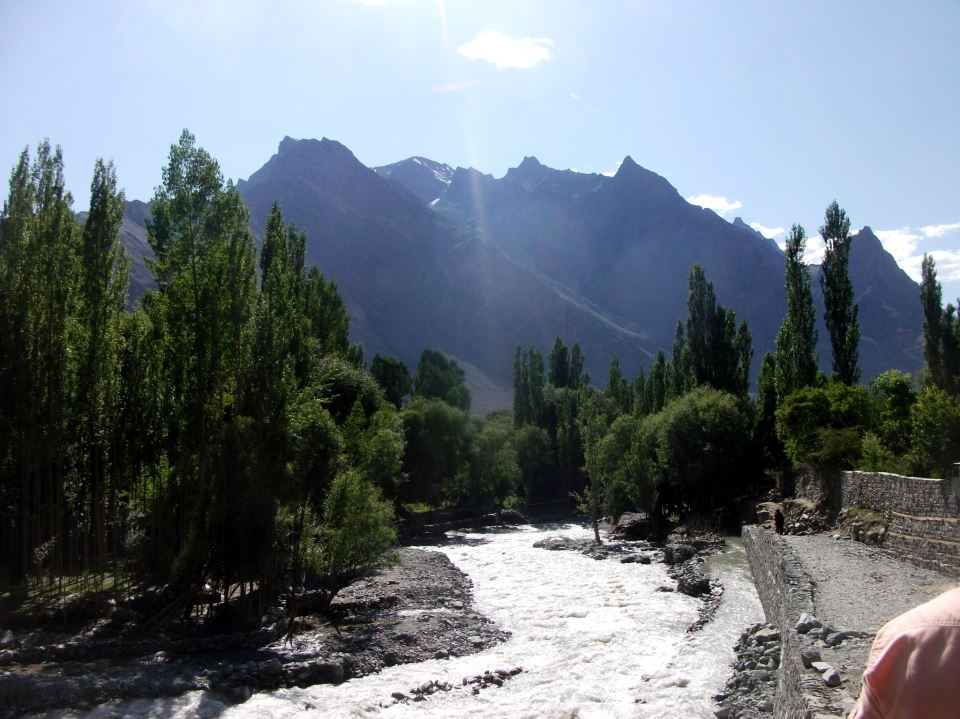
Shigar Valley lies where the Himalayas meet the Karakoram, a place of raw, uncompromising beauty. The landscape here is one of extremes—towering cliffs, vast glaciers, and a narrow ribbon of green carved by the Shigar River, which winds its way through the valley like a lifeline. This is the land of K2, the world’s second-highest peak, and the valley itself stretches downward from its base, eventually merging with the Indus near Skardu. For centuries, it has been a crossroads—first for Silk Road caravans, later for mountaineers drawn to the Karakoram’s formidable summits. The air is thin, the silence profound, broken only by the rush of the river or the distant call of an eagle circling overhead.
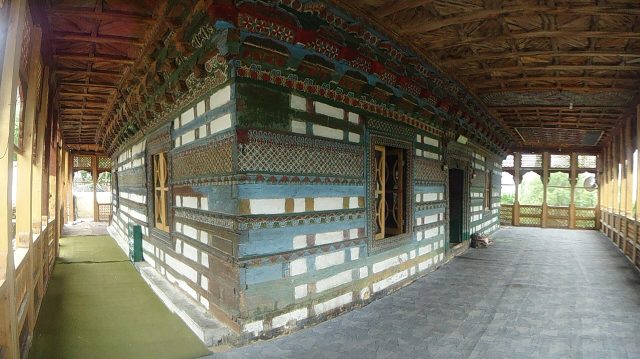
The architecture here tells a story of layered history. The most striking remnant is Shigar Fort, built in the 17th century by the Amacha rulers, a dynasty that once held sway over this remote corner of the world. Perched on a hill above the river, the fort seems to grow out of the rock itself, its walls a blend of stone and clay, its wooden balconies and intricately carved galleries echoing the styles of Tibet and Baltistan. Inside, the courtyards are cool and shaded, leading to chambers where the rulers once lived, prayed, and governed. A small museum preserves fragments of their world—weapons, manuscripts, and everyday objects that hint at a life both austere and rich in tradition. Nearby, the Amacha Palace, rebuilt in the early 20th century, stands as a curious mix of local craftsmanship and colonial influences, its European-style facade softened by the passage of time.
Life in the valley moves at the pace of the seasons. The people here are mostly Balti, a community with deep Tibetan roots, and their existence is shaped by the land. Terraced fields cling to the mountainsides, yielding barley, wheat, and vegetables in the short growing season. In summer, herds of yaks and sheep graze on high-altitude pastures, while in winter, the valley retreats under a blanket of snow, isolating it from the outside world. The villages are clusters of stone and wood houses, their flat roofs used for drying apricots or storing firewood. There’s a quiet resilience to the way people live here, a rhythm that hasn’t changed much in generations. Even the arrival of trekkers and climbers in the warmer months doesn’t disrupt it—if anything, it adds a gentle pulse to the valley’s timeless flow.
For those who come seeking adventure, Shigar is a gateway to some of the most dramatic landscapes on earth. The valley is the starting point for expeditions to K2’s base camp, a grueling two-week trek through some of the harshest terrain imaginable. But there are gentler paths, too—walks to the Mantong Glacier, or shorter hikes to viewpoints where the entire valley unfolds below, a patchwork of green and brown framed by snow-capped peaks. The Karakoram’s glaciers, like Baltoro and Biafo, are within reach, their icy tongues creeping down from the high mountains. These are not places for the unprepared, but for those who venture here, the rewards are measured in silence, solitude, and the kind of beauty that lingers long after the journey ends.
There’s a sense of myth woven into the fabric of Shigar. The Balti people speak of it as a place where Buddhist monks once sought refuge, fleeing the decline of their faith in Tibet. Ancient petroglyphs dot the landscape, their meanings lost to time, while inscriptions on boulders hint at the passage of traders and pilgrims centuries ago. The valley’s mosques, with their wooden minarets and simple interiors, stand as testament to the spread of Islam, yet in some villages, older traditions persist—rituals and beliefs that predate the arrival of the faith. It’s a place where history feels alive, not just in the stones and ruins, but in the way people live, the stories they tell, and the quiet pride they take in their heritage.
The climate here is as stark as the landscape. Summers are hot, with temperatures climbing into the thirties, though the nights bring a sharp chill, especially in the higher reaches. Winters are long and severe, with snow locking the valley away from November to March. The best time to visit is between May and October, when the roads are passable and the valley bursts into life—wildflowers carpet the meadows, and the river swells with meltwater, its currents swift and cold. Even then, the weather can be unpredictable, shifting from sunshine to snow in a matter of hours. It’s a place that demands respect, where preparation and patience are as essential as a good pair of boots.
Getting here isn’t easy, but the journey is part of the experience. The road from Skardu winds through stark, beautiful terrain, a mix of paved stretches and rough tracks that test even the sturdiest vehicles. There are no luxury hotels in the valley, just a handful of guesthouses and campsites where travelers can rest, their walls warmed by wood stoves in the evenings. The food is simple—flatbreads made from barley flour, hearty soups, and meat from yaks or goats, all of it flavored with the apricots for which Baltistan is famous. Visitors are often offered butter tea, a salty, rich brew that’s as much a part of local culture as the mountains themselves. It’s an acquired taste, but one that warms the body and connects you, however briefly, to the rhythms of life here.
Shigar is a place where the past and present coexist in a delicate balance. The valley has seen empires rise and fall, religions come and go, yet it remains largely unchanged, its essence untouched by the passage of time. For some, it’s a stepping stone on the way to greater adventures—K2, the glaciers, the high passes that lead into China or India. For others, it’s a destination in itself, a place to slow down, to listen to the wind in the poplars, to watch the light change on the mountains as the day fades. There’s a humility that comes with being here, a sense of smallness in the face of such grandeur. And yet, for all its remoteness, Shigar has a way of making you feel at home, as if the mountains themselves are welcoming you into a world that has existed long before you arrived and will endure long after you’ve gone.