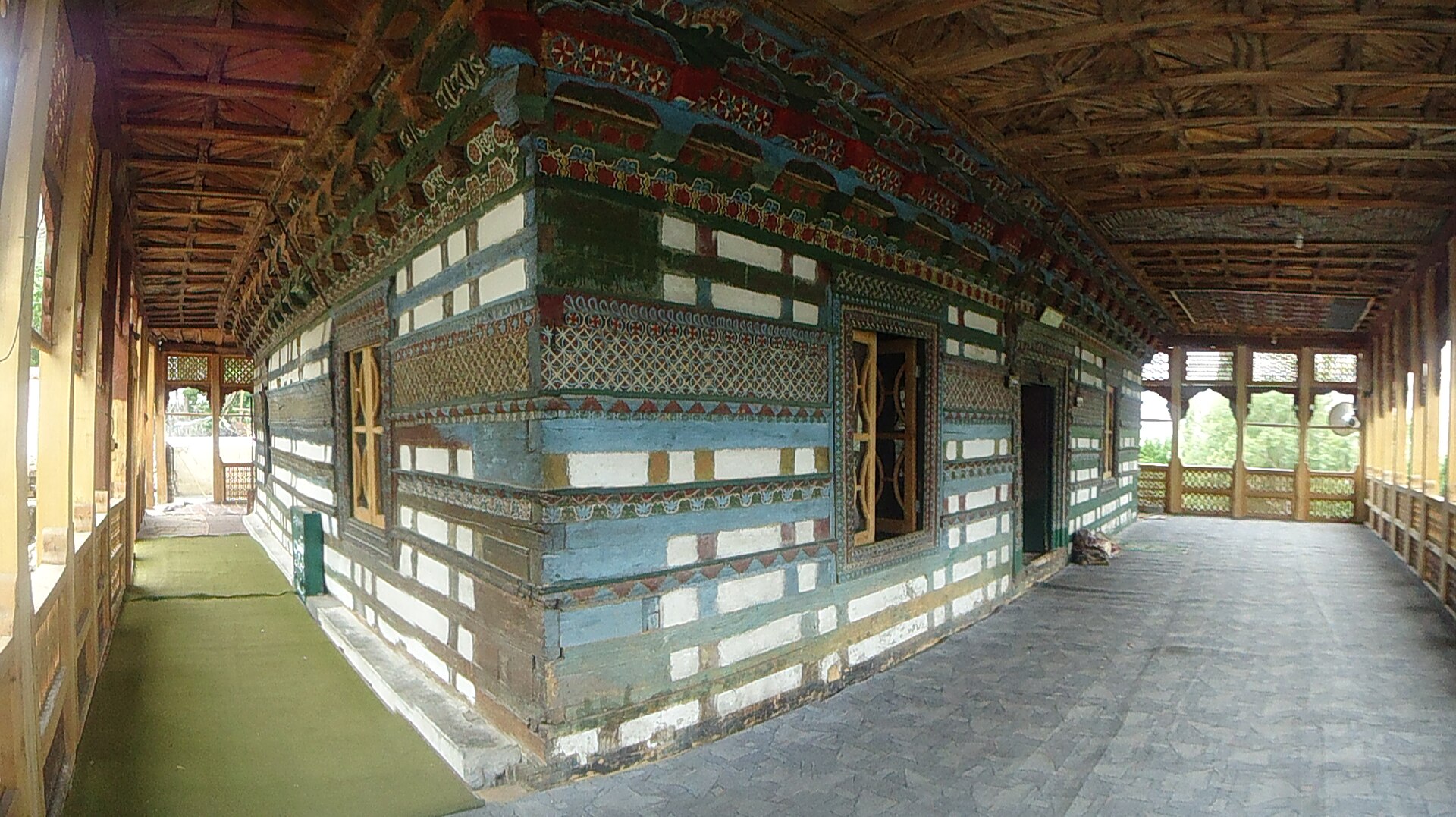
Khanaqa Mosque in Skardu is the kind of place that doesn’t demand attention but lingers in memory long after you’ve left. Perched on a hillside, it overlooks the town and the rugged mountains beyond, as if time moves a little slower here. The mosque isn’t grand in size, but its architecture and setting make it feel like a natural part of the landscape rather than something imposed upon it.
Skardu has long been a crossroads, a place where trade routes from Central Asia and China once converged. For centuries, it served as a gateway between cultures, religions, and ways of life. The mosque likely dates back to a period when Islam had already taken root in the region, yet its design carries echoes of earlier traditions. There’s something distinctly local in its construction—thick stone walls and wooden beams that speak to the practical needs of a harsh climate, with subtle influences from Tibetan Buddhist architecture and the vernacular styles of Baltistan.
The building itself is simple and unadorned, built from local stone with a roof supported by sturdy wooden beams. Inside, the space is open and uncluttered, with minimal decoration—just a few understated patterns on the walls. Light filters through small windows, casting a soft glow that shifts with the time of day. There are no gilded domes or intricate mosaics here, nothing to distract from the quiet purpose of the place. That simplicity is what makes it feel so genuine.
Unlike the more famous landmarks in Pakistan, Khanaqa Mosque isn’t a place you’ll find on most tourist itineraries. There are no crowds, no vendors selling trinkets, no guides offering their services. Instead, it remains a living part of the community. Locals come here for prayers, especially on Fridays, when the small courtyard fills with people. The atmosphere is one of quiet routine—the rustle of wind through the mountains, the distant call of a muezzin from another mosque in town. If you want to understand the rhythm of life in Skardu, this is where you’ll find it.
Surrounded by the towering peaks of the Karakoram, the mosque seems to exist in conversation with the landscape. In winter, when snow blankets the mountains, the dark stone of the building stands out against the white, while smoke from nearby homes curls into the cold air. Summer brings a different kind of beauty—shade from the trees in the courtyard offers relief from the heat, and the interior stays cool even when the sun is high. It’s a place that adapts to the seasons, just as the people who visit it do.
For travelers who seek more than just postcard views, Khanaqa Mosque offers something rare: a glimpse into the everyday life of this remote region. There’s no fanfare here, no grand spectacle—just the quiet persistence of a place that has served its purpose for generations. Some might find it unremarkable, but for those who appreciate authenticity, it’s a small revelation.
Skardu isn’t just about mountains and glaciers; it’s also home to the Balti people, whose culture has endured with remarkable resilience. Their traditions, language, and way of life have remained largely intact over the centuries, and the mosque is a part of that heritage. It’s not just a religious site but a reflection of how Islam became woven into the fabric of local life, coexisting with older customs rather than erasing them.
If you find yourself in Skardu, don’t rush straight to the famous peaks or the glaciers. Take a moment to climb the hill to Khanaqa Mosque, sit on its steps, and look out over the town. The view might not be the most dramatic, but it’s here that you’ll sense the true character of the place—unhurried, deep, and quietly enduring.