Caesarea’s Palace on the Promontory is one of those rare places where history isn’t just remembered—it’s felt. Perched on a narrow rocky spit jutting into the Mediterranean, the ruins of this ancient complex seem to exist outside of time. Built in the first century BCE by Herod the Great, the palace was more than a royal residence; it was a statement. Herod, a ruler whose ambitions often outstripped his territory, used this site to project power, impressing both Roman allies and local elites with a display of wealth and engineering prowess that few could match.
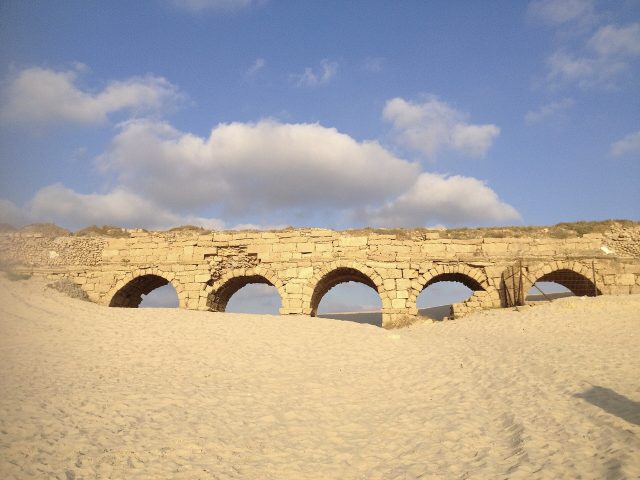
The architecture was as audacious as its location. Herod, known for his grand building projects, spared no expense in creating a villa that would reflect his status. The main structure stood on an artificial platform supported by massive vaults, rising above the sea like a fortress. At its heart was a large freshwater pool, surrounded by colonnades and reception halls where guests would have gathered for banquets and political discussions. The baths were particularly lavish, with separate chambers for hot and cold plunges, their walls lined with marble and intricate mosaics. Water was supplied through an elaborate system of aqueducts, some of which still stand today, a testament to the sophistication of Roman engineering.
Perhaps the most striking feature of the palace was its private harbor, carved directly into the bedrock. Herod ordered the construction of a breakwater and docking facilities so that ships could moor right at the palace walls. This wasn’t just practical—it was symbolic. By controlling access to the sea, Herod demonstrated his reach, turning the Mediterranean into an extension of his domain. Today, the harbor lies submerged, but at low tide, the outlines of ancient piers and wave breakers emerge from the water. Archaeologists have uncovered evidence of a complex lock system that regulated water levels, an innovation that would have been revolutionary for its time.
The palace wasn’t merely a place of luxury; it was a stage for power. Herod used it to host foreign dignitaries, negotiate with Roman officials, and entertain guests with feasts that reinforced his authority. After his death, the complex passed to Roman procurators, who continued to use it for similar purposes. Emperors and generals stayed here, and by the third century CE, it even served as a temporary residence for the Roman governor of Judea. The palace was where politics and spectacle intertwined, where deals were struck over wine and where the fate of the region was often decided.
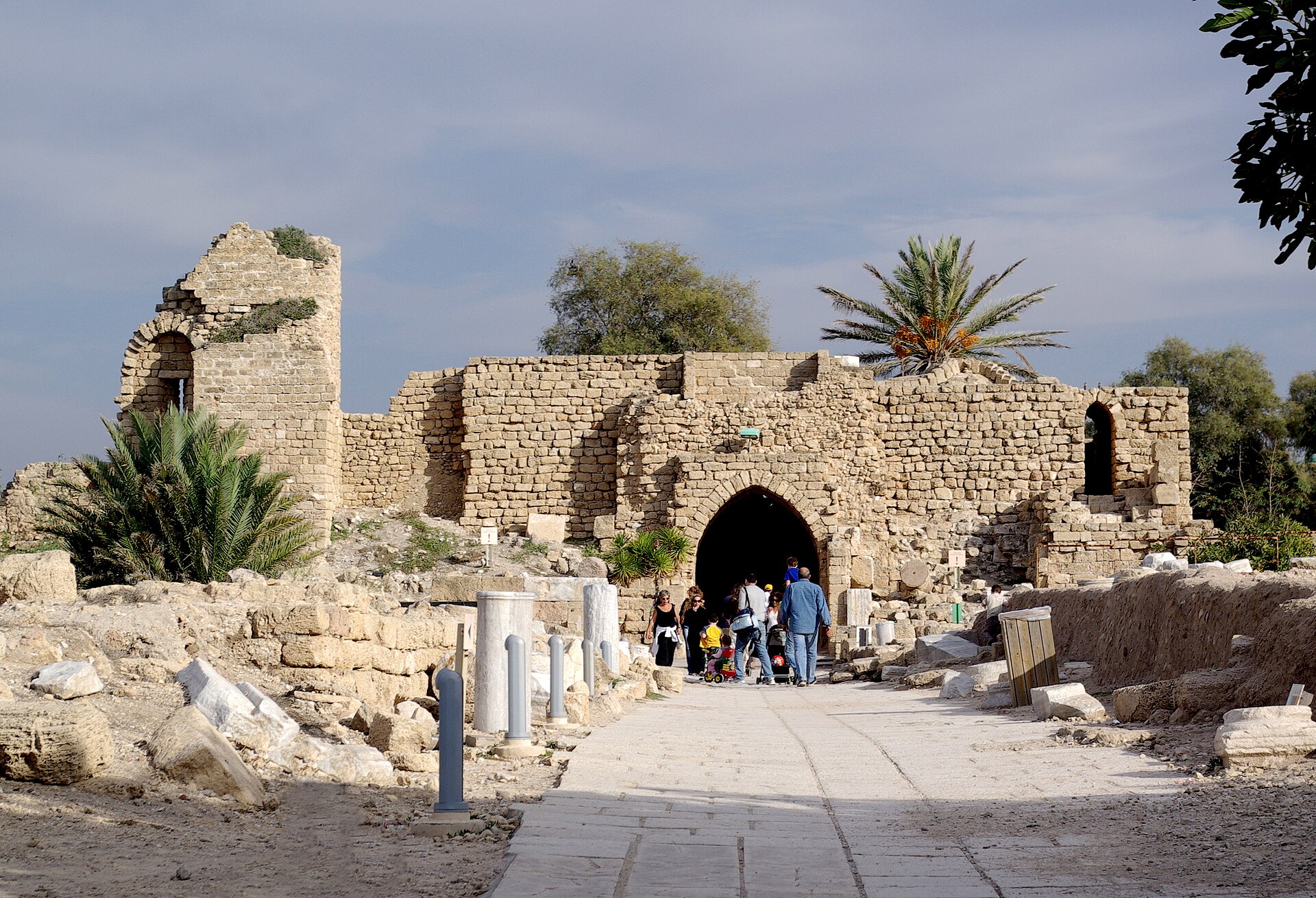
With the decline of the Roman Empire, the palace fell into disrepair. Earthquakes, invasions, and the relentless passage of time took their toll. Marble columns collapsed, mosaics crumbled, and the once-grand halls were reduced to ruins. Later periods saw new structures built atop the old—Byzantine additions, Crusader fortifications—but even then, the remnants of Herod’s palace retained a sense of grandeur. Travelers and pilgrims who visited Caesarea over the centuries wrote of its haunting beauty, a place where the past felt almost tangible.
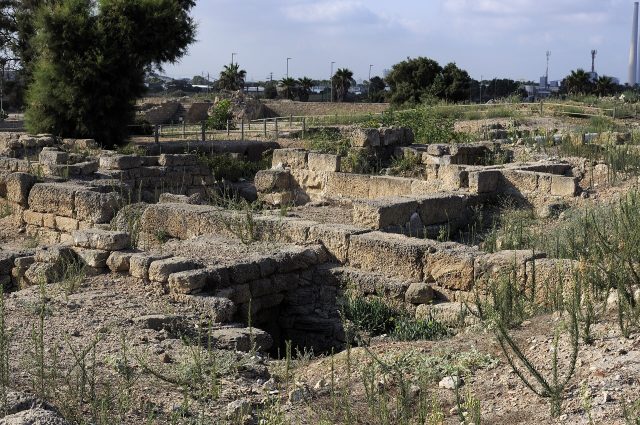
Today, the Palace on the Promontory is an open-air museum, a place where visitors can wander among the ruins and imagine the life that once filled them. The remains of the colonnades still stand, their weathered stones bearing the marks of centuries. Below ground, storerooms that once held wine and olive oil now lie empty, their cool shadows offering a respite from the Mediterranean sun. The upper terrace provides a sweeping view of the sea, where the waves crash against the same rocks that once supported Herod’s harbor. Early mornings and late afternoons are the best times to visit, when the light softens the harshness of the ruins and the sound of the surf makes it easy to lose track of time.
Caesarea itself is a city layered with history. Founded by Herod in honor of Emperor Augustus, it became one of the most important ports on the eastern Mediterranean, a hub of trade and culture. The city’s theater and hippodrome drew crowds from across the empire, while its markets buzzed with merchants from distant lands. Today, Caesarea is a quiet coastal town where modern villas stand alongside ancient ruins. Walking its streets, it’s not hard to picture the bustle of the past—sailors loading ships, traders haggling in the agora, and nobles gathering in the palace for another night of feasting.
What makes the Palace on the Promontory special isn’t just its age or its architecture, but the way it connects the present to the past. Here, the wind carries the same salt spray it did two thousand years ago, and the stones still hold the echoes of footsteps from another era. It’s a place where history isn’t something you read about in books—it’s something you experience. That’s why it draws not just tourists, but locals who come to walk its paths, to stand where Herod once stood, and to feel, if only for a moment, the weight of the centuries pressing down on the shore.