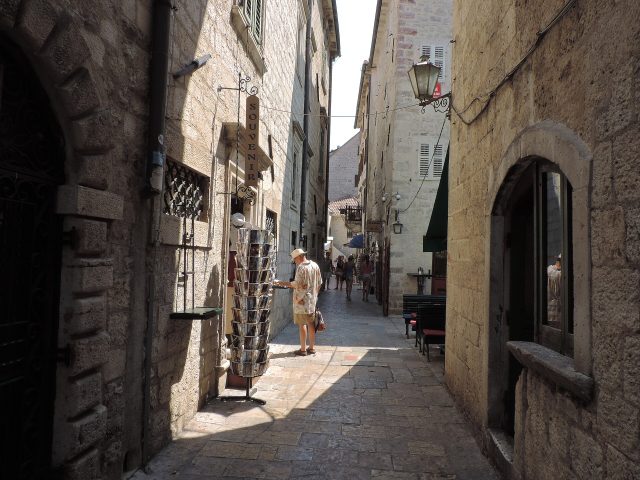
The Church of Saint Luke in Kotor is one of those rare places that feels untouched by the centuries, as if the Middle Ages linger in its very stones. Tucked away on a quiet square in the heart of the old town, it stands surrounded by narrow-windowed houses with terracotta roofs, their weathered facades bearing the marks of time. Unlike the grander churches of Kotor, Saint Luke’s was never meant to impress with opulence or scale. Its modest size and unassuming architecture speak more of the everyday lives of the people who built and used it than of power or wealth.
Originally a Catholic church when it was constructed in the twelfth century, its fate changed in the seventeenth century when the Ottomans took control of the region. Rather than being destroyed or abandoned, it was handed over to the Orthodox community—a rare example of a place of worship serving two faiths across the centuries. Inside, the layers of history are still visible. The original Catholic altar remains, while an iconostasis was added later when the church became Orthodox. There’s no tension in this coexistence, just the quiet accumulation of time, one tradition laid gently over another.
Built from local gray stone that has darkened with age, the church’s facade is simple, marked only by a small round window and an unadorned portal. A bell tower once stood above it, but today the structure feels complete even without it. The interior is intimate, almost domestic in scale, with walls covered in faded frescoes. Some date back to the church’s earliest days, while others were added later, their Byzantine influences softened by the hand of local artists. The most striking is the vaulted ceiling, where the remnants of old paintings tell a story of devotion and craftsmanship.
For centuries, Saint Luke’s was more than just a place of worship—it was a cornerstone of community life. In the Middle Ages, it served as a gathering spot where townspeople exchanged news, settled disputes, and sought refuge during the earthquakes that frequently shook Kotor. That sense of shelter and continuity still lingers. Unlike many historic sites that feel like museum pieces, this church remains a living part of the city, its walls holding the echoes of countless ordinary lives.
Today, it welcomes visitors, though it never draws the crowds that flock to Kotor’s larger churches. Inside, the air is still, broken only by the occasional footsteps of those who wander in. A single oil lamp flickers in the corner, its light casting a warm glow over the old icons. The narrow windows filter the sunlight softly, as if reluctant to disturb the quiet. There’s a sense here that time moves differently—slower, more deliberately, as if the past isn’t something to be remembered but something that simply *is*.
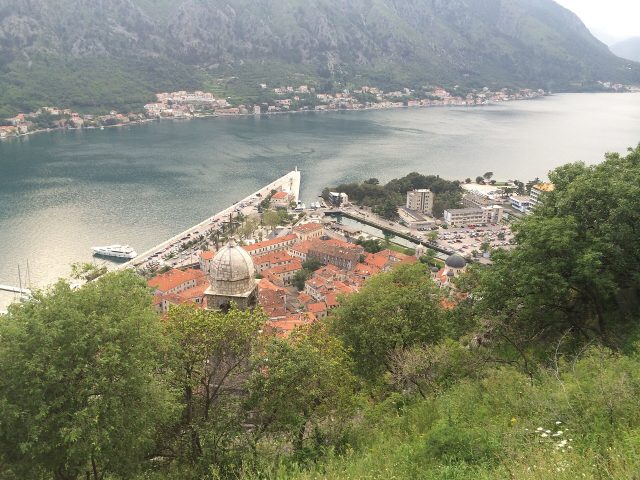
Kotor itself is a city of contrasts: towering mountains loom over the bay, narrow alleys twist into hidden courtyards, and lively squares buzz with activity. The Church of Saint Luke is a quiet counterpoint to all that energy. It doesn’t demand attention or dazzle with grandeur. Instead, it offers something subtler—a place to pause, to breathe, to feel the weight of history not as a story told by guides, but as something tangible, present in every stone and crack in the wall.
If you pass by in the evening, when the street lamps cast long shadows across the cobblestones, the church takes on a particularly serene quality. The light softens the rough edges of the stone, and for a moment, it’s easy to imagine the generations of people who have stood in the same spot, seeking solace or simply a moment of stillness. That’s why locals still come here—not just for services, but to reconnect with something deeper. The church isn’t just a building; it’s a thread in the fabric of the city, a quiet but enduring presence that has witnessed Kotor’s joys and sorrows for nearly a thousand years.