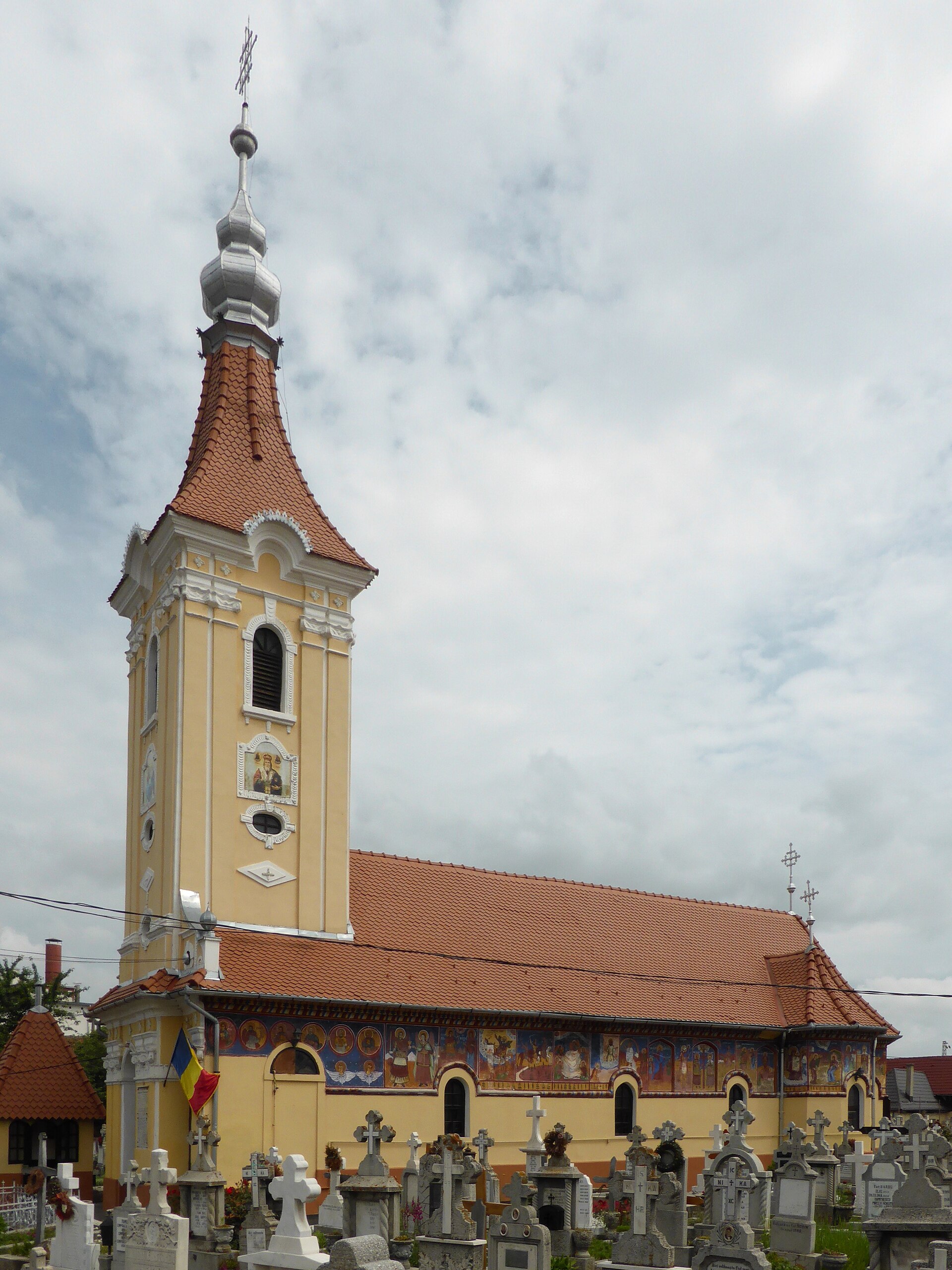
The Holy Trinity Church in Brașov stands quietly on a gentle slope near the city’s old center, its pale yellow facade softened by time and the dappled light filtering through the linden trees that line the street. Built in the mid-eighteenth century, it is one of the few remaining Baroque churches in Transylvania, a region more commonly associated with Gothic spires and fortified Saxon churches. Its modest size and unassuming exterior might make it easy to overlook, but stepping inside reveals a space that feels both intimate and grand, where the past lingers in the scent of aged wood and the faint echo of footsteps on stone.
The church was constructed between 1777 and 1782, a period when Brașov was under Habsburg rule, and its design reflects the architectural tastes of the time. Unlike the medieval churches that dominate the city’s skyline, the Holy Trinity was built in the Baroque style, characterized by its curved lines, ornate decorations, and a sense of movement in the structure itself. The facade is simple but elegant, with pilasters framing the entrance and a triangular pediment above, while the bell tower rises gracefully from the body of the church, its copper roof long since turned a muted green. Inside, the nave is bathed in natural light from tall, arched windows, and the ceiling is adorned with delicate stucco work, though much of the original interior decoration has been lost or altered over the centuries.
What makes the Holy Trinity Church particularly interesting is its role in the religious and cultural history of Brașov. The city has long been a crossroads of faiths and ethnicities, with Orthodox, Catholic, Lutheran, and Unitarian communities coexisting—sometimes uneasily—within its walls. This church was originally built for the Greek Catholic community, a Byzantine-rite church in communion with Rome that emerged in Transylvania in the eighteenth century. The Greek Catholics were a bridge between the Orthodox majority and the Catholic Habsburg authorities, and their churches often blended Eastern and Western traditions. Here, that fusion is visible in the iconostasis, a screen of icons that separates the nave from the altar, a feature more common in Orthodox churches but adapted here to fit the Greek Catholic liturgy.
Over the years, the church has witnessed the ebb and flow of history. In the nineteenth century, Brașov became a center of Romanian nationalism, and the Holy Trinity Church played a part in that story. During the 1848 revolution, when Transylvanian Romanians rose against Habsburg rule, the church served as a meeting place for local leaders. Later, in the early twentieth century, when Transylvania was united with Romania, the Greek Catholic Church gained new prominence, though its fortunes would change dramatically under communist rule. After 1948, the communist regime outlawed the Greek Catholic Church, confiscating its property and forcing its followers to join the Orthodox Church. The Holy Trinity Church was closed for decades, its icons and religious objects either destroyed or scattered. It wasn’t until after the fall of communism in 1989 that the church was returned to the Greek Catholic community and gradually restored.
Today, the Holy Trinity Church is once again an active place of worship, though its congregation is small compared to the larger Orthodox and Lutheran churches in the city. The interior has been carefully renovated, with some of the original icons returned and new ones commissioned to fill the gaps. The iconostasis, though not as elaborate as those in older Orthodox churches, is a striking feature, with its tiers of saints and biblical scenes painted in rich, warm colors. The altar, too, is simple but dignified, with a sense of reverence that transcends the specific traditions of the faith. On Sundays and feast days, the church comes alive with the sound of chanting and the scent of incense, a reminder of the enduring spiritual life of the city.
For visitors, the Holy Trinity Church offers a different perspective on Brașov’s history. While the Black Church and the Council House dominate the city’s tourist itineraries, this smaller, lesser-known church provides a glimpse into the complexities of Transylvania’s religious and cultural identity. It’s a place where the layers of history are still visible—not just in the architecture, but in the stories of the people who have worshipped here over the centuries. The churchyard, with its old gravestones and overgrown grass, adds to the sense of timelessness, as if the past and present coexist in this quiet corner of the city.
Walking through Brașov, it’s easy to be captivated by the grandeur of its medieval landmarks, but the Holy Trinity Church invites a slower, more contemplative pace. There are no crowds here, no tour groups rushing through, just the occasional visitor pausing to light a candle or sit for a moment in the wooden pews. The church’s location, slightly removed from the bustle of the main square, makes it feel like a hidden gem, a place where one can step out of the flow of time and reflect. Whether you’re drawn by history, architecture, or simply the desire for a quiet moment, the Holy Trinity Church offers something rare in a city that is otherwise so well-trodden by tourists.
In many ways, the church is a microcosm of Brașov itself—a city shaped by empires, faiths, and the resilience of its people. It may not have the dramatic silhouette of the Black Church or the imposing presence of the fortress walls, but it carries its own kind of beauty, one that reveals itself slowly to those who take the time to look. Here, the past is not just preserved in stone and paint; it’s alive in the rituals, the memories, and the quiet dignity of a place that has endured centuries of change. For anyone seeking to understand the soul of Brașov, the Holy Trinity Church is a good place to begin.