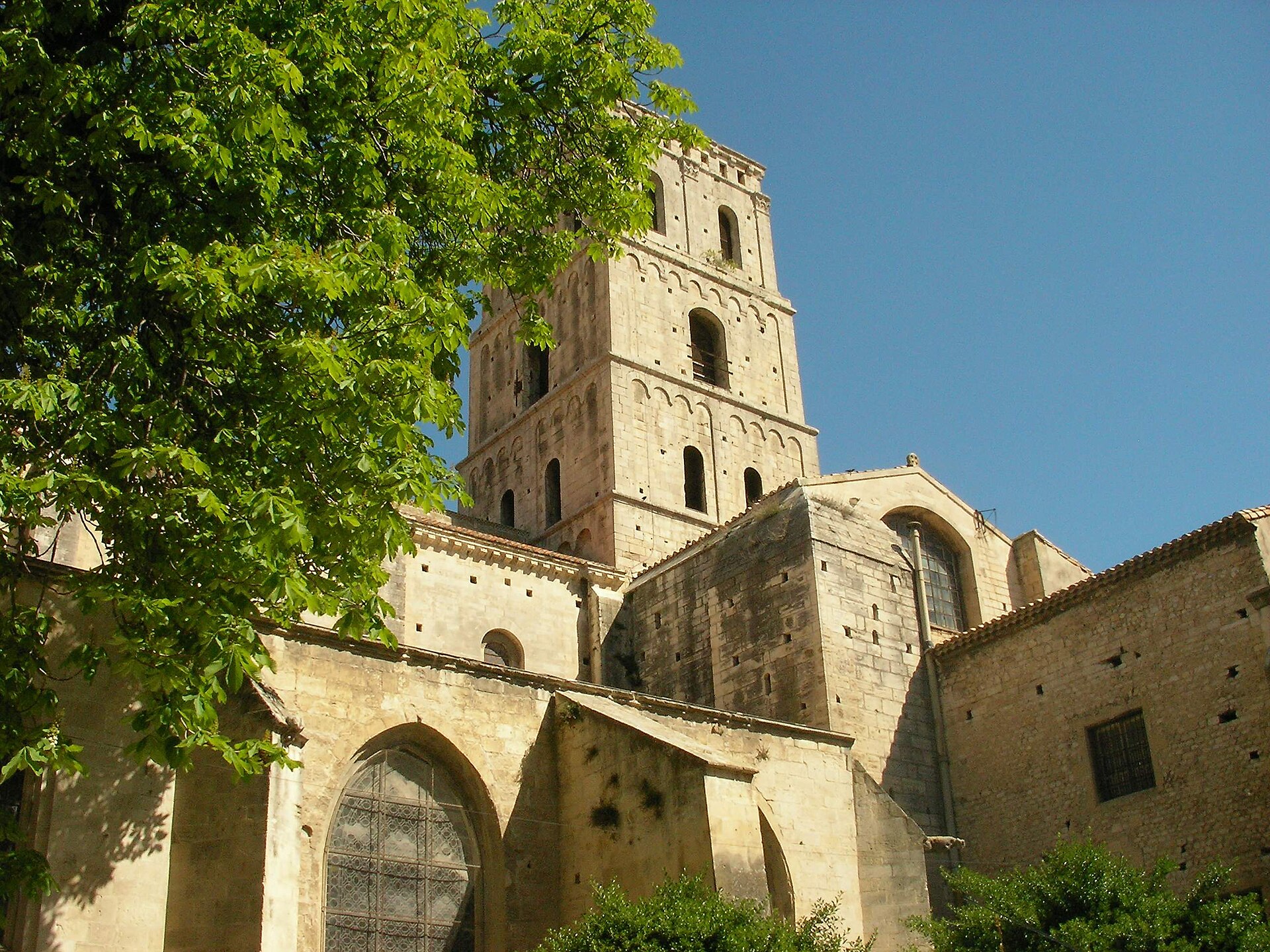
Saint-Trophime Church in Arles feels like a place where time has paused, leaving behind the quiet grandeur of medieval Provence. Standing on the square in front of the former bishop’s palace, its facade draws the eye immediately—not with flashy ornamentation, but with the weight of history carved into stone. The intricate sculptures, biblical scenes, and Gothic arches unfold like an open book, telling stories of faith and craftsmanship from centuries past. The church is named after Saint Trophimus, the first bishop of Arles, who, according to tradition, brought Christianity to the region as early as the third century. Today, it remains both an active place of worship and a monument where Romanesque and Gothic styles intertwine, each element a testament to the hands that shaped it.
Arles itself is a city layered with history, and Saint-Trophime sits at its core. In the Middle Ages, the church was part of a sprawling abbey that hummed with activity—pilgrims gathered here, fairs bustled in its shadow, and decisions with far-reaching consequences were made within its walls. Between the 11th and 12th centuries, the church underwent significant renovations, and it was during this time that its famous portal took shape. Now considered one of the finest examples of Romanesque sculpture in France, the portal is a masterpiece of storytelling in stone. Every figure, from the apostles to the dramatic scenes of the Last Judgment, carries a sense of purpose, as if warning visitors of life’s fleeting nature.
Step inside, and the church reveals a different kind of beauty—one of simplicity and solemnity. The high vaulted ceilings, sturdy columns, and dim light filtering through narrow windows create an atmosphere of quiet reflection. Unlike some of France’s more lavish cathedrals, Saint-Trophime doesn’t overwhelm with gilded altars or elaborate frescoes. Instead, its restraint makes it all the more striking. The altar, the carved capitals of the columns, and the faded murals all bear the marks of time, each detail a whisper from the past. The crypt, where the relics of Saint Trophimus were once kept, adds another layer of intrigue, though little remains of the pilgrims who once flocked here from across Europe.
The church is deeply woven into the history of Arles and the wider region. During the Middle Ages, the city was a vital religious hub, and Saint-Trophime stood at its spiritual center. Provençal counts were crowned here, and decisions made within these walls shaped the fate of southern France. Even as Arles lost its political influence, the church endured as a place of pilgrimage and reverence. Today, it sits at the crossroads of tourist routes, yet it hasn’t become a mere museum piece. Services are still held here, the organ plays, and the sense of continuity with the past remains tangible.
The facade of Saint-Trophime is a story in itself. The sculptures are so meticulously crafted that it’s easy to imagine the stonemasons pouring their skill—and perhaps their faith—into every detail. The central tympanum depicts the Last Judgment, with Christ enthroned among angels, while below, the saved and the damned face their eternal fates. Flanking the portal are figures of saints, apostles, and biblical characters, each one a silent narrator of its own tale. Among them, Saint Trophimus stands out, holding a book—a symbol of his role as a bringer of knowledge and faith.
Arles has long been a muse for artists, and Saint-Trophime is no exception. Vincent van Gogh, who lived in the city in the late 19th century, captured its essence in his work, though he focused more on the vibrant cafes and sunflower fields that defined his time here. Still, the church became part of the broader image of Provence that inspired the Impressionists—a place that was ancient, a little austere, but radiant with an inner light. Today, visitors come not just for the history, but for the atmosphere, the sense of stepping into a world where time moves differently.
Inside, the church invites lingering. The carved capitals of the nave columns are a particular delight, each one unique. Some depict lions, others mythical creatures, and a few illustrate scenes from the life of Christ. The side chapels hold murals from different eras, their colors softened by age, while the choir’s stained-glass windows cast a gentle, colored glow. The best way to experience the church, though, might be during a service or an organ concert, when the space comes alive with sound and movement, breaking the stillness in the most natural way.
Saint-Trophime is more than an architectural landmark; it’s a living piece of history. It has weathered wars, revolutions, and the passage of centuries, yet it stands much as it did hundreds of years ago. Outside, the square buzzes with cafes and souvenir stalls, but cross the threshold, and the noise of the modern world fades. Inside, there’s no rush, no distraction—just the quiet weight of stone and the sense that the past is still breathing, just within reach. It’s a place where you can sit for a while, look around, and feel the echoes of those who came before.