The Alcazar of Arles is one of those rare places where history isn’t just preserved—it lingers in the air, settling into the cracks of ancient stone. Tucked away in the heart of the old city, it doesn’t announce itself with grand facades or towering spires. Instead, you stumble upon it almost by accident, turning off a busy street into a quiet courtyard where time seems to slow. There are no gilded halls or dramatic vistas here, just the quiet weight of centuries pressing against the walls. It feels less like a monument and more like a living thing, one that has witnessed wars, shifting powers, and the steady, unhurried rhythm of daily life in Provence.
The story of the Alcazar begins in the Middle Ages, when Arles was a thriving hub of trade and influence in southern France. The first records of the building date back to the 12th century, though it’s likely that some form of fortification stood here even earlier. Originally, it served as the residence of the viscounts of Arles, who governed the city on behalf of the counts of Provence. When Provence was absorbed into the French kingdom, the Alcazar lost its political clout but remained an important administrative center. Over the years, it housed courts, prisons, and even military barracks, each era leaving its mark on the structure.
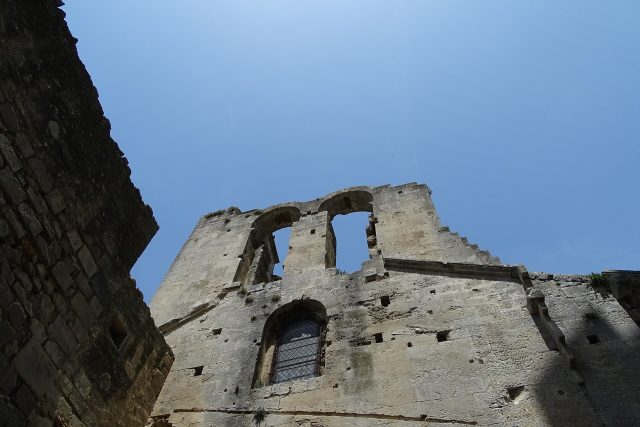
What makes the Alcazar’s architecture so compelling is how it layers different periods like pages in a book. The oldest surviving part is the Romanesque Chapel of Saint-Jean, built in the 12th century. Its thick walls and narrow windows evoke the austere beauty of medieval churches, a stark contrast to the soaring Gothic hall added in the 14th century, where the city council once convened. Later, in the 17th century, a Baroque facade was grafted onto the building, giving it the appearance it has today. Each style exists independently, yet together they create something unexpected—a harmony born of time rather than design.
Inside, the Alcazar doesn’t try to impress with opulence. There are no frescoed ceilings or marble staircases, just vast, unadorned rooms where the past feels close enough to touch. Some spaces now host contemporary art exhibitions, a quiet dialogue between old and new. The building doesn’t demand attention; it simply endures, much like the plane trees in the courtyard or the worn cobblestones underfoot. That understated presence is what makes it special. Here, the modern world’s urgency fades, replaced by the slow, steady pulse of history.
Today, the Alcazar is more than just an architectural relic—it’s a cultural heart for Arles. The courtyard comes alive in summer with open-air film screenings, while winter brings a small Christmas market. Concerts, lectures, and theater performances fill the halls, but locals also come for simpler reasons: to sit on a bench with a coffee, to chat with neighbors, or to gaze out at the rooftops of the old city. The Alcazar has woven itself into the fabric of daily life, a rare achievement for a building so old. It’s no longer just a relic of the past; it’s a place where the past and present coexist.
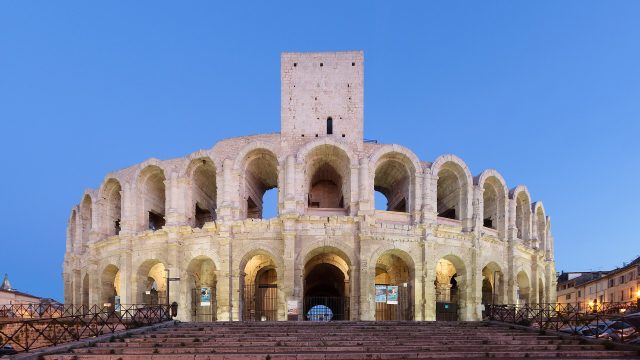
Arles itself is a city that wears its history lightly, and the Alcazar is one of its most intriguing chapters. To truly understand it, you have to explore beyond its walls. Nearby, the Roman amphitheater still hosts bullfights, while the Church of Saint-Trophime dazzles with its intricate portal. These landmarks are connected by invisible threads of history, and the Alcazar is where many of them converge. It doesn’t shout its importance, but if you listen closely, the stones seem to whisper stories of the people who once walked these halls.
Visiting the Alcazar isn’t about ticking off a checklist of sights. There are no detailed plaques explaining every arch or column, and that’s part of its charm. You can wander the courtyard, climb the stairs to an upper floor, and look out over the city from a window that’s framed centuries of change. Or you might linger in a hall where decisions were once made, now filled with the quiet rustle of art or the murmur of visitors. Time here doesn’t feel linear; it’s more like a circle, one that invites you to step inside.
This isn’t a place for those seeking grand spectacles or picture-perfect moments. The Alcazar is for those who are willing to pause, to listen, to let the weight of history settle over them. In a world that moves too fast, such places are increasingly rare. They remind us that history isn’t just a series of dates—it’s a living thing, still breathing if we take the time to notice. The Alcazar of Arles doesn’t just preserve the past; it offers a quiet space where the past can speak for itself. All you have to do is listen.