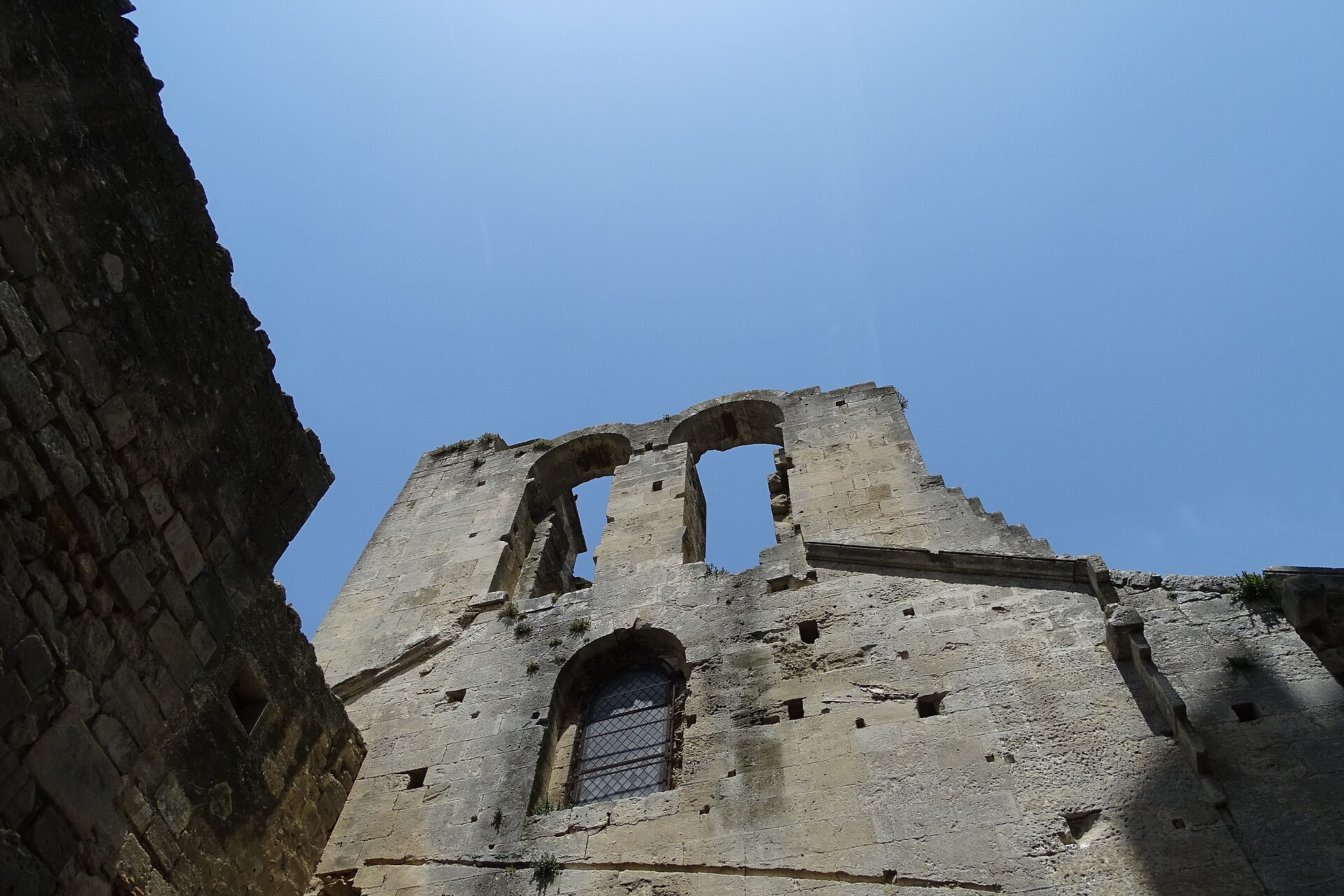
Perched on a gentle rise outside Arles, Montmajour Abbey rises from the Provençal landscape. Its pale stone walls overlook the Camargue plain, where reeds bend in the wind and salt flats stretch to the horizon. This is no ordinary ruin—it’s a place where history lingers in the cracks of its walls.
From monastery to power center
Benedictine monks founded Montmajour in the 10th century. By the 11th and 12th centuries, it had become one of southern France’s most important religious sites. Pilgrims came to pray before the relics of Saint Trophime, Arles’ first bishop. The abbey’s influence reached far beyond its walls—its abbots shaped local politics, and its lands covered vast tracts of the countryside. A village once stood at its base; today, only a few scattered stones remain.
Stone and silence
The main church, dedicated to the Virgin Mary, is built in the Romanesque style. Thick walls, rounded arches, and narrow windows create a space of dim, quiet light. Below it, the crypt’s vaulted ceilings rest on sturdy columns—speak softly here, and your voice carries like an echo. Later, Gothic elements were added, though time has worn away much of that work.
The cloister, now half-ruined, was once the heart of monastic life. Monks walked its paths in silence, read scripture, or discussed theology under its arcades. Some of the carved capitals survive, showing scenes from the Bible and strange creatures from medieval imagination. Even now, the space feels orderly, set apart from the world outside.
Survival and ruin
Montmajour’s history is one of both faith and violence. In the 16th century, Huguenots attacked the abbey, looting its treasures and leaving parts in ruins. By the 18th century, the monastery had declined, and the French Revolution turned its buildings into quarries for other projects. Preservation efforts began in the 19th century, but progress has been slow.
The view from the hill
From the abbey’s height, the land unfolds in all directions. Vineyards roll toward the Rhône, and on clear days, the Alps rise in the distance. The wind carries the scent of thyme and lavender, while gulls cry overhead. Sometimes, the faint sound of church bells drifts up from Arles.
In summer, the abbey hosts classical concerts. In winter, fog sometimes wraps around its walls, softening its edges. Locals know it well—it’s part of their landscape, not just a tourist site. For visitors, though, it offers something quieter: a place to sit, to listen, to let the past settle in.
If you visit Arles, walk up the hill. Find a spot on the worn church steps. Stay until the light changes—until the sunset turns the Camargue gold. Montmajour doesn’t ask for much. It’s enough that it’s still here.