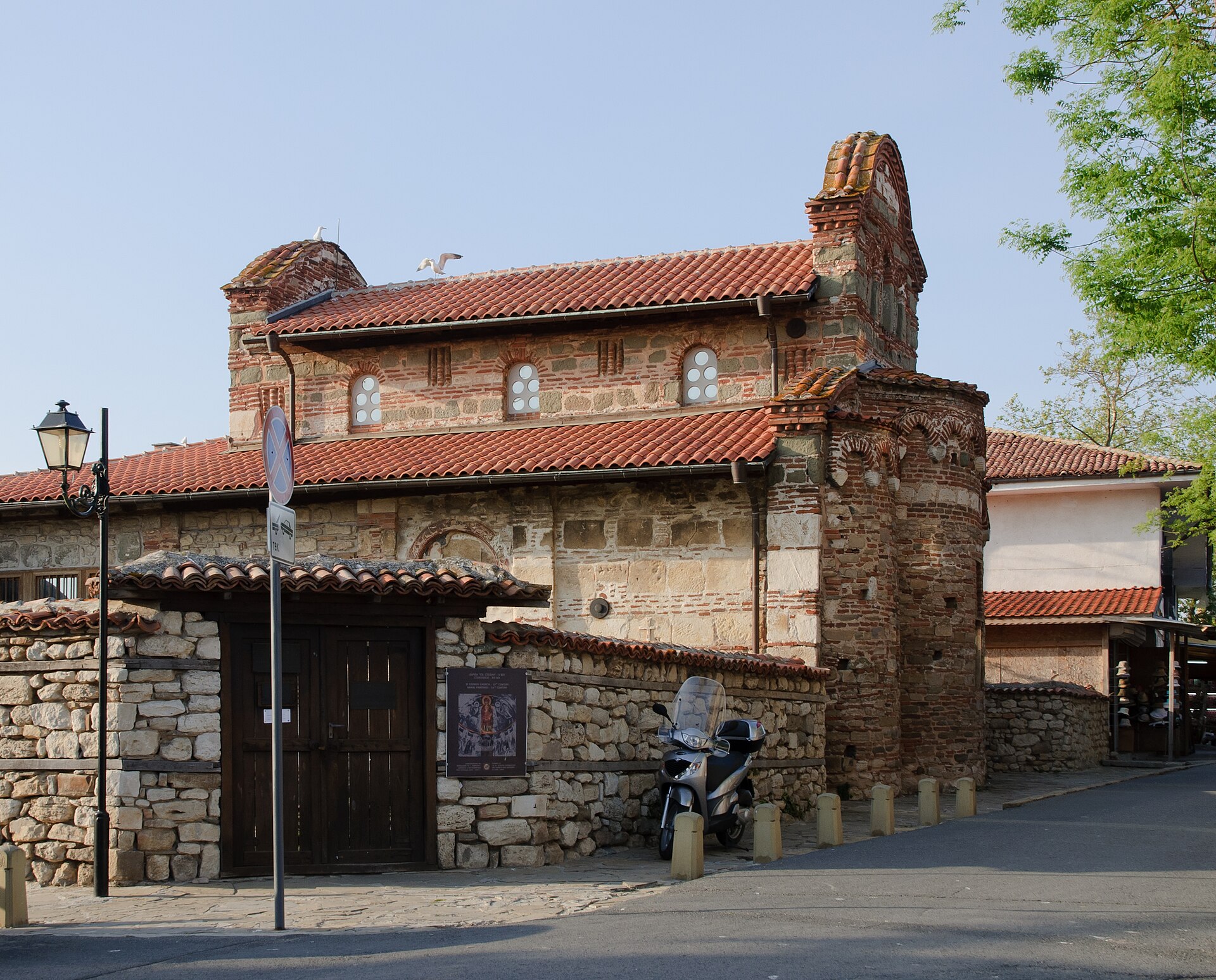
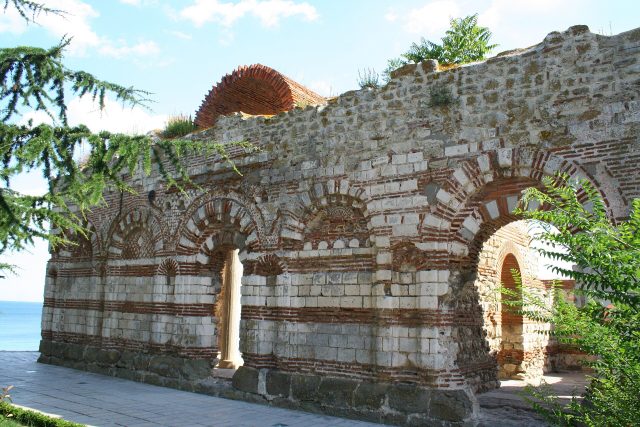
Nessebar is a town where history lingers in every stone, where narrow lanes wind between ancient walls and the past feels almost tangible. Among its many treasures, the Church of Saint Stephen stands out—not just for its age, but for the quiet dignity with which it has endured. Built in the 11th century, it has witnessed the rise and fall of empires, the shifting tides of faith, and the slow march of time. When Nessebar was a vital Byzantine hub of trade and religion, this church was already standing, a silent observer of centuries.
The church is small, its modest dimensions—barely sixteen meters long and ten wide—only adding to its charm. There’s something intimate about its scale, as if it was built not for grandeur, but for the people who once gathered within its walls. Constructed from stone and brick in the Byzantine style, its facades are adorned with decorative arches and niches that catch the light in shifting patterns. The eastern side, with its three apses where the altar once stood, is particularly striking. Inside, the walls were once covered in frescoes, though time has worn most of them away, leaving only fragments that still hint at their former glory.
What makes the Church of Saint Stephen truly remarkable are the surviving frescoes, painted between the 11th and 14th centuries. Though many have faded or crumbled, the ones that remain are breathtaking in their craftsmanship. The images of Christ Pantocrator, the Virgin Mary, and saints are rendered with a depth of emotion that feels almost modern. One of the most compelling scenes is the Last Judgment, where angels sound their trumpets and the damned are led into the fires below. These paintings offer a rare glimpse into medieval life, not just in their religious symbolism, but in the way they reflect the fears, hopes, and beliefs of the people who created them.
For centuries, this was a living church, where worshippers gathered for prayers and services. During the Ottoman era, it was converted into a mosque, but after Bulgaria regained its independence, it was restored to Christian use. Today, it no longer hosts regular services, yet it remains a place of quiet reverence. Stepping inside, you can almost hear the echoes of ancient hymns, the murmur of prayers rising toward the vaulted ceiling. The light filtering through narrow windows casts a soft glow on the worn stones, and the stillness makes it easy to imagine the church as it once was.
Visiting the Church of Saint Stephen is less about ticking off a tourist attraction and more about stepping into another era. There are no crowds here, no rush—just the chance to linger, to study the details, and to let the weight of history settle around you. The church sits slightly apart from Nessebar’s busier spots, its quiet presence enhanced by the absence of souvenir stalls or noisy cafes. Nearby, the old town’s cobbled streets lead to other ancient churches, while the sea glints just beyond, a reminder of the town’s long connection to the water.
Nessebar is often called an open-air museum, and the Church of Saint Stephen is one of its finest exhibits. It’s a place where the layers of history are visible in every brick, where Byzantine, Ottoman, and Bulgarian influences intertwine. The church has survived earthquakes, conquests, and the slow decay of time, yet it still stands, a testament to the resilience of the past. For those who take the time to visit, it offers more than just a glimpse into medieval art and architecture—it offers a moment of connection, a sense of continuity with the people who once knelt in prayer beneath its roof.
Outside, the small square in front of the church provides a peaceful vantage point. From here, you can see the sea stretching toward the horizon and the old town’s red-tiled roofs clustered together, their worn facades telling their own stories. Nessebar is a place where history isn’t confined to museums; it’s woven into the streets, the buildings, the very air. The Church of Saint Stephen embodies that sense of timelessness, a quiet corner where the past feels closer than ever. There’s no need for grand gestures here—just the simple, enduring presence of a building that has seen empires rise and fall, and yet remains.