Byblos is one of those places where history isn’t just preserved—it’s lived. The Church of Saint John-Mark stands on the edge of this ancient city, where the past lingers in every stone. It doesn’t demand attention with grand arches or towering spires. Instead, it waits quietly among narrow streets and weathered houses, as if it has always been there.
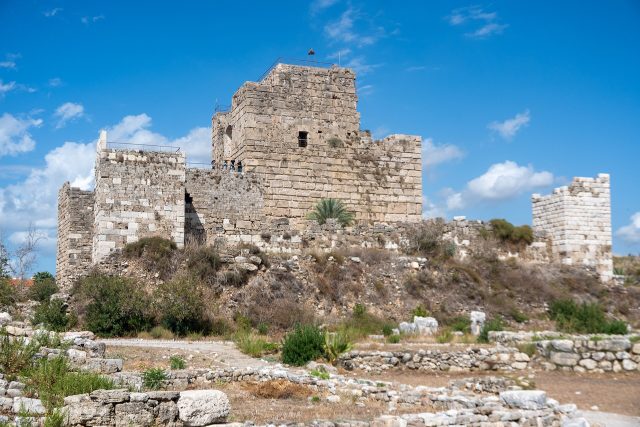
The church was built in the 12th century by Crusaders. Time has softened its edges, but the core remains: thick walls of local limestone, slit-like windows that once served as lookouts, and a heavy wooden door that groans when opened.
Inside, the church feels restrained. No gilded altars or elaborate frescoes—just bare walls and a few icons lit by muted stained glass. The altar is simple, except for an ancient mosaic of Saint John-Mark. Local tradition says the apostle passed through Byblos, though no one knows for sure. But in a place where history is often about belief, such details matter less than the sense of continuity the church provides.
It has been here for generations—where newborns are baptized, couples exchange vows, and the community gathers to mourn.
The architecture is Crusader: a single nave, a semicircular apse, a vaulted ceiling, and a small bell tower added later. Fragments of medieval masonry still show in the walls. In one corner, the faint outline of an old fresco peeks through plaster. This was never a grand cathedral, just a humble parish church for the local Christian community, which has endured in Lebanon despite centuries of upheaval. The Maronites took over after the Crusader states fell, preserving it through Ottoman rule and into the modern era.
Byblos is a city of layers. The Phoenicians built its harbors, the Romans left columns, the Byzantines mosaics, and the Arabs winding souks. The Church of Saint John-Mark is one of those layers. When the Kingdom of Jerusalem collapsed, the church didn’t disappear—it became part of the local fabric, adapted and cared for by those who remained. In the 19th century, it was restored, but its essential character stayed intact.
Today, the church is still in use. Services are held on major feast days, and during Easter, candlelight and hymns fill the space. On ordinary days, it’s quiet. Visitors might sit on a wooden pew and listen for the voices that have echoed here over centuries.
Outside, the old city hums—vendors sell spices, pottery, souvenirs. But step away from the main streets, and the noise fades. The quiet feels sacred.
The Church of Saint John-Mark isn’t special because of its size or splendor. It’s the way it holds time. The walls have stood through wars and empires. The icons have been touched by countless hands. The air carries the scent of incense and old stone.
For those who come to Byblos seeking more than ruins, this church offers something quieter—a connection to the people who have called this place home. It’s not for crowds. It’s for those who notice the weight of history.