St. John’s Church in Jinja is one of those quiet places that doesn’t demand attention but lingers in the mind long after you’ve left. Perched on a gentle hill just off the town’s streets, it feels like a remnant of another era—back when Jinja was a colonial outpost on the banks of the Nile. Built in the early 1900s, the church has witnessed the sweep of history: British rule giving way to independence, the rise of missionary schools, and the blending of Christianity with local traditions that continues today.
The architecture is unassuming. The red brick, once shipped from Europe, now looks as if it has always belonged here, weathered by time and climate. The tall bell tower with its narrow windows, the pointed arches over the entrance, and the simple wooden pews inside all echo the design of English parish churches, though adapted to the realities of East Africa. There are no grand decorations or gilded domes, just a sense of warmth and stillness.
Inside, the stained-glass windows tell their own story. They depict biblical scenes, but with details that feel distinctly local—palm trees instead of olive groves, African landscapes in the background. The artisans who created them wove their own culture into the glass, making these windows more than just religious art. They’re a record of the people who built and cared for this place. On the walls, small plaques bear the names of parishioners who donated money over the years, their contributions forming a kind of informal history of the town.
St. John’s has never been a tourist attraction or a site of pilgrimage. Its purpose has always been simpler: to serve the community that gathers here. On Sundays, families who have lived in Jinja for generations fill the pews. Services are held in English and Luganda, hymns sometimes accompanied by an old piano, and afterward, people linger in the courtyard, chatting under the shade of trees.
Have you ever sat in a place where time seems to slow? For some, this church is a social hub; for others, a rare moment of peace in a busy week.
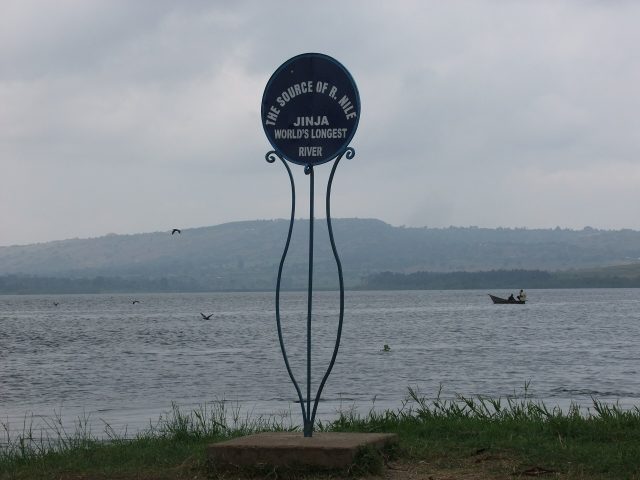
The church’s location is no accident. It stands near the spot where the Nile begins its long journey north from Lake Victoria, a place that was once strategically vital. During the colonial era, Jinja was a crossroads for trade, industry, and missionary work. St. John’s wasn’t just a spiritual center—it was part of the fabric of the town, watching as it grew from a small settlement into a city. Today, Jinja is a place of contrasts, where modern offices stand beside colonial-era buildings and the sounds of English mix with local languages on the streets.
Around the church, a small garden holds flowers and trees planted in the early 20th century. Nearby is a cemetery where the first European settlers and missionaries are buried. The graves are modest, their inscriptions worn by time, but each one marks a life that helped shape Jinja. Some are nearly illegible now, yet locals still remember who lies beneath them, occasionally leaving flowers. It’s a reminder that this town carries its past with it, not as something distant, but as a living part of the present.
On a quiet weekday, when the church is empty, the atmosphere feels almost timeless. The hush of the interior, the faint breeze through open windows, the way sunlight filters through the stained glass—it all creates a sense that time moves differently here. Maybe that’s why the people of Jinja hold this place in such affection. It doesn’t ask for reverence or fanfare; it simply exists, a quiet witness to the lives that have passed through its doors.
St. John’s isn’t the kind of church that makes it into guidebooks or documentaries. That’s part of its charm. It doesn’t try to impress or overwhelm; it just endures, as much a part of Jinja as the Nile itself. For visitors, it might be just another stop on the way to the river, but for those who call this town home, it’s a place to pause and reflect. Sometimes, all it takes is sitting on an old wooden pew to realize that the world doesn’t always have to rush by.