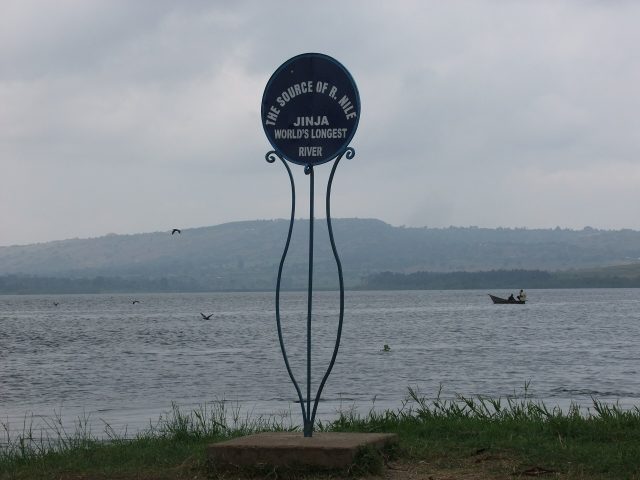
Jinja’s Owen Falls Memorial Park sits quietly on the edge of Lake Victoria, where the Nile begins its long journey north. This isn’t just a spot on a map—it’s where the raw power of one of the world’s great rivers meets the bold engineering of the mid-20th century. The park occupies a stretch of low hills and green spaces that once buzzed with the noise of construction, a project that reshaped the region and left a mark still visible today.
The park takes its name from the Owen Falls Dam, built in the 1950s when Uganda was still under British rule. The dam was part of a larger push to harness East Africa’s hydroelectric potential, and its completion created one of the continent’s largest artificial lakes. The reservoir stretches for hundreds of kilometers upstream, supplying electricity not just to Uganda but to neighboring countries as well. The dam itself is an imposing structure, nearly a kilometer long, its concrete and steel bulk contrasting with the calm waters of the Nile at its source. Here, the river is still young, its currents gentle before they gather strength downstream.
Near the dam, a few of the original buildings from the construction era remain. Built to house engineers and workers, they’re sturdy but unassuming, a reminder of the time when this place was a hive of activity. Some now serve as administrative offices or small museums, where black-and-white photographs and yellowed documents tell the story of the dam’s creation. The exhibits aren’t flashy, but they offer a glimpse into the challenges and ambitions of the project.
Beyond the dam, the park opens up into well-kept lawns, shaded paths, and viewpoints overlooking the river. On weekends, families spread out picnic blankets, children chase each other across the grass, and fishermen prepare their boats for the lake. The atmosphere is relaxed, almost sleepy, with the occasional call of a bird or the distant hum of the dam’s turbines breaking the quiet. For many visitors, the real draw is simply sitting by the water, watching the Nile as it begins its journey.
The dam’s history is tied to larger narratives about progress and its costs. Winston Churchill, visiting the region in the early 1900s, had predicted that the Nile would be key to East Africa’s development. The Owen Falls Dam proved him right, providing Uganda with a stable energy source that fueled economic growth. But the project also came with trade-offs. Thousands of people were displaced to make way for the reservoir, and the flooding of vast areas disrupted traditional ways of life. These tensions remain part of the park’s story, a reminder that even the most ambitious projects leave complicated legacies.
For those curious about how the dam works, there’s a chance—though not a guarantee—to tour the hydroelectric station. These visits aren’t regular, and they’re more technical than tourist-friendly, but they offer a rare look at the machinery hidden behind the concrete walls. It’s a glimpse into the inner workings of a system that powers cities and towns across the region, a quiet testament to human ingenuity.
The park’s surroundings are worth exploring too. Jinja, just a short distance away, was once a bustling industrial hub but now moves at a slower pace. The town’s waterfront is a good place to wander, with small markets selling fresh fish from Lake Victoria and cafes serving simple meals. If you’re lucky, you might spot hippos in the distance, their dark shapes occasionally breaking the surface near the shore.
Owen Falls Memorial Park isn’t a place of grand attractions or luxury. Instead, it offers something quieter: a chance to stand at the source of the Nile, to see the marks left by human hands, and to spend a few hours in the company of a river that has shaped history. The water here is still, the currents unhurried, but the sense of possibility is unmistakable. For many travelers, it’s one of those rare spots where time seems to slow down, and the weight of the place—its past, its power, its promise—settles in naturally.