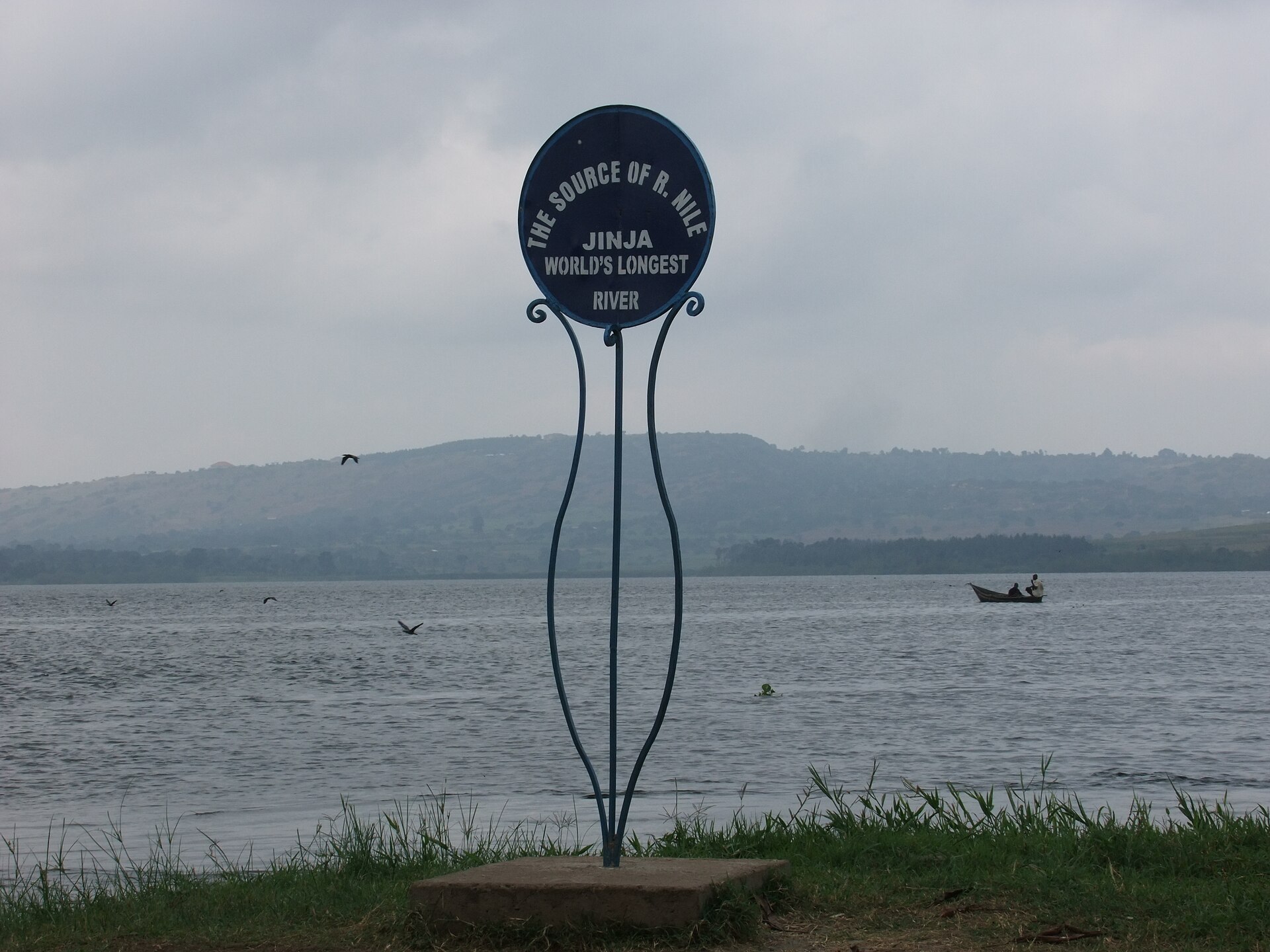
Jinja is one of those places that rarely makes it onto the average traveler’s radar, tucked away in southern Uganda where the landscape rolls gently into low hills and dense greenery. Yet this unassuming town holds a quiet claim to fame: it’s where the Nile begins its long journey north, carving through half the continent before emptying into the Mediterranean. More precisely, it’s the starting point of the White Nile, the river’s longest tributary, which spills out of Lake Victoria in a deceptively modest trickle. The spot where the water first breaks free from the lake is known simply as the Source of the Nile, and though it lacks the drama of other famous river origins, it carries a weight of its own—a place where geography and myth seem to blur.
The source itself isn’t a roaring cascade or a thunderous waterfall. Instead, it’s a serene, almost understated moment where the lake’s calm surface gives way to a narrow channel, winding past a small reed-fringed island. On a still day, the water appears almost motionless, mirroring the sky above, while a light breeze stirs the papyrus along the banks. There’s no grand spectacle here, just a sense of quiet beginnings. Locals sometimes call it the "eye of the Nile," a name that hints at its deeper significance—not as a physical landmark, but as a point of origin, both for the river and for the stories that have grown around it.
For Europeans, the discovery of the Nile’s source was a long and contentious chapter in the history of exploration. For centuries, the river’s origins were shrouded in mystery, with ancient writers speculating about distant "Mountains of the Moon" somewhere deep in Africa. It wasn’t until the mid-19th century that British explorer John Hanning Speke reached Lake Victoria and proposed it as the source. His theory sparked fierce debate among geographers, but later expeditions confirmed his findings. Today, a modest monument stands near the shore—a simple stone marker paying tribute to an era when much of Africa was still uncharted territory for the outside world.
To Ugandans, the Nile is more than just a river. It’s a lifeline, providing water, fish, and electricity through hydroelectric dams, while also shaping the country’s identity. In Jinja, the river has become the backbone of the local economy, powering factories, irrigating farmland, and drawing tourists to its banks. Yet for all its practical importance, the Nile remains untamed. During the rainy season, it swells beyond its banks, flooding low-lying areas, while in droughts, its waters recede, exposing sandy shallows. This duality—both provider and force of nature—is part of what makes the river so central to life here.
Jinja doesn’t have the architectural grandeur of Kampala or the ancient ruins found elsewhere in East Africa. Its charm lies in its unpretentiousness, a blend of colonial-era buildings and everyday African life. The town center is a mix of old British administrative structures, now repurposed as shops or offices, and bustling markets where women in vibrant kitenge fabrics sell fresh produce. Motorbikes weave through the streets, and the pace of life feels slower, especially along the Nile’s waterfront, where locals gather in the evenings to unwind. There’s no rush here, no sense of urgency—just the steady rhythm of a town that has grown up alongside the river.
Most visitors arrive expecting something more dramatic, only to find that the source is a place of quiet reflection rather than spectacle. There are no crowds like those at Niagara or Victoria Falls, just a chance to stand at the edge of something vast. A wooden walkway leads to the exact spot where the Nile begins, and from there, you can take a boat out onto the lake or simply watch the water flow past. The area is rich in birdlife—herons, cormorants, and kingfishers are common—and if you’re lucky, you might spot a crocodile lurking near the reeds. As the sun sets, the water takes on a golden hue, and the whole scene feels suspended in time, as if the river itself is holding its breath before the long journey ahead.
A short distance downstream, the Bujagali Falls offer a different perspective on the Nile’s power. Though not particularly tall, the falls are striking, with the river surging over rocks and through narrow channels before continuing north. The sound of rushing water carries across the surrounding hills, and the area has become a popular spot for photographs or a quiet moment by the shore. In recent years, Bujagali has also gained a reputation among adventure seekers, with white-water rafting drawing thrill-seekers to its rapids. For those who prefer a slower pace, there are cafes along the banks where you can sip coffee and watch the river’s endless motion.
Beyond the Nile, Jinja has its own layers of history. During the colonial era, it was a key trading hub, funneling goods from the African interior toward the coast. Indian merchants, African artisans, and British officials all left their mark on the town, shaping its culture and architecture. Today, Jinja retains a sense of its past while moving at its own unhurried pace. There are no luxury resorts or flashy attractions here, just the quiet hum of daily life. It’s a place where you can wander through markets, chat with fishermen along the river, or simply sit on a bench and watch the world go by.
For many travelers, the Source of the Nile becomes more than just another stop on an itinerary. It’s a place that invites contemplation—a reminder of how fragile and yet how enduring nature can be. The river here is young, full of potential, its waters gathering strength for the thousands of miles ahead. Standing at its edge, it’s hard not to feel a connection to something larger than yourself, to the idea of beginnings and the slow, inevitable passage of time. The Nile has shaped civilizations, inspired myths, and sustained life for millennia, and in Jinja, you can still sense that legacy in the quiet lapping of water against the shore.