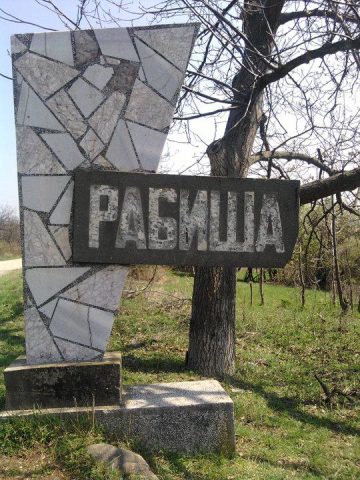
Nestled on the edge of the quiet village of Rabisha, the Church of St. Demetrius feels like a place where time has gently paused. The surrounding hills and open fields stretch out in every direction, their slow rhythms barely touched by the pace of the modern world. The church itself is small, its modest size belying its deep roots in the region’s history. There are no grand domes or ornate facades here—just the quiet authenticity of weathered stone and the stories it carries.
The origins of the church reach back to the Middle Ages, when this part of Bulgaria was part of the Second Bulgarian Empire. While the exact date of its construction remains uncertain, historians place it somewhere between the 13th and 14th centuries, a time when Christianity had firmly taken hold across the Balkans. Churches then were more than places of worship; they were community hubs, often built with thick walls and narrow windows to serve as refuges during raids. The Church of St. Demetrius likely played this dual role, offering both spiritual solace and physical protection to the villagers.
Its architecture is typical of rural Bulgarian churches from that era—a single-nave basilica with a semicircular apse, built from roughly hewn stone and brick. The exterior is unassuming, almost austere, but step inside, and the faded frescoes reveal a different layer of its past. Painted in the Byzantine style, they depict saints, biblical scenes, and intricate patterns, though time and dampness have worn away much of their original vibrancy. What remains, however, is enough to imagine the church in its prime, when these walls were alive with color and devotion.
St. Demetrius of Thessaloniki, the saint to whom the church is dedicated, holds a special place in Orthodox Christianity, particularly in the Balkans. Revered as a protector of warriors and cities, his name graces countless churches across Bulgaria, but few retain the sense of untouched history found here. Unlike the grand cathedrals that now draw crowds of tourists, the Church of St. Demetrius remains a place of quiet reverence. Locals still come to pray, light candles, or simply sit in the cool shade, much as they have for generations.
Just beyond the church lies an old cemetery, its gravestones standing as silent witnesses to the passage of time. Some date back to the 19th century, others even earlier, their inscriptions in Old Bulgarian barely legible now. There are no grand monuments here, just simple markers tended by families who remember. The cemetery doesn’t feel like a place of sorrow; instead, it blends seamlessly into the landscape, as much a part of the village as the fields or the hills.
Rabisha is a small place, and for its residents, the Church of St. Demetrius is more than a historical landmark—it’s a living connection to their past. During the Soviet era, when Bulgaria underwent rapid industrialization and urbanization, many rural churches fell into disrepair or were abandoned. But Rabisha, tucked away from major roads and development, remained largely unchanged. The church survived because the village did, preserving its role as a spiritual anchor for the community.
Today, the church welcomes visitors, though few make the journey. Those who do are usually travelers with an interest in Bulgaria’s lesser-known history or those seeking quiet corners far from tourist trails. Inside, the air is cool even in summer, the scent of old wood and candle wax lingering. The icons, the wooden iconostasis, and the remnants of frescoes all speak of a time when life moved to a slower rhythm. In winter, the church feels even more intimate, its warmth and stillness offering a respite from the cold outside.
The Church of St. Demetrius isn’t the kind of place that demands attention. Its beauty is understated, almost easy to overlook, and that’s precisely what makes it special. It doesn’t try to impress; it simply endures, as it has for centuries, through wars, shifting borders, and the ebb and flow of human lives. For some, it may be just another stop on a map. For others, it’s a place to pause and reflect, where history isn’t just something read about in books but something felt in the quiet weight of old stones and the soft glow of candlelight.