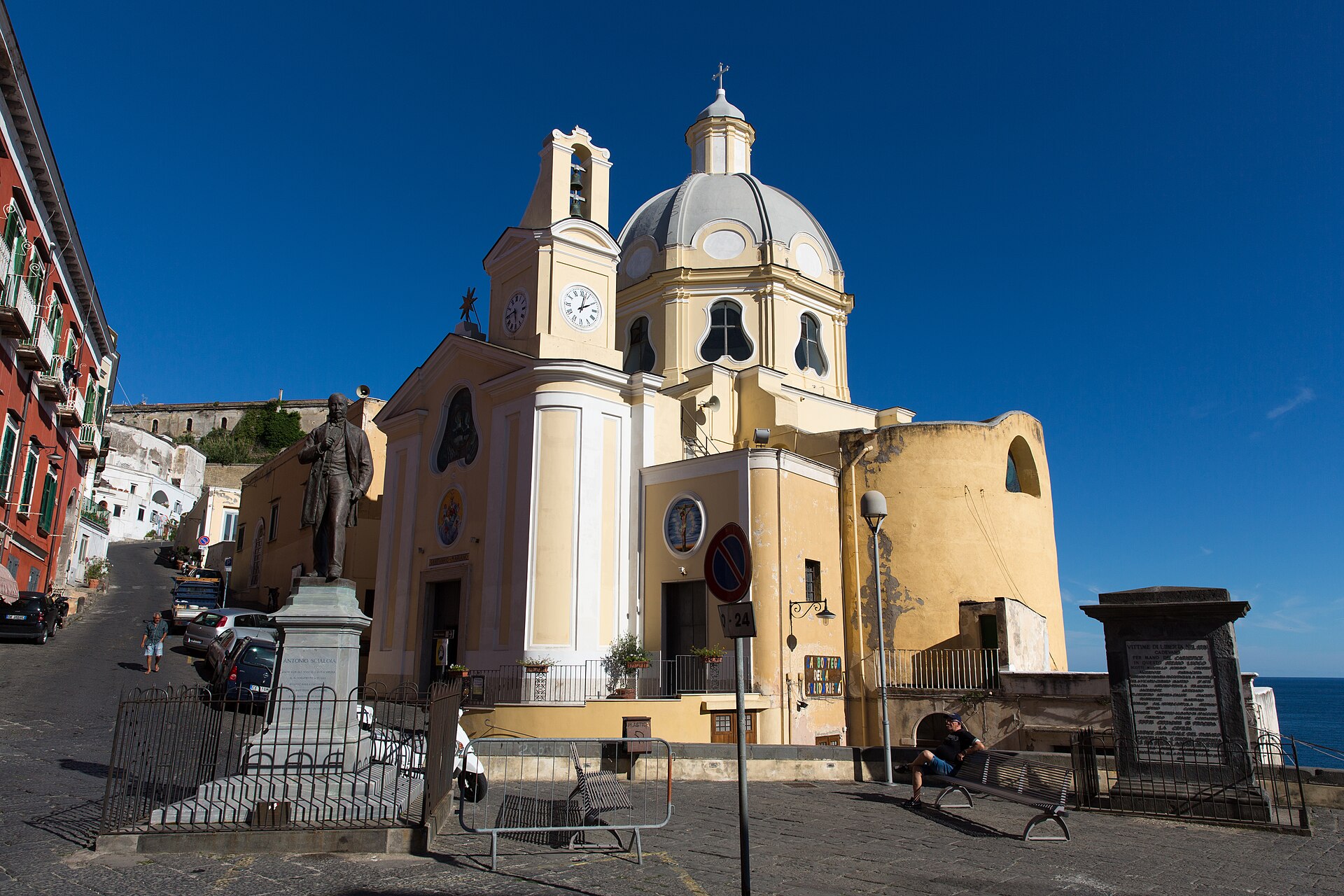
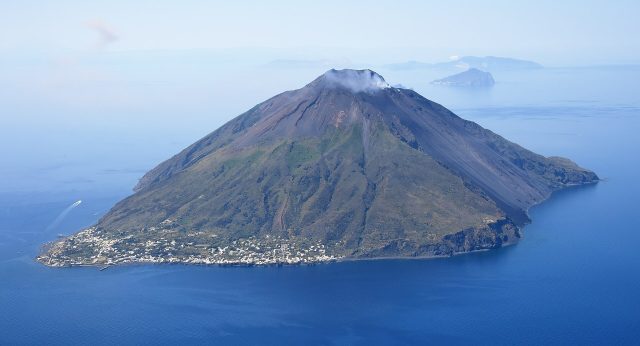
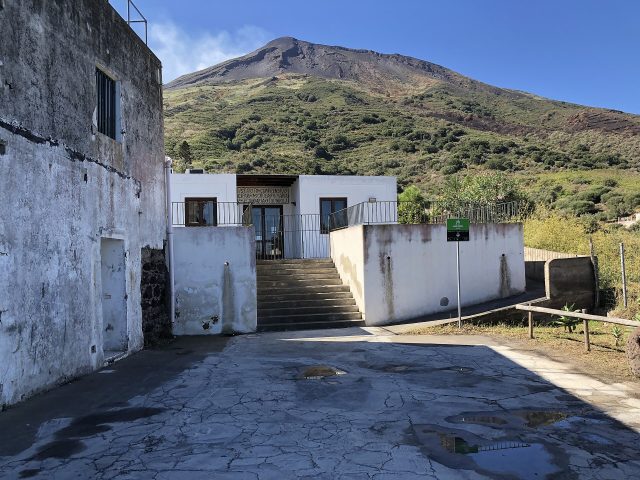
Santa Maria delle Grazie is one of those places that feels inseparable from Stromboli itself. Perched in the heart of the village of San Vincenzo, it stands quietly over the sea and the volcano, a reminder of how fragile yet enduring life can be in these parts. Its whitewashed walls, bleached by sun and salt, blend with the surrounding houses, yet the church has a way of drawing the eye—not through grandeur, but through something far more subtle. There are no ornate facades or towering domes like those on the Italian mainland. Instead, there’s an unmistakable sense of authenticity, as if time moves a little slower here, and the people who enter do so not out of habit, but because they feel compelled to.
The church’s history is woven into the story of Stromboli. The island has always been a harsh place—its volcano a constant, unpredictable presence, its soil poor, its people dependent on the sea. When settlers first arrived in the Middle Ages, they built churches not for splendor, but for solace and protection. Santa Maria delle Grazie dates back to the 17th century, a time when the island had begun to feel more like home to fishermen and farmers. It was constructed on the site of an older chapel dedicated to the Virgin Mary, who, according to local lore, shielded the islanders from eruptions and pirate raids. In those days, Stromboli was often targeted by corsairs, and the church served as both a place of worship and a refuge, where people could seek shelter from sudden attacks.
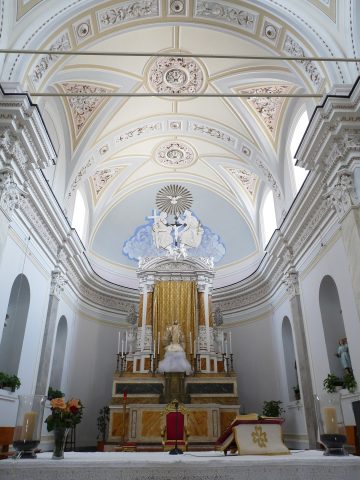
The architecture is simple and practical, much like everything else on the island. The facade is modest, with a single portal and a small rose window above it, all in a restrained Baroque style. The bell tower, though not tall, is visible from the sea—a beacon for fishermen returning home. Inside, the church is small but bright and welcoming. The walls are adorned with frescoes by local artists, depicting scenes from the lives of Christ and the Virgin Mary. The altar features a wooden statue of the Madonna and Child, believed to be miraculous. To the right of the entrance, a small chapel holds a statue of Saint Vincenzo Ferreri, the island’s patron saint. He is especially revered here, seen as the protector of fishermen and all who depend on the sea.
Santa Maria delle Grazie is more than just an architectural landmark; it remains a living part of the island’s rhythm. On Sundays, services draw both locals and the occasional tourist who wanders in. The atmosphere inside invites quiet reflection—even if you’re not religious, it’s easy to lose track of time, sitting in the dim light while the sound of the sea drifts through the open doors. In summer, when more visitors arrive, the church becomes a meeting point for different worlds: a fisherman in a faded T-shirt might sit beside a tourist in shorts, while an elderly woman in a black headscarf murmurs prayers in the background.
The church’s charm is most vivid during local festivals. The most celebrated is the feast of Saint Vincenzo in late July, when the entire island gathers around the church. On the eve of the festival, the saint’s statue is carried through the streets in a procession of music, fireworks, and singing. Fishermen decorate their boats with flowers and garlands, and in the evening, the square in front of the church fills with tables laden with fresh fish, capers, and local wine. Even those who aren’t religious join in—the festival is less about ritual and more about coming together, remembering the past, and celebrating the present.
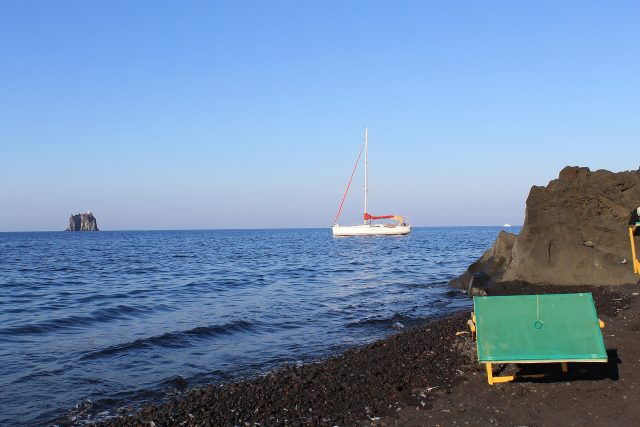
Beyond its spiritual role, Santa Maria delle Grazie offers a unique perspective on the island. A narrow path behind the church leads to a small viewpoint overlooking the sea, the volcano, and the terraced vineyards sloping down to the shore. On clear days, the outlines of the other Aeolian Islands shimmer in the distance. At sunset, the sky above Stromboli transforms into a canvas of pinks, purples, and golds. Locals say this is one of the best spots to watch the volcano’s eruptions—when the mountain rumbles to life, bursts of fire against the dark sky make it feel as if the earth itself is breathing.
The church is deeply embedded in the island’s daily life. It’s where children are baptized, couples marry, and the departed are remembered. For many of Stromboli’s residents, it’s not just a building but a part of their own story. The faded photographs in the priest’s house, the yellowed books in the sacristy, the worn steps at the entrance—all hold memories of those who came before. Even if you’re only visiting for a few days, it’s worth stepping inside for a moment. You might just feel that elusive connection between people and place that makes travel truly meaningful.