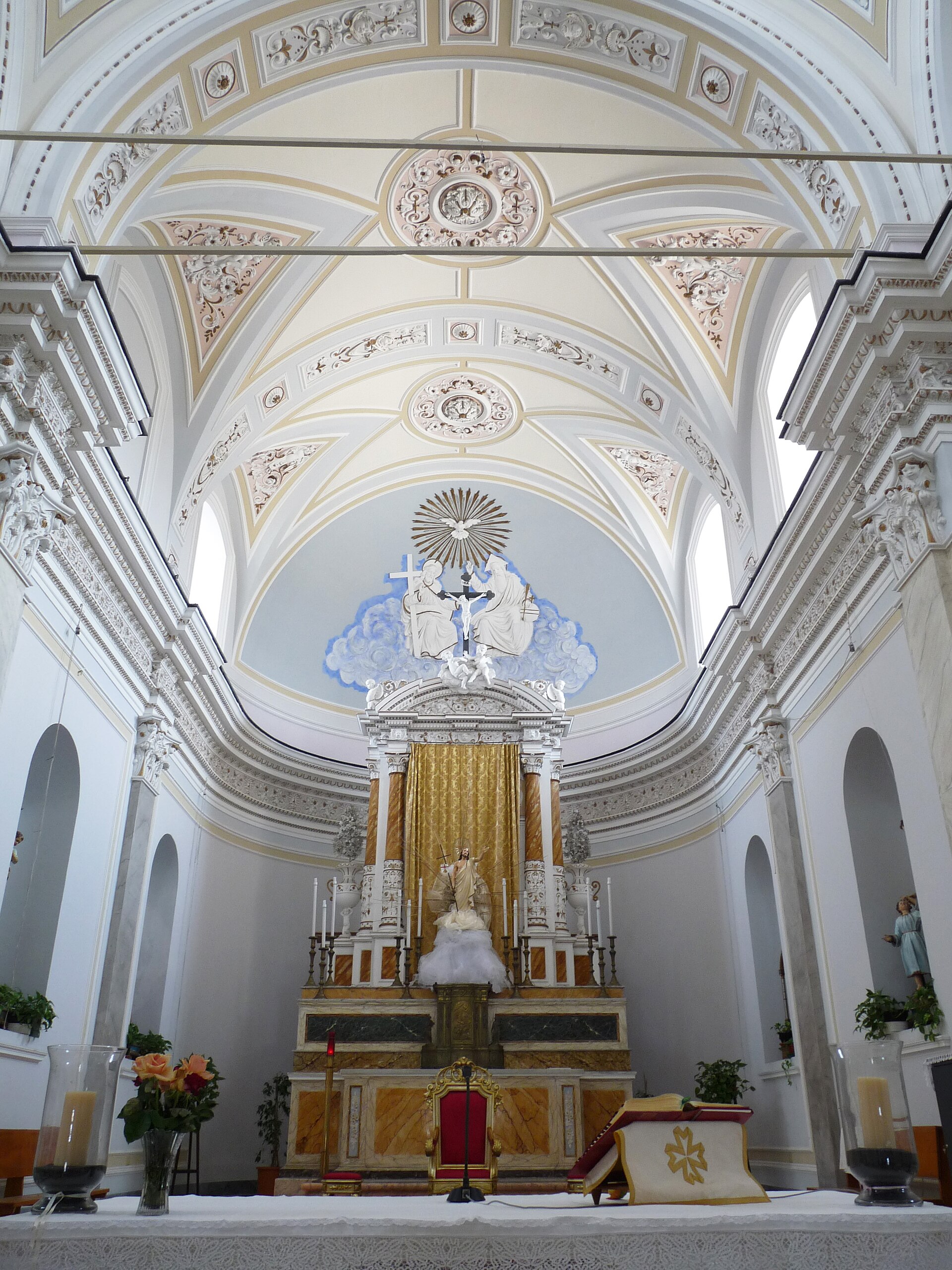
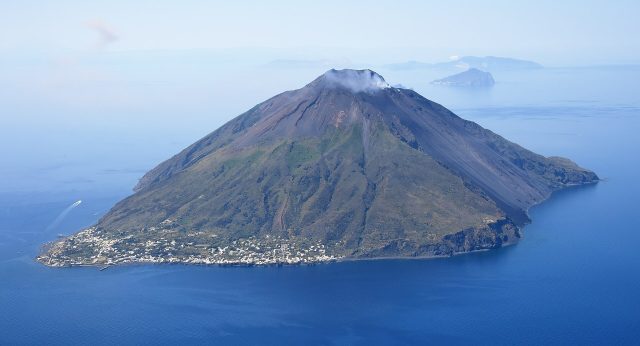
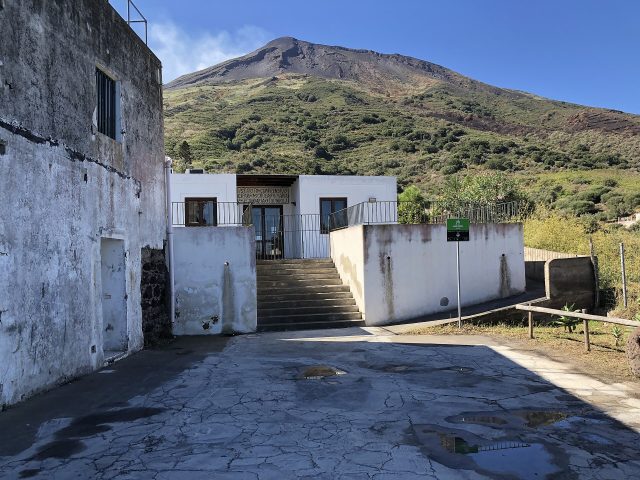
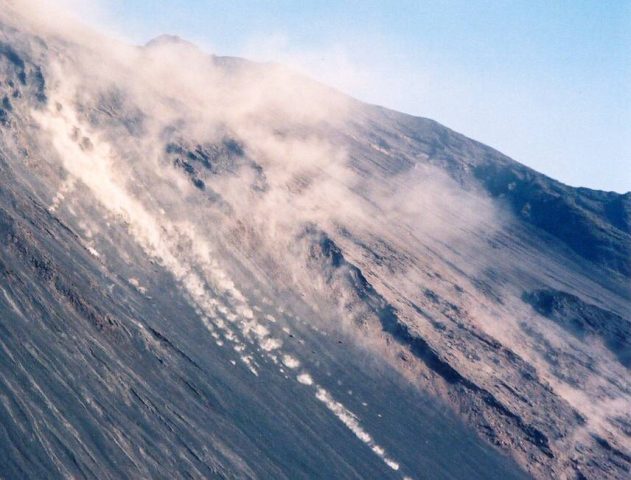
Perched on the slopes of Stromboli, the Church of San Vincenzo is a quiet conversation between human hands and the raw power of the earth. This small 18th-century chapel doesn’t compete with the volcano’s drama—it stands alongside it, a place where the island’s rhythm of fire and silence is tangible. Stromboli is a place of constant motion, where the mountain growls and spits lava every few minutes. Inside these whitewashed walls, time slows. The church has witnessed generations of fishermen and farmers who learned to live with the volcano’s moods. It remains a steady presence in their lives, a place to gather when the world feels too loud.
The architecture is unassuming. There are no grand arches or ornate carvings, just a modest facade with a single bell, narrow windows, and walls weathered by salt and wind. Inside, the space is intimate. Wooden pews, worn smooth by time, line the nave. Faded frescoes depict saints in simple scenes. Light filters through small stained-glass windows, casting patterns on the stone floor. The air carries the scent of old wood and candle wax, mingling with the tang of the sea.
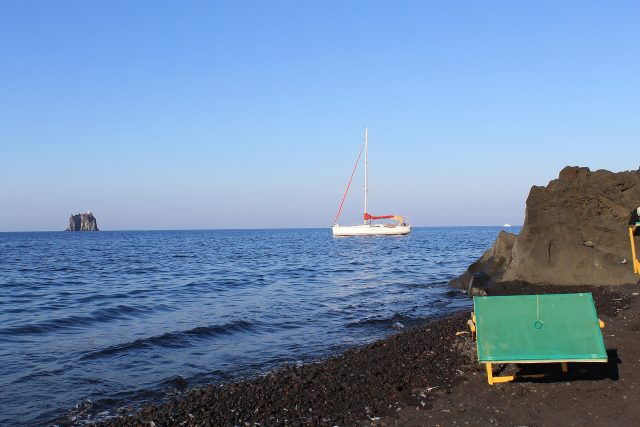
Stromboli is unlike other Mediterranean islands. No crowded beaches or luxury resorts exist here—only black sand, jagged cliffs, and the volcano’s constant rumble. The church doesn’t tame this wildness; it belongs to it. From the outside, its white walls blend into the volcanic rock. The building understands the real spectacle isn’t inside but all around—where the earth cracks open and the sea crashes against the shore.
The history of San Vincenzo is part of the island’s story. Stromboli has never been easy to live on. For centuries, its people have been fishermen, farmers, and sailors, eking out a living on this rocky outpost where the soil is fertile but the land is restless. The church was built in the 1700s, when the island was already home to those who coexisted with the volcano’s temper. It wasn’t just a place of worship—it was a symbol of resilience. The walls have seen storms, eruptions, and quiet years, standing firm as the island’s heartbeat.
The church remains open to anyone who wants to step inside. The door is usually unlocked. Visitors wander in, sit, or stand in the quiet. Locals treat it with reverence, but without ceremony. For them, it’s part of daily life—a place to stop by after work or before heading up the mountain.
One of the best views of Stromboli is just above the church. A short climb up the path reveals the island’s raw beauty—the black slopes of the volcano tumbling to the sea, the Aeolian Islands on the horizon, and, on clear days, Sicily’s distant outline. Standing there, you realize how small you are against the landscape. Yet people have made their lives here, generation after generation. The church, with its modest silhouette, feels like part of this scene, a human touch in a world of fire and water.
San Vincenzo is tied to the island’s traditions. Every June, the feast day of Saint Vincenzo Ferrer, the island’s patron, brings the community together. Locals gather for prayers and processions. In the evening, bonfires light the slopes. It’s one of the few times Stromboli feels alive with people, though the atmosphere stays subdued. The church becomes the heart of this celebration because it’s theirs.
What makes San Vincenzo special isn’t its size or splendor. It’s honest—no excess, no pretension, just a lived-in space. It doesn’t dazzle; it offers a place to pause. In a fast-moving world, the church on the volcano’s slope reminds you to slow down. To look around. To remember that some things—like the sea, the fire, and the quiet moments—are worth holding onto.
Maybe that’s why people keep coming back to Stromboli. Why they stay despite the risks. Because here, in the mountain’s shadow, life feels both fragile and enduring.