Santa María de Nasca stands quietly on the town’s main square, a silent witness to centuries of history. Built during the colonial era, it doesn’t impress with grand dimensions or lavish decoration, and that’s precisely what makes it special. The modest clay-and-stone facade, typical of southern Peru’s architecture, blends seamlessly into the rugged landscape where mountains meet desert, and the wind carries the dust of ancient roads.
Inside, the church is dimly lit, with sunlight filtering through small windows. The wooden beams overhead, darkened by time, support the roof, while the walls are adorned with simple frescoes that, despite their unrefined execution, carry the spirit of an age when art served more as instruction than adornment. The gilded altar stands as the only splash of brightness in this restrained space, a reminder that faith here has always mattered more than opulence.
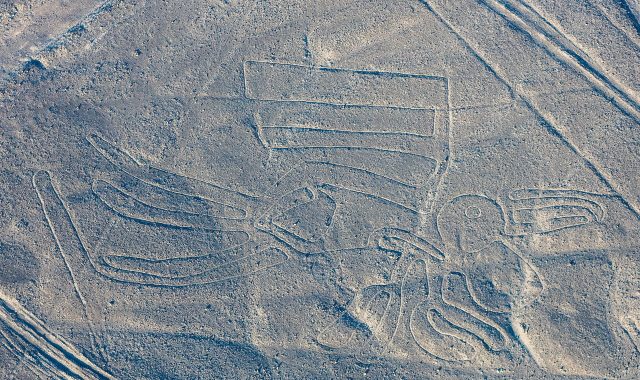
The history of Santa María de Nasca is intertwined with that of the town itself. Nasca, best known for its enigmatic geoglyphs, was already an important center long before the Spanish arrived. When the conquistadors came in the 16th century, they brought not just new order but Christianity. The church became one of the first stone structures in the region, a symbol of both new authority and new beliefs. Yet the local traditions didn’t vanish—they merged with Catholic rituals, creating a cultural blend that lingers to this day.
The square in front of the church was once the heart of colonial life. Merchants, pilgrims, and townspeople gathered here for religious festivals or to exchange news. Over time, the town expanded, but the square remained Nasca’s center. Today, it still hosts markets, and in the evenings, locals gather to play dominoes or chat. The pace is unhurried, as if time moves to its own rhythm.
The church’s architecture is typical of colonial Peru, with thick adobe walls that shield against the desert heat and frequent earthquakes. The bell tower, added later, rises above the town, its chimes echoing across the valley. Inside, wooden pews carved by local artisans and old icons, though modest, are still revered by the community.
Santa María de Nasca isn’t just an architectural landmark—it’s a living place where past and present intersect. Services, baptisms, and weddings still take place here, and each time the doors open, the church welcomes not just worshippers but the spirit of history. That’s why it doesn’t feel like an open-air museum but a part of daily life.
For travelers visiting Nasca, the church is often the first stop. It offers a cool respite from the heat, a chance to hear stories from locals, or simply to sit on a bench and watch life unfold on the square. Unlike Cusco or Lima, there are no crowds here, making the visit feel more authentic—an encounter with the real Nasca, not its tourist version.
Santa María de Nasca doesn’t claim to be one of Peru’s great wonders, but its quiet charm is undeniable. It reminds us that history isn’t just written by grand events and famous names but by the everyday lives of ordinary people. That’s why, when leaving Nasca, many take with them not just photos of the mysterious lines but memories of this unassuming place where time seems to stand still.