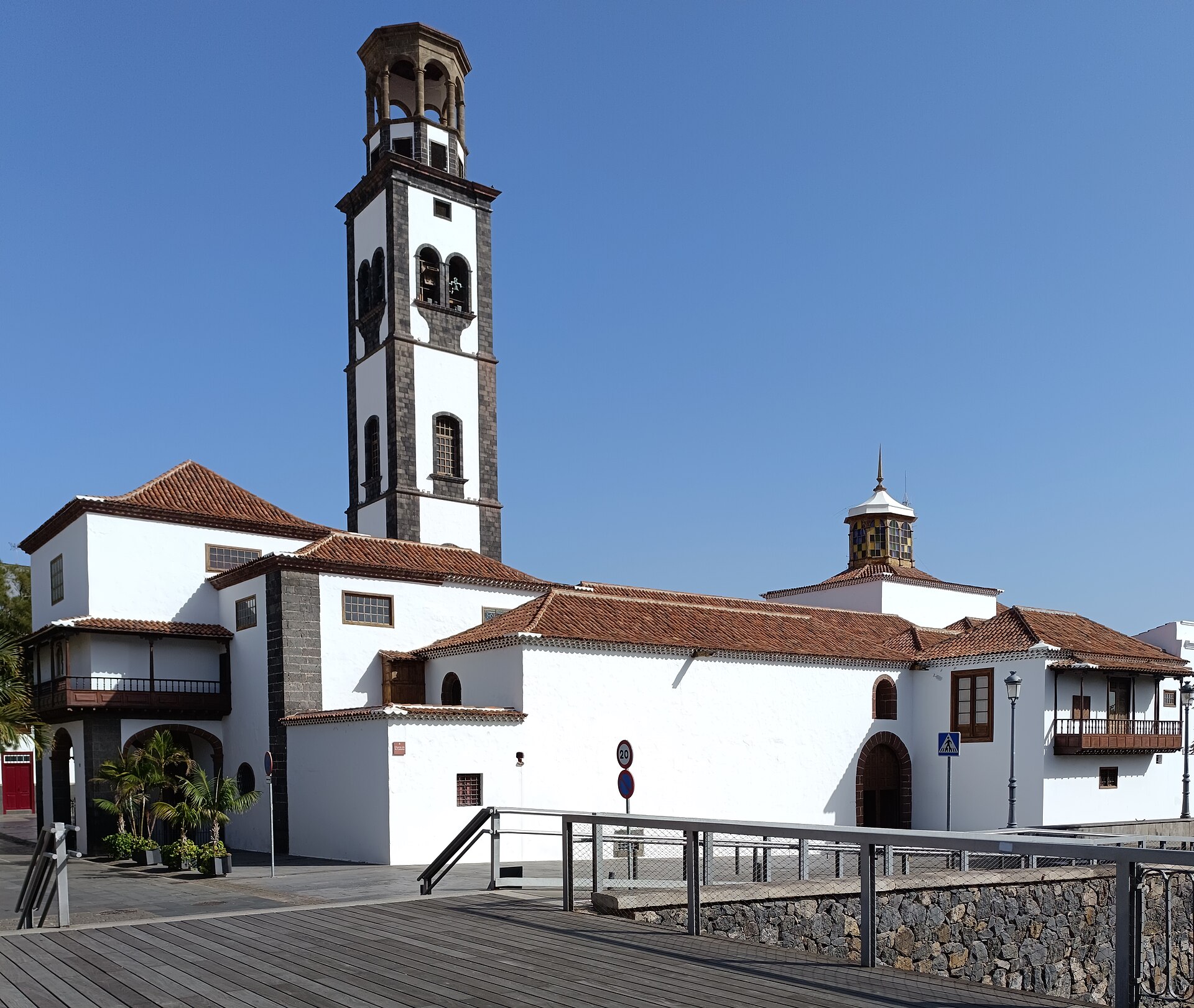
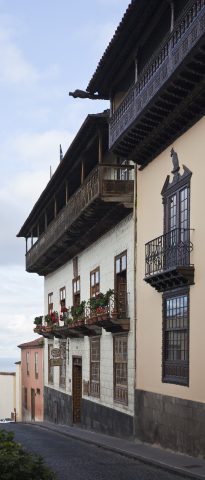
La Orotava’s Church of the Immaculate Conception sits quietly at the heart of the town, as if holding its breath through the centuries. The square around it is framed by old houses with intricately carved wooden balconies, their dark volcanic stone facades softened by time. The cobblestone streets, worn smooth by generations of footsteps, lead here naturally, as though the town itself has always gathered in this spot. Built in the 16th century, the church is more than a relic of the past—it’s a witness to Tenerife’s transformation under Spanish rule, a place where the island’s early identity took shape.
The building is a striking example of Canarian religious architecture, blending Gothic, Renaissance, and Baroque influences into something distinctly its own. The facade, made of dark local stone, carries a quiet dignity, its twin towers rising above the square like silent sentinels. The clock faces have marked time for centuries, their hands moving almost imperceptibly, as if reluctant to rush the days. Inside, the church feels unexpectedly bright, light filtering through stained glass in soft, shifting hues. There’s none of the heavy solemnity often found in older Catholic churches; instead, the space feels warm, almost intimate, as if the walls remember not just prayers but the ordinary moments of those who have passed through.
The high altar is the centerpiece, a masterpiece of Baroque craftsmanship. Gilded carvings twist and curl around figures of saints, their expressions serene yet full of life. At the heart of it all stands the statue of the Virgin Mary, the church’s patron, her presence a quiet constant in the lives of La Orotava’s people for centuries. Around the altar, paintings and sculptures tell stories without words—some brought from mainland Spain, others crafted by local hands, each piece carrying its own history. The details are meticulous, from the delicate folds of the saints’ robes to the way light catches the gold leaf, making it shimmer as if alive.
This church has always been more than a place of worship. In the 16th and 17th centuries, La Orotava was one of Tenerife’s most important towns, home to wealthy families, merchants, and officials. The church was a symbol of their influence, a place where decisions were made, alliances forged, and the town’s elite laid to rest. Even today, when La Orotava no longer holds the same economic power, the church remains a touchstone for the community. People come here not just to pray but to connect with something deeper—the sense of continuity that ties the present to the past.
Over the centuries, the church has been altered and expanded, each change reflecting the tastes and needs of its time. In the 18th century, a chapel dedicated to Saint Joseph was added, its design complementing the original structure without overshadowing it. Later, in the 19th century, new stained glass windows were installed, their Gothic revival style adding another layer to the church’s evolving character. These modifications didn’t erase the past; they enriched it, creating a building that feels both timeless and ever-changing. Walking through its doors, you can sense the different eras in the details—the worn stone steps, the patina of age on the wood, the way the light falls differently in each corner.
La Orotava is known for its religious festivals, and the Church of the Immaculate Conception is at the heart of them. The most spectacular is the Feast of Corpus Christi, when the streets are transformed into vibrant carpets of flowers and petals, and processions wind through the town in a riot of color. On these days, the church is the focal point, its facade serving as a backdrop for the celebrations. But even on ordinary days, there’s a sense of quiet reverence here. The air is still, broken only by the occasional murmur of a visitor or the faint crackle of a candle being lit. It’s a place where time seems to slow, where the weight of history feels both distant and immediate.
For those who appreciate architecture and history, the church offers endless details to discover. The wooden pews, carved with care, bear the marks of countless hands. The confessionals, tucked into corners, hold their own stories. The ceiling frescoes depict scenes from the lives of saints, their colors still vivid despite the years. Every element, from the grand to the seemingly insignificant, has been thoughtfully placed. The way light moves through the space is particularly striking—morning sun spills gently over the altar, while in the evening, shadows deepen, lending the church an air of quiet mystery.
Yet for all its historical significance, the church remains a living part of La Orotava. Services are still held here, baptisms and weddings celebrated, and each person who enters becomes part of its ongoing story. The town itself is a place where past and present intertwine seamlessly, and the Church of the Immaculate Conception is one of the few places where that connection is palpable. It’s not just a monument to history; it’s a place where history is still being written, one quiet moment at a time.