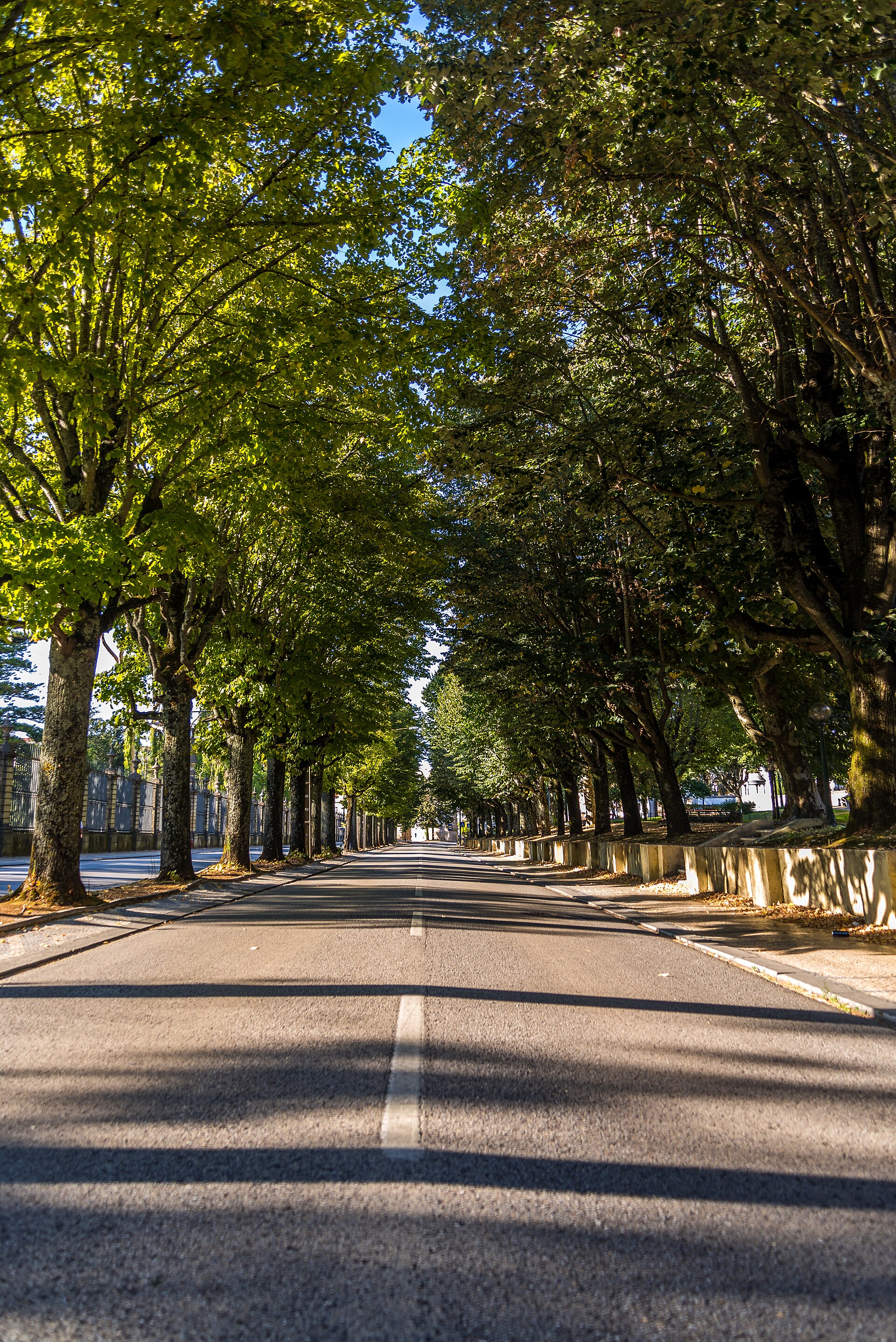
Coimbra’s Botanical Garden is one of those rare places where the city’s relentless pace seems to pause, as if the outside world has been left behind beyond its high walls. Perched on a hillside, the garden descends in terraces toward the Mondego River, a quiet green refuge tucked within the heart of this historic university town. Unlike the crowded tourist spots that draw visitors with their photogenic charm, the garden offers something simpler: a bench in the shade, the play of sunlight through leaves, and the kind of stillness that makes time feel less urgent.
Founded in the mid-18th century at the urging of the Marquis of Pombal, the garden was part of a broader effort to position Coimbra as a center of scientific inquiry. Portugal was expanding its colonial reach, and botany played a crucial role in understanding the exotic plants arriving from distant lands. The first plantings were overseen by Domenico Vandelli, an Italian botanist, and from the beginning, the garden served a dual purpose. It was both a living laboratory for research and a retreat where students and professors could step away from the pressures of academic life.
The garden’s design reflects the Enlightenment’s fascination with order and reason. The upper terraces are a study in symmetry, with straight paths intersecting at right angles, neatly trimmed lawns, and fountains that echo the era’s belief in humanity’s ability to shape nature. But as you descend toward the river, the landscape softens. The rigid geometry gives way to winding paths, clusters of bamboo, and palm trees that grow with a more natural ease. It’s as if the garden itself acknowledges that even the most carefully planned spaces need room to breathe.
One of the garden’s most striking features is its 19th-century greenhouse, a relic of the Industrial Age when botanical gardens began to showcase not just plants but also the technological advancements of the time. Its glass walls and iron framework stand in contrast to the surrounding greenery, yet inside, the air is thick with the scent of tropical plants brought from Brazil, Angola, and Mozambique. Some of these specimens have been here for generations, surviving wars, political upheavals, and the slow march of time. They are living links to the garden’s past, silent witnesses to the students and scientists who once studied beneath their leaves.
The garden’s history is deeply intertwined with that of the University of Coimbra, one of Europe’s oldest academic institutions. For centuries, it was a place of practical learning, where botany students collected specimens for their studies and professors conducted experiments. In the 19th century, the garden became a testing ground for new agricultural crops that would later spread across Portugal. It was here, for instance, that eucalyptus trees were first planted, eventually becoming a defining feature of the country’s landscapes.
Today, the garden remains an active scientific hub, though its role has evolved. Researchers now focus on ecology and the preservation of endangered plant species, with particular attention given to native trees threatened by climate change. Yet it hasn’t lost its appeal as a public space. On weekends, families stroll along the paths, students read under the shade of ancient trees, and older visitors come to reminisce about their own university days. The garden has a way of making everyone feel at home, whether they’re there for science, solitude, or simply the pleasure of being surrounded by nature.
The garden’s character shifts with the seasons. In spring, magnolias, camellias, and azaleas burst into bloom, filling the air with fragrance. Summer brings relief from the heat under the dense canopy of mature trees, while autumn turns the leaves into a mosaic of gold and crimson. Even in winter, when the branches are bare and the light is soft, the garden retains a quiet beauty. The evergreens stand as a reminder that life persists, no matter the season.
Walking through the garden, it’s easy to imagine the past. You can almost see the students in their traditional robes, hear the murmurs of scholarly debates, or picture the Marquis of Pombal himself overseeing the planting of a new specimen. The garden hasn’t erased its history—it has layered it, adding new stories to the old. While Coimbra is best known for its university and ancient libraries, the botanical garden offers a different perspective on the city. It’s a place where the noise of the modern world fades, and what remains is something timeless: the rustle of leaves, the scent of earth, and the quiet sense that some things are meant to endure.