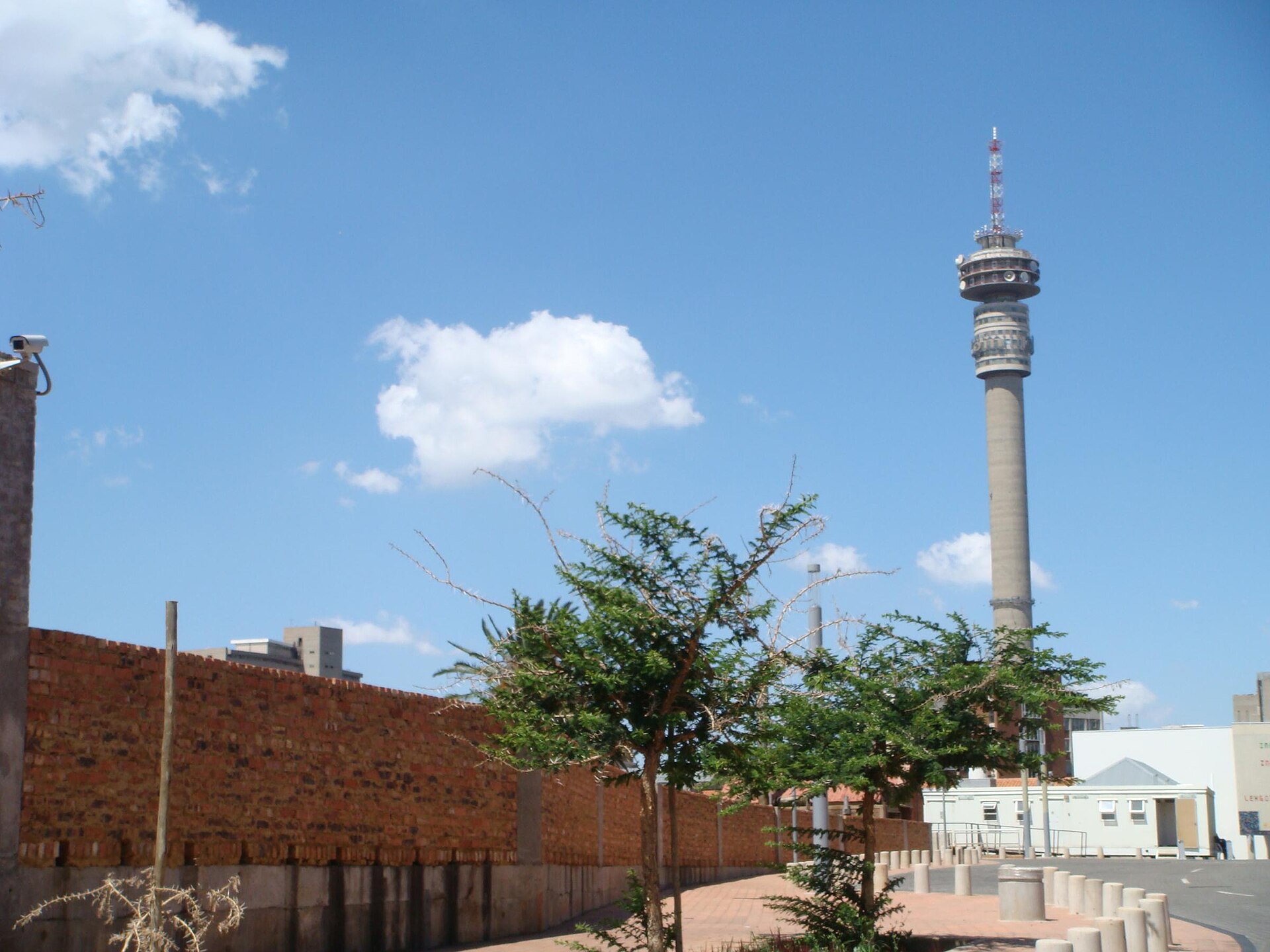
Hillbrow Tower has stood over Johannesburg for half a century, a silent witness to the city’s restless evolution. Built in the 1970s, when the country’s economic boom was reshaping the skyline, the tower rose above Hillbrow, then the vibrant heart of white Johannesburg. Back then, the neighbourhood hummed with energy—sleek office buildings, late-night jazz clubs, pavement cafés where businessmen and artists rubbed shoulders. The tower was more than just another high-rise; it was a symbol of confidence, a declaration that the city had arrived.
Its design is pure late modernism: clean lines, raw concrete, and expanses of glass that catch the light at dawn and dusk. There’s a certain austerity to it, a refusal of ornament that feels deliberate, almost defiant. Inside, the lower floors once housed corporate offices, while the upper levels offered something rarer—a public space. Restaurants and observation decks drew visitors who wanted to see the city from above, to feel its scale and ambition. For a while, the tower was where Johannesburg looked at itself.
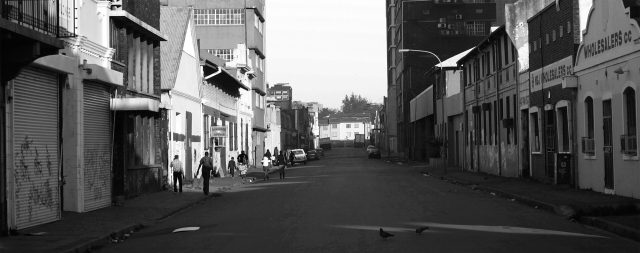
But cities change, and so did Hillbrow. After apartheid ended, the neighbourhood became a magnet for migrants from across Africa, and its character shifted. The streets that once felt familiar now buzz with new languages, music, and rhythms. The tower, once a beacon of prosperity, now stands amid a different kind of energy—one that’s less polished but no less alive. It’s no longer the centre of anything, yet its presence is undeniable, a fixed point in a neighbourhood that refuses to stand still.
Decades of neglect have taken their toll. The offices are empty, the restaurants long closed, and the observation decks sealed off. The building’s exterior shows signs of wear, its concrete stained by rain and time. Yet it still dominates the skyline, a stubborn reminder of what once was. Locals call it simply *the Tower*, and for many, it’s more than just a landmark—it’s a reference point in a city where streets twist and turn, where the past and present collide. In a place where nothing feels permanent, the tower endures.
Its story mirrors Johannesburg’s own. The 1970s were a time of optimism, when the city believed it could outrun its contradictions. The 1990s brought hope, a sense that the future might finally belong to everyone. Now, the tower stands as a relic of those eras, a structure that has outlived its original purpose but not its meaning. Some see it as a monument to a bygone era; others can’t imagine Hillbrow without it. Either way, it’s become part of the city’s DNA.
Over the years, the tower has slipped into local folklore. Musicians have written songs about it, filmmakers have used it as a backdrop, and artists have painted its silhouette against the Highveld sky. Stories cling to it—tales of lovers meeting on the observation deck, of late-night encounters in the empty corridors, of the faint echoes that some swear they’ve heard in the stairwells. These aren’t the kind of stories you find in guidebooks; they’re the ones people tell over drinks, the kind that blur the line between fact and myth.
Today, the tower isn’t a tourist attraction in the usual sense. You won’t find tour buses parked outside or crowds snapping photos. Instead, it’s woven into the fabric of everyday life. From a distance, it’s a landmark for newcomers trying to get their bearings. Up close, it’s just there—looming over street vendors, minibus taxis, and the constant hum of the city. For those who live in Johannesburg, it’s less about what the tower is now and more about what it represents: a city that keeps reinventing itself, even when the past refuses to let go.
There’s been talk, over the years, of restoring the tower—turning it into a cultural hub, a museum, or even a boutique hotel. But so far, those plans remain just that. The building continues to stand, watching as the city moves around it. Whether it will ever find a new purpose or simply remain a monument to the past is anyone’s guess. Either way, it’s already done its part. It’s become one of those places that doesn’t need to be useful to matter. It just is. And in a city as restless as Johannesburg, that might be enough.