Mosul’s old city is a place where history stacks unevenly, like pages warped by time. Near the Tigris’ western bank, the Mosul Tower—or what’s left of it—stands guard over streets that have known empires, invasions, and quiet afternoons.
The tower was built in the late 1800s under Ottoman rule. Back then, Mosul was a provincial capital in an empire that was already fraying. The Ottomans often marked cities with towers like this one, meant to signal modernity and state power. But this tower had a practical job too: it was a fire lookout. Watchmen would scan for smoke rising from the old quarter’s tightly packed houses and sound the alarm before flames could spread.
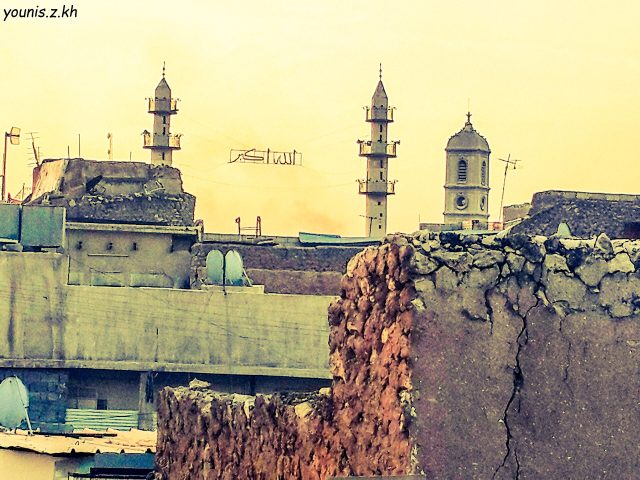
The base is square, made from the same pale stone you see in Mosul’s older buildings. The upper section narrows, with arched windows that once framed the city below. The clock face, now rusted and still, was added later—a nod to the European influence creeping into Ottoman architecture. The mechanism inside was likely imported, a small piece of the industrial age in a city where life still moved to the rhythm of donkey carts and river barges. For decades, its chime marked time for merchants, boatmen, and muezzins.
What keeps the tower from being just another old building? It’s the way it’s absorbed the city’s history. Mosul has always been a crossroads—Assyrian, Arab, Kurdish, Ottoman. The tower has stood through all of it. British soldiers used it as a vantage point during the early 20th-century occupation. Later, under Saddam Hussein, it became a backdrop for wedding photos. Then came the wars of the 21st century. The old city around it was damaged, its narrow alleys reduced to rubble in places. The tower survived, but not without scars. The upper section still bears the marks of bullets and shrapnel.
Today, the area is slowly rebuilding. Stone by stone, the old city is being restored. The tower remains as it is—part intact, part broken. No grand restoration projects, no plaques for tourists. It’s just there, part of the city’s fabric. Locals pass by without a second glance, though some older residents remember when it still kept time.
For outsiders, it’s easy to miss. Nineveh’s ruins across the river and the grand mosques overshadow it. But if you stop, it tells a story—not just of empires and wars, but of a place that refuses to disappear.
The Tigris flows nearby, its waters carrying silt as they have for millennia. On the opposite bank, Nineveh’s ruins stretch out, a reminder of the ancient world. The tower, by comparison, is a newcomer. Yet it connects the two. It stands where the medieval streets meet the modern grid. From its base, you can see the Great Mosque of al-Nuri’s minaret, another casualty of war, now gone.
The tower doesn’t demand attention. It doesn’t offer the comfort of a neatly preserved heritage site. It’s just there, a little battered, a little out of place. But in a city where so much has been lost, it endures. It doesn’t need to be grand or perfect. It’s enough that it’s still standing.