The Mosul Museum stands as a quiet witness to the rise and fall of empires, the ebb and flow of civilizations that once shaped the cradle of human history. Nestled in Iraq’s second-largest city, it was once the country’s most significant cultural institution after the National Museum in Baghdad. Its halls, though now marked by time and conflict, once held artifacts that told the story of Mesopotamia—a land where writing was invented, where the first cities rose, and where empires left their indelible mark. But the museum’s legacy is not just one of ancient relics; it is also a story of resilience, reflecting the turbulent fate of Mosul itself.
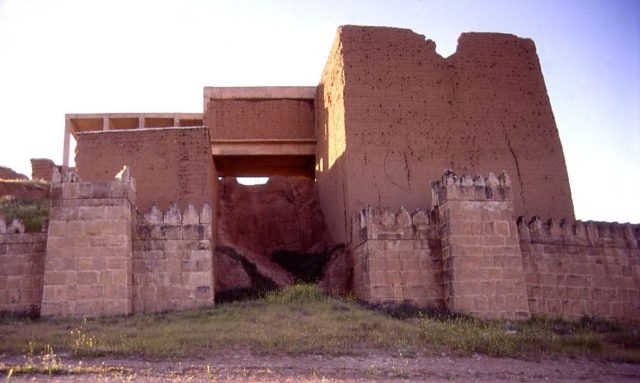
Founded in the mid-20th century, the museum was conceived as a repository for discoveries unearthed in northern Iraq. Its collections spanned millennia, from Assyrian reliefs and statues to Islamic manuscripts and Ottoman artifacts. Among its most prized possessions were relics from Nineveh, the ancient capital of the Assyrian Empire, located just a short distance away. Excavated in the 19th and 20th centuries, these artifacts bore witness to the might of one of antiquity’s greatest powers. The museum’s galleries once displayed intricate stone carvings—winged bulls guarding palace gates, scenes of royal hunts, and inscriptions detailing the deeds of kings who ruled over vast territories. These were not just objects; they were fragments of a world that had shaped the course of human history.
Yet the museum’s story is inseparable from the wars that have ravaged Iraq in recent decades. In 2003, during the invasion by coalition forces, the museum was looted. Thieves made off with priceless artifacts, while others were destroyed in the chaos. The building itself suffered significant damage, its halls left scarred by the violence. But the worst was yet to come. In 2014, Mosul fell under the control of the Islamic State, and the museum became a target. The extremists declared the ancient artifacts to be idolatry and systematically destroyed them. Videos of militants smashing statues with sledgehammers and toppling reliefs spread across the globe, shocking the world. These images became a symbol of the cultural devastation wrought not just upon Iraq, but upon humanity’s shared heritage.
When Mosul was liberated in 2017, the museum lay in ruins. The building was partially collapsed, its collections decimated. Yet even then, whispers of restoration began to circulate. International organizations and Iraqi authorities pledged support, recognizing that the museum was more than a collection of antiquities—it was a piece of the city’s identity, a testament to its layered past. The road to recovery was slow. Experts from around the world traveled to Mosul to assess the damage and devise a plan. Some artifacts were recovered from collectors or smugglers; others were painstakingly reconstructed from photographs and archival records. The process was painstaking, but it was a start.
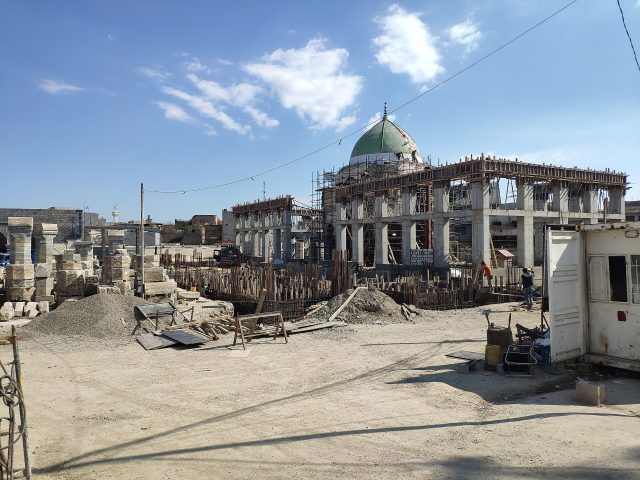
Today, the Mosul Museum exists in a state of fragile rebirth. It remains closed to the public, but the work of restoration continues. Where silence once reigned, the sounds of archaeologists and conservators now fill the air, each stroke of a brush or placement of a fragment a small act of defiance against oblivion. The museum no longer gleams with its former grandeur, but it holds something perhaps more valuable: hope. Every restored piece, every cleaned artifact, is a reminder that even in the face of destruction, culture endures. It is a symbol not just of loss, but of resilience—a testament to the idea that what has been broken can, with time and care, be made whole again.
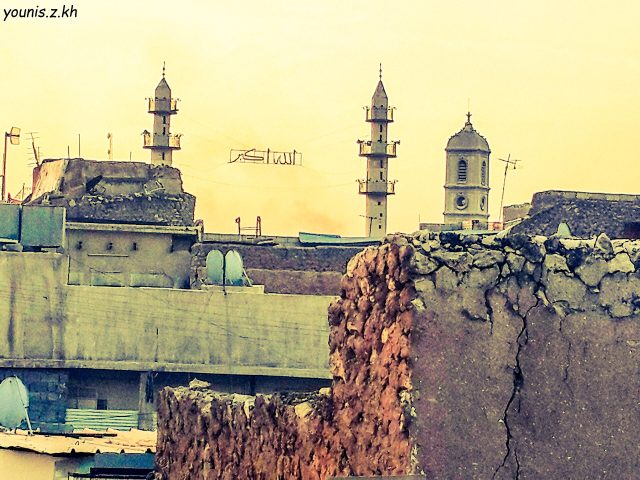
For Mosul, the museum is more than a building; it is a reflection of the city’s own history. Perched on the banks of the Tigris, Mosul has long been a crossroads of civilizations, a place where cultures, languages, and religions intersected. Its streets have echoed with the footsteps of Assyrians, Arabs, Kurds, and Ottomans, each leaving their mark on the city’s identity. The museum’s collections mirror this diversity, with Assyrian statues standing alongside Islamic manuscripts and Ottoman coins. Even in its damaged state, the museum tells a story of layers—of a city that has absorbed centuries of human experience, where the past is never truly buried, only waiting to be uncovered.
The restoration of the Mosul Museum is a slow and uncertain process. Many artifacts cannot be fully restored, and some are lost forever. Yet what remains is invaluable. These are not just relics of the past; they are keys to understanding how people lived, what they believed, and what they feared. The museum serves as a bridge between eras, a reminder that culture is not the property of a single people or time, but a shared inheritance. It is a place where the past can speak to the future, where the lessons of history can be heard amid the echoes of destruction.
When the museum finally reopens, it will not be the same as it once was. But its significance will endure. It will become a place where visitors can touch the past, where they can grasp the fragility of the heritage we leave behind and the importance of preserving it. For the people of Mosul, it will be a symbol of their city’s rebirth, a sign that even after unimaginable hardship, life—and history—can begin anew. And for the world, it will stand as a reminder that even in the darkest times, there is always the possibility of renewal. The story of the Mosul Museum is not just about what was lost; it is about what can still be saved.