The Church of the Miraculous Virgin in Mosul is one of those rare places where time seems to settle into the stones, carrying the weight of centuries. This city has always been a crossroads—of empires, faiths, and people—and the church stands as a quiet witness to that layered history. Built in the 19th century, it has seen Mosul shift from Ottoman rule to modern conflicts, yet it remains a testament to the endurance of the city’s Christian community, one of the oldest in the Middle East.
The architecture of the church blends the traditions of Levantine Christianity with local craftsmanship. It isn’t grand in scale, but its proportions feel deliberate, as if every detail was considered with care. The facade is simple, adorned with modest stucco work, while the interior walls bear faded frescoes depicting scenes from the lives of the Virgin Mary and Christ. The iconostasis, a carved wooden screen separating the sanctuary from the nave, is particularly striking. Though worn by time, its intricate patterns still hint at the skill of the artisans who created it, their work layered with symbolism that once told stories to those who knew how to read them.
Mosul has long been a place where different cultures coexisted, and the Church of the Miraculous Virgin is a piece of that mosaic. Christians have lived here since the earliest centuries of the faith, leaving their mark on the city’s language, architecture, and customs. By the 1800s, when the church was built, Mosul was part of the Ottoman Empire, and while the Christian community was small, it played a meaningful role in the city’s life. The church wasn’t just a place of worship; it was a gathering point, a refuge where people could find solace and connection in a world that often felt uncertain.
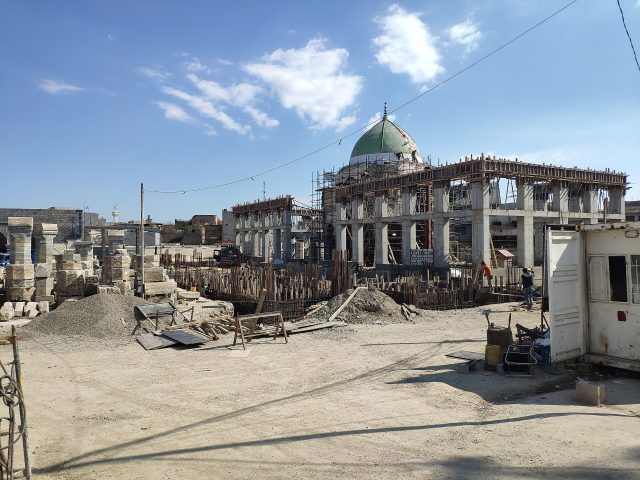
In recent decades, the church has faced its share of hardships. Wars, political upheavals, and religious tensions have all taken their toll. The most devastating period came when Mosul fell under the control of extremist groups. Many of the city’s Christian sites were destroyed or defiled, but the Church of the Miraculous Virgin, though damaged, survived. Today, it is slowly being restored, with locals—regardless of their faith—contributing to its revival. For many, the church represents more than just a building; it’s a piece of Mosul’s shared heritage, something worth preserving.
Visiting the church is a quiet experience. There are no crowds, no guided tours rushing through. Inside, the light filters softly through narrow windows, casting a warm glow over the worn wooden pews and the scent of old wood and candle wax lingers in the air. It’s a place where time moves differently, where the past feels close enough to touch. For centuries, people have come here for the same reasons—to pray, to reflect, to remember those who came before them.
The Church of the Miraculous Virgin isn’t just a historical monument; it’s a symbol of resilience. It stands as a reminder that even in the darkest times, there are those who hold onto hope, who work to preserve what matters. For Mosul, a city with a history as rich as it is painful, such places are vital. They help anchor the present to the past, offering a sense of continuity in a world that often feels fractured. In its quiet way, the church tells a story—not just of faith, but of the people who have kept it alive.