Nineveh is one of those rare places where history isn’t just something you read about—it’s something you can almost touch. Standing on the eastern bank of the Tigris, across from modern Mosul, it was once the beating heart of the Assyrian Empire, one of the most formidable powers of the ancient world. Today, little remains of its grand palaces and towering walls, but even the ruins carry the weight of its past. Founded in the third millennium BCE, the city grew into the empire’s capital, reaching its peak in the 7th century BCE under King Sennacherib. That was when Nineveh became a true metropolis of antiquity, encircled by twelve kilometers of fortified walls, filled with lavish palaces, temples, and gardens that stretched as far as the eye could see.
The architecture of Nineveh was as awe-inspiring as its military might. Sennacherib spared no expense in transforming the city into a marvel of engineering and artistry. His palace, known as the "Palace Without Rival," sprawled over ten hectares and was adorned with intricate reliefs depicting scenes of royal hunts, battles, and daily life. The city’s water supply was a feat in itself—a network of canals and aqueducts channeled water from the surrounding hills, some of which still stand today as a testament to Assyrian ingenuity. But Nineveh wasn’t just about grand structures. It was also home to one of the ancient world’s greatest libraries, where clay tablets preserved epic poems, scientific texts, and administrative records, offering a glimpse into the minds of a civilization long gone.
Yet Nineveh’s story ended in tragedy. In 612 BCE, the city fell to the combined forces of the Babylonians and Medes, and the empire that had once dominated the Near East collapsed almost overnight. According to legend, the last Assyrian king, Sin-shar-ishkun, chose to die in the flames of his palace rather than surrender. After its destruction, Nineveh faded into obscurity, its stones repurposed for new cities, its name nearly forgotten. It wasn’t until the 19th century that European archaeologists rediscovered its ruins, and even now, excavations continue to uncover its secrets, though many remain buried beneath the earth.
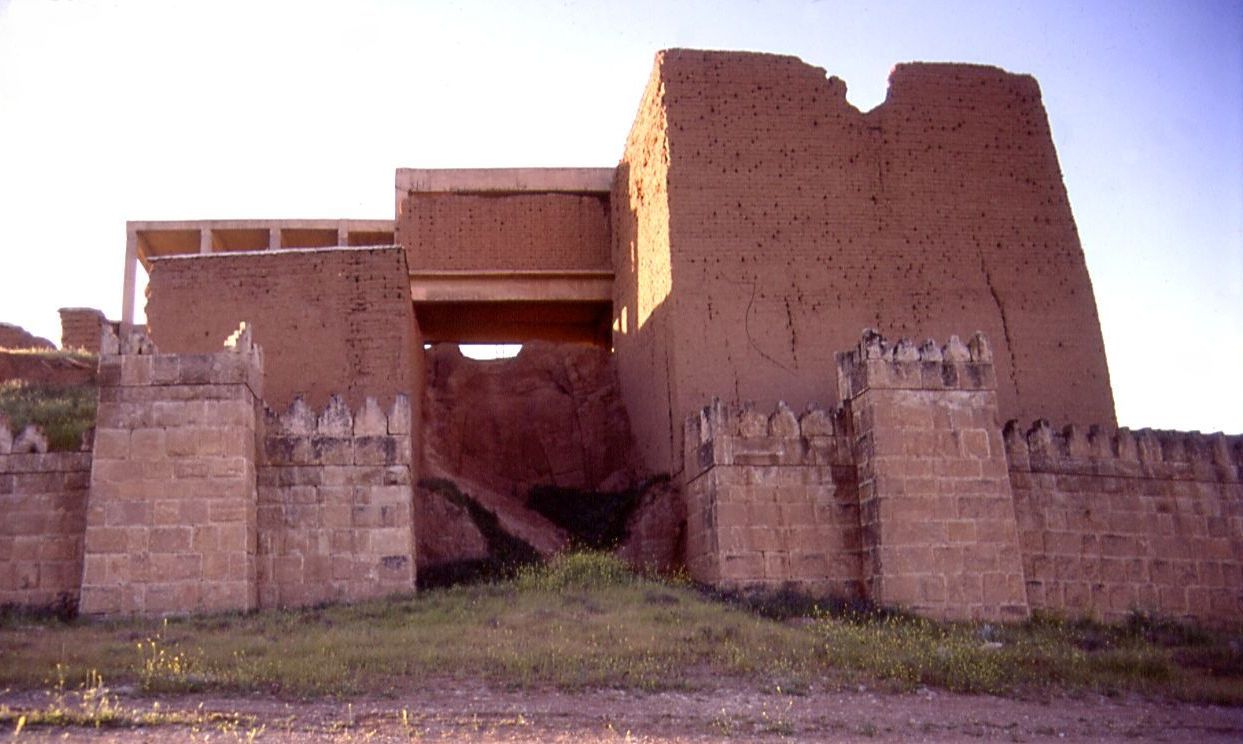
Today, Nineveh is an archaeological site where every layer of soil holds traces of the past. The most striking remnants are the massive city gates, named after gods—Nergal, Shamash, and Ishtar. The Gate of Ishtar, in particular, was once the grand entrance for triumphal processions of Assyrian kings. Nearby, the mound of Kuyunjik conceals the ruins of Sennacherib’s palace and those of his successors. It was here that archaeologists found the famous lion hunt reliefs, now displayed in museums in London and Paris. Sadly, much of Nineveh’s heritage has been lost or damaged in recent decades due to conflict, but what remains is enough to imagine the scale of its former glory.
Visiting Nineveh isn’t like walking through a polished historical attraction. There are no neatly paved paths, no informational plaques, no souvenir stalls—just the raw, unfiltered remnants of history. That’s what makes it special. As you wander among the ruins, it’s easy to picture the city as it once was: chariots rolling through the streets, merchants haggling in the markets, priests performing rituals in the temples. The effect is strongest at sunset, when the fading light casts long shadows over the stones, and for a moment, it feels as if time itself has paused. This is a place where the past isn’t just remembered—it’s still present, waiting to be rediscovered.
Nineveh is more than just an ancient ruin; it’s a living connection to the present. Located in a region that has seen its share of turmoil, its fate mirrors the complexities of modern Iraq. Excavations have been disrupted by conflict, yet efforts to preserve the site continue, driven by the understanding that Nineveh’s legacy belongs not just to Iraq but to the world. For many Iraqis, the ruins are a reminder of their land’s enduring history, a symbol of resilience even in the face of destruction.
If you come here, you’ll need to rely on your imagination. There are no grand reconstructions or dramatic displays—just the quiet persistence of stone and earth. Walk along the remnants of the walls, listen to the wind whispering over the Tigris, and try to picture the city in its prime. It’s a humbling experience, one that makes you realize history isn’t just a series of dates and events. It’s something deeper, something that still lingers in the air, in the very ground beneath your feet. Nineveh may never be what it once was, but its ruins still hold the echoes of the people who built, lived, and dreamed here thousands of years ago.