Olympia’s Archaeological Museum is one of those rare places where history doesn’t just sit behind glass—it lingers in the air, as if the past is still unfolding around you. This land was once the heartbeat of the ancient world, a sacred ground where wars paused every four years so people from across Greece could gather to honor the gods and compete in strength, skill, and spirit. The museum stands as a bridge between then and now, a collection of artifacts that tell stories not only of the Olympic Games but of daily life, faith, and art in ancient Greece.
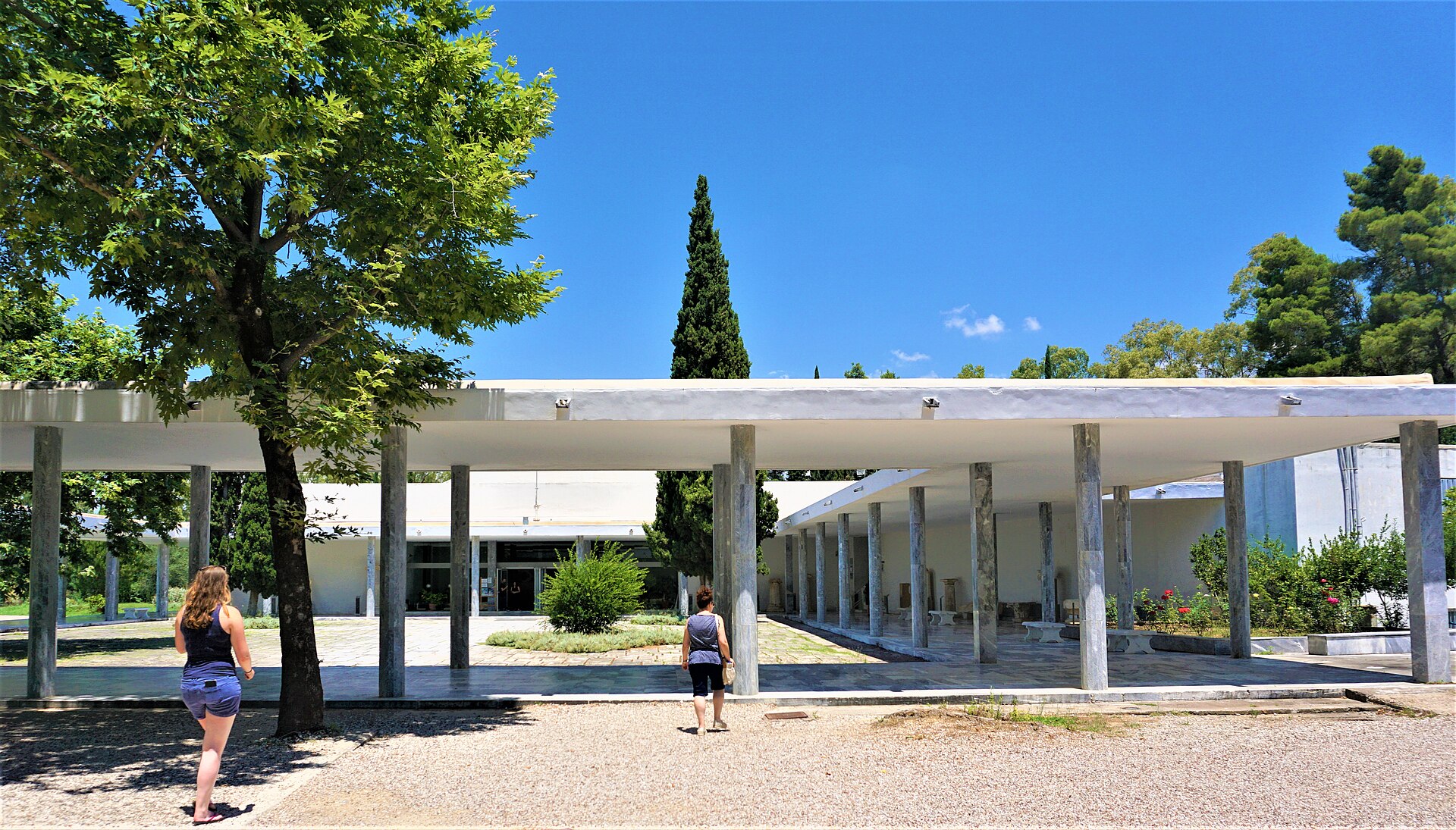
The museum building itself is worth noticing. Built in the late 1960s, its architecture doesn’t try to compete with antiquity but instead complements it. The spacious halls, with their high ceilings and soft natural light, create an atmosphere where the exhibits don’t feel like relics but like living pieces of a world that once was. There’s no rush here, no crowded corridors—just the quiet presence of objects that invite you to take your time, to really see them, to feel their weight and meaning.
Some of the museum’s treasures draw visitors from all over the world. Among them is the Hermes of Praxiteles, a statue carved in the 4th century BC, considered one of the masterpieces of ancient sculpture. The marble figure of the god holding the infant Dionysus is striking not just for its craftsmanship but for the way it captures movement and life in stone. Nearby stands the Nike of Paionios, the winged goddess of victory who once adorned the sacred site of Olympia. Her figure, frozen in mid-flight, still radiates triumph and energy, as if the moment of victory has been preserved for centuries.
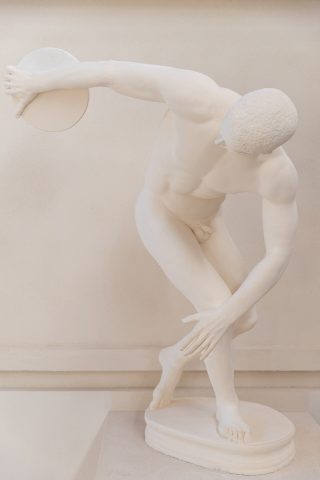
But the museum isn’t just about statues. It holds objects that reveal how the Games themselves unfolded—the bronze helmets and shields worn by athletes, the discus throwers and javelin hurlers caught in the midst of competition. A special place is reserved for the olive wreaths, the ultimate prize for Olympic victors. While no original wreaths survive, their wax replicas give a sense of what the ancient champions received. Nearby, marble tablets inscribed with the names of winners serve as the ancient equivalent of medals, preserving their glory for eternity.
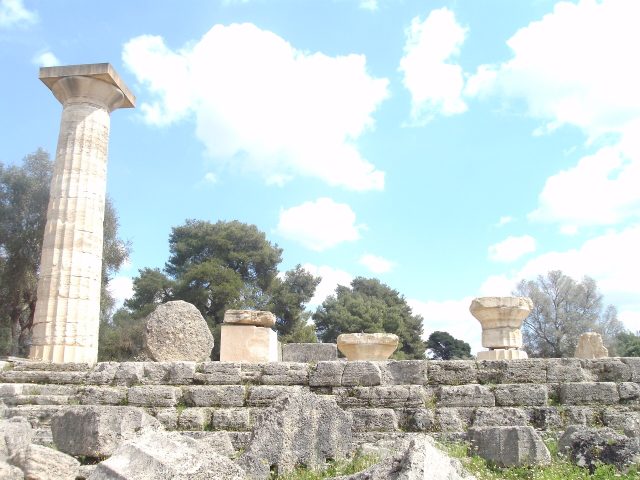
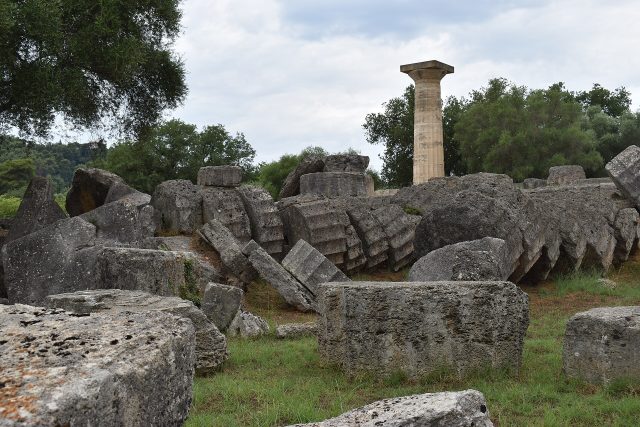
A separate hall is dedicated to Zeus, the god to whom the Games were dedicated. Here, fragments of the Temple of Zeus—including metopes and pediments adorned with scenes from Greek myths—are on display. One of the most striking is the pediment depicting the battle between the Lapiths and the Centaurs, a dynamic composition full of drama and tension. These sculptures once decorated a temple considered one of the Seven Wonders of the ancient world, and even now, despite their age and damage, they leave a powerful impression.
The museum doesn’t focus solely on sports and religion. It also holds everyday objects—pottery, coins, jewelry—that show how ordinary people lived in those distant times. Small clay figurines of athletes or gods, likely used as amulets or offerings, offer a glimpse into personal devotion. Bronze mirrors, often decorated with scenes from myths or daily life, reveal the tastes and habits of ancient women. These items might not be as grand as the statues, but they make history feel more tangible, more human.
Olympia was more than just a sporting venue; it was a major religious center. The museum houses many objects tied to the worship of Zeus and other gods—bronze tripods used in sacrifices, terracotta figurines of deities and heroes. A special place is given to votive offerings, gifts left at the temple as thanks or requests. Some are simple clay figures, while others are true works of art, crafted by the finest artisans of their time.
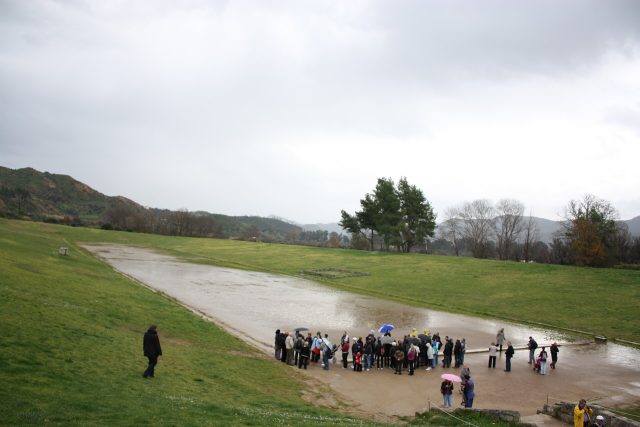
Walking through the museum isn’t just about viewing exhibits—it’s a journey through time. You can almost hear the voices of athletes on the stadium, the crackling of sacrificial fires on the altars, the cheers of the crowd for the victors. Olympia was a place where people from different city-states gathered, where borders faded and a sacred truce reigned. Though only ruins remain of the ancient sanctuary today, the museum helps recreate that sense of unity and grandeur.
After leaving the museum, it’s worth exploring the archaeological site of Olympia just a short walk away—the ruins of temples, the stadium, the gymnasium. But even if you don’t linger there, the museum leaves you with the feeling that you’ve touched something profound. Perhaps because the Olympic Games aren’t just a sporting event—they’re part of a cultural legacy that connects people across time and place. And in Olympia, that legacy feels especially alive.