The stadium at Olympia is where the Olympic Games began. Here, the spirit of competition took shape beneath olive groves and among the ruins of temples built for the gods. Today, it remains a place where the past feels close—where the footsteps of ancient athletes seem to echo in the warm air of the Peloponnese.
Walk onto the stadium grounds, and you can almost see the scene over two thousand years ago. Men from across Greece gathered here not for medals or fame, but for the honor of their cities and the favor of Zeus.
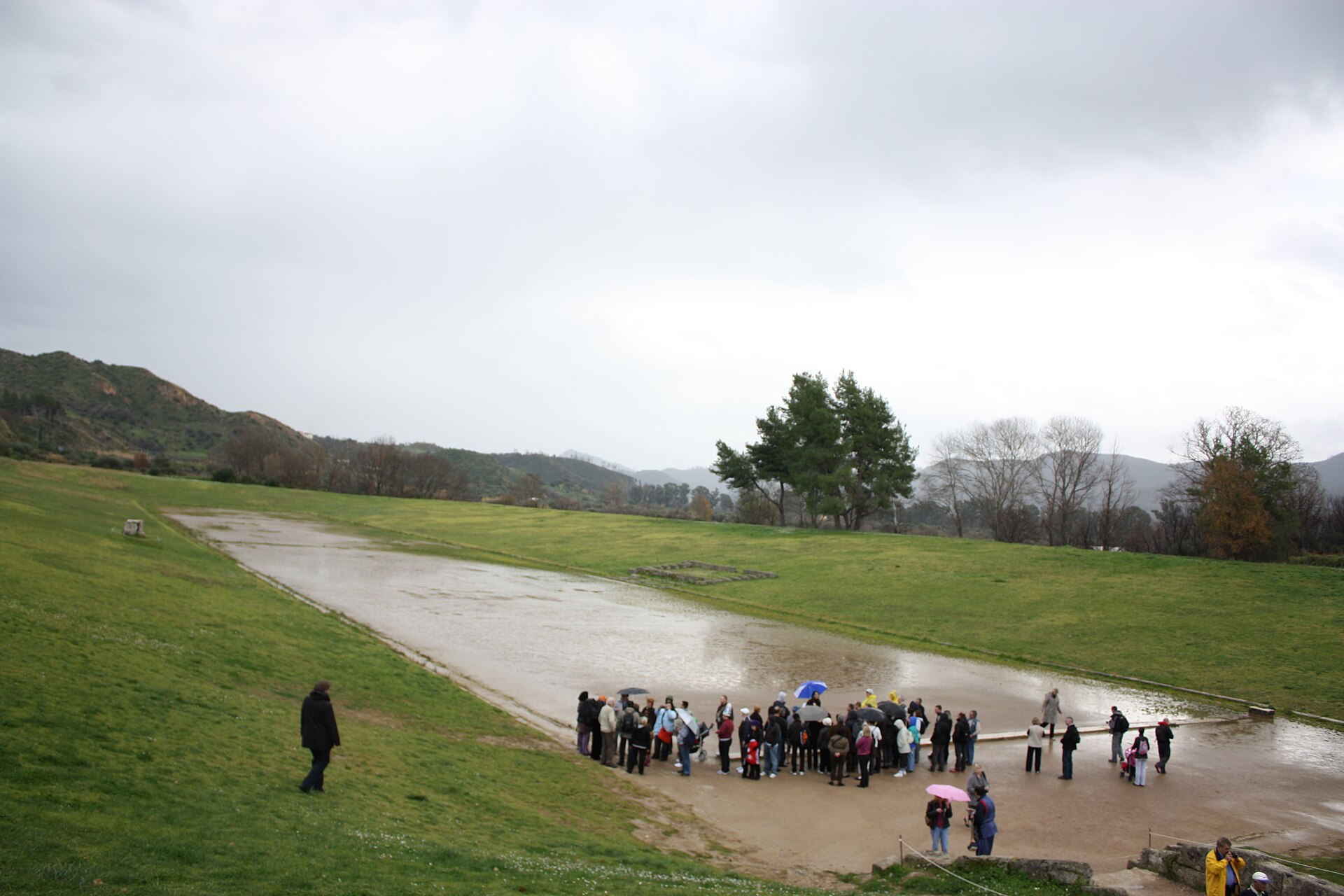
The stadium at Olympia looks nothing like the grand arenas of today. No towering stands, no electronic scoreboards—just an open, elongated space framed by earthen embankments. Spectators sat or stood on the natural slopes of the hillside, watching runners sprint, wrestlers grapple, or discus throwers launch their weights into the sky. The track stretches 192 meters, wide enough for twenty runners side by side. Packed earth, worn smooth by centuries of use, still marks the surface. Stone slabs outline the start and finish lines.
The stadium’s history is tied to the Olympics themselves. The earliest competitions, in the 8th century BCE, were simple events near the altar of Zeus. As the games grew in prestige, so did the need for a proper venue. By the 5th century BCE, the stadium had been moved to its current location. Its capacity expanded to hold up to forty-five thousand spectators. These were not just sporting events—they were a cornerstone of Greek identity. Rival city-states set aside conflicts to compete in peace. A sacred truce allowed athletes to travel safely to Olympia, where they vied for glory before crowds from across the Hellenic world.
The stadium’s design is simple but deliberate. The most striking feature is the stone tunnel, the crypt, which served as the athletes’ entrance. It was more than a passageway—it marked the threshold between the ordinary world and the sacred space of competition. Emerging from its cool shadows into the bright sunlight, athletes would have faced the roar of the crowd and the watchful eyes of judges. On the opposite side stood the judges’ platform, where officials ensured fairness in a society that valued honor above all. Nearby altars to the gods reminded everyone that the games were as much a religious observance as a contest.
Visiting the stadium today is quiet. Far from the bustle of Athens or Delphi, there are no crowds, no vendors. Just the stillness of the ruins and the rustle of wind through olive trees. In summer, the earth radiates heat, but the valley’s breeze cuts through it. The scent of wild herbs mixes with cypress, and the only sounds are cicadas and the distant murmur of the Alpheios River. The landscape feels timeless.
What makes the stadium special is its lack of modern distractions. No glass cases or interactive displays obscure the view. Just the raw presence of history—the same earth underfoot, the same sun overhead. You can walk the length of the track, stand at the starting line, and imagine the weight of expectation pressing on the athletes. Or climb the embankments, where spectators once cheered, and look out over the empty arena. Try to picture it filled with people, alive with shouts, the crack of chariots, the thud of bodies in wrestling matches. It’s a place that makes you think—not just about the past, but about the human desire to test limits.
The ancient Olympics lasted five days. Each day had its own rituals and events. The first day was for sacrifices and oaths—athletes pledged to compete fairly. The second day featured foot races: the *stadion* sprint, the longer *diaulos*, and the *dolichos*. The third day shifted to combat sports: wrestling, boxing, and the brutal *pankration*. The fourth day was for the pentathlon. The fifth day ended with chariot races and the crowning of victors. Winners received no medals—just an olive wreath, cut from a sacred tree said to have been planted by Heracles. This simple crown was the highest honor a Greek athlete could earn.
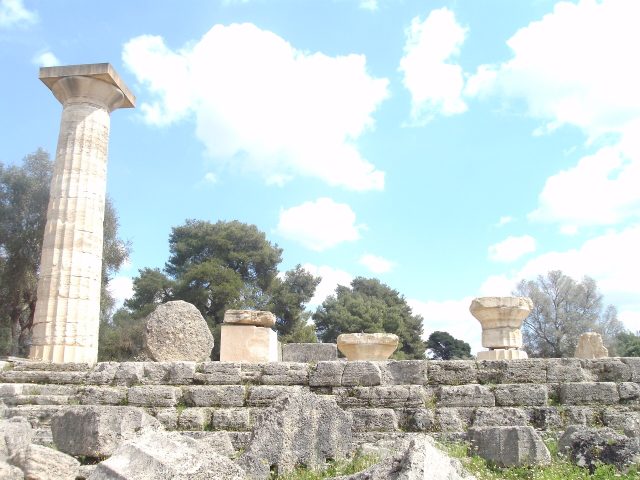
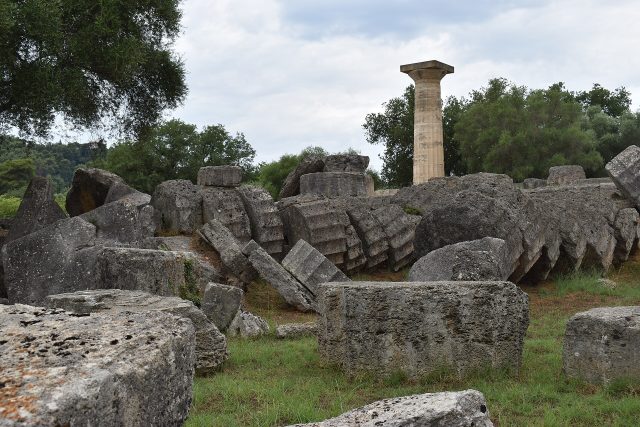
Olympia was more than a stadium. The surrounding site includes the ruins of temples, treasuries, and Phidias’ workshop, where he sculpted his massive statue of Zeus. But the stadium remains the heart of the site, where the past feels closest. Sport connects us across time. The modern Olympics, revived in the 19th century, owe their existence to this spot. Standing on the ancient track, you feel more than history—you feel the unbroken thread of human ambition, competition, and the pursuit of excellence that has defined the games for millennia.