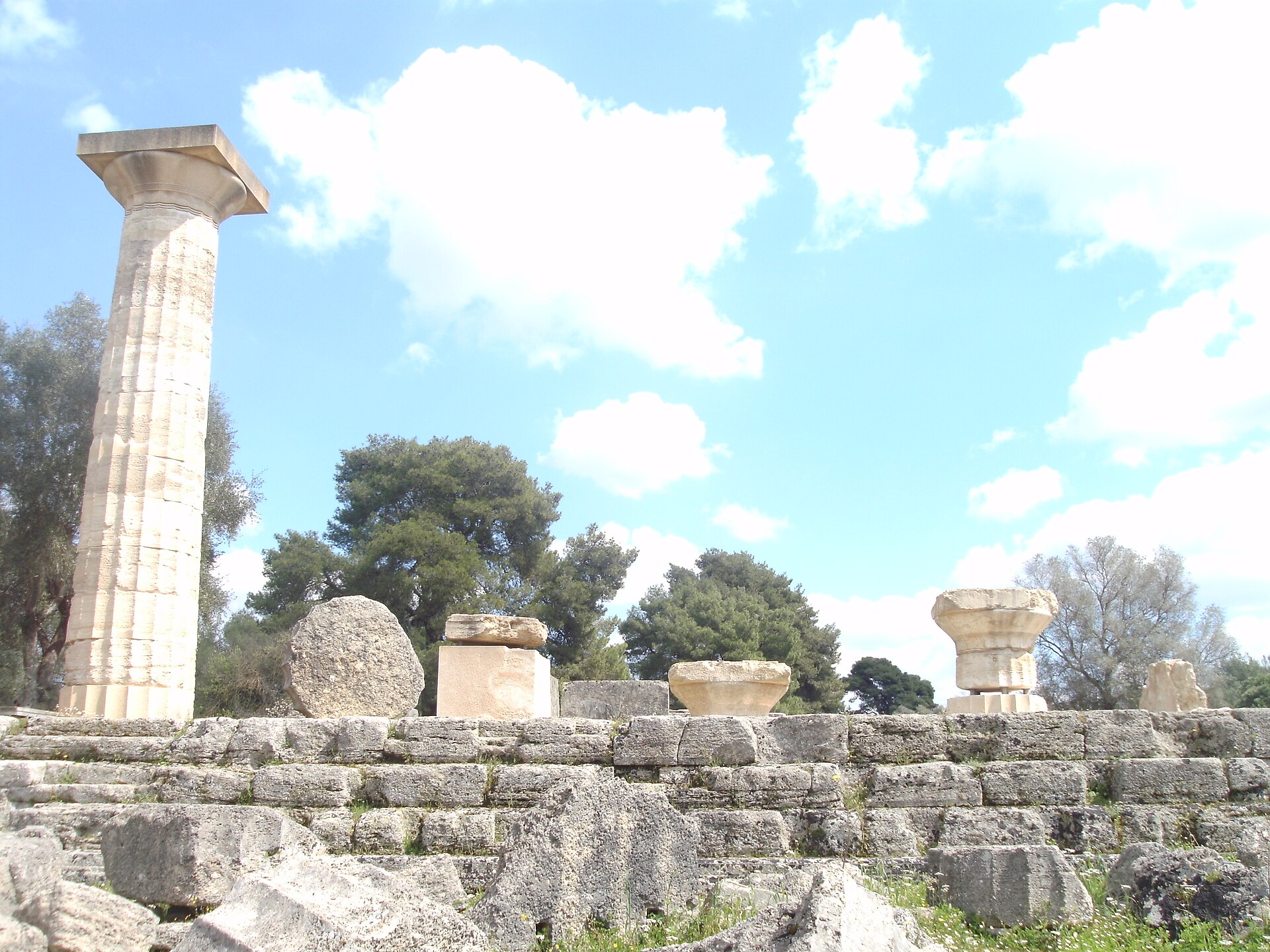
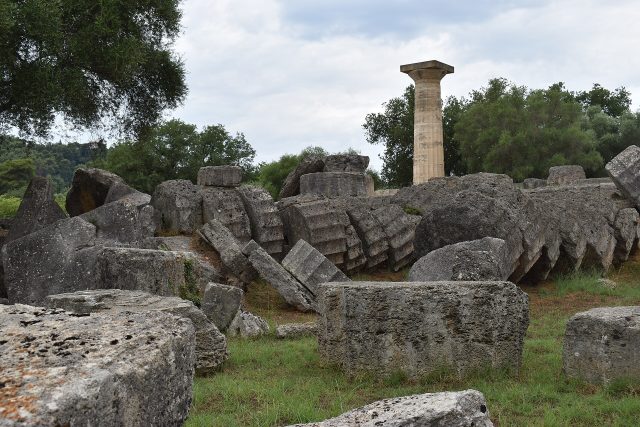
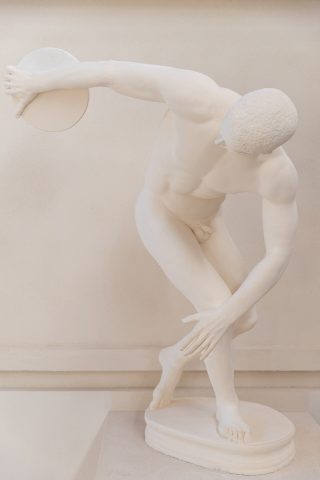
The Temple of Zeus at Olympia stands where the ancient world once gathered in celebration, competition, and reverence. Nestled in a quiet valley on the Peloponnese, this site was more than just a place of worship—it was the heart of a tradition that shaped Greek identity. The ruins that remain today, though fragmented, carry the weight of history in every weathered stone.
Built in the fifth century BC, the temple was dedicated to Zeus, the king of the gods, and became one of the most significant religious structures in ancient Greece. Its scale and craftsmanship were meant to inspire awe, reflecting the power and grandeur of the deity it honored. The temple followed the Doric order, its sixteen towering columns once supporting a roof that sheltered the sacred space within. The proportions were carefully calculated to create harmony, a principle central to Greek architecture.
At the temple’s center stood the statue of Zeus, a masterpiece by the sculptor Phidias. Crafted from gold and ivory, it reached nearly twelve meters in height, depicting the god seated on a throne, his expression serene yet commanding. The statue was considered one of the Seven Wonders of the Ancient World, though it vanished long ago—lost to fire in Constantinople, where it had been moved in later centuries. What remains are the descriptions left by ancient writers, who marveled at its lifelike detail and the way it seemed to radiate divinity.
Olympia itself was a place of convergence. Every four years, athletes and spectators from across the Greek world traveled here for the Olympic Games, a festival that transcended political divisions. The temple was not just a backdrop but an active participant in these events. Victories were celebrated with offerings to Zeus, and prayers for success filled the air. The games were so sacred that a truce was declared among warring city-states, allowing safe passage for all who wished to attend. For a brief time, the rivalries of the Greek world were set aside in the name of shared devotion and competition.
The temple’s decline came gradually. Earthquakes weakened its structure, and fires consumed what remained. By the time the statue was relocated to Constantinople, the site had already begun to fade from its former glory. Today, the ruins are part of the larger archaeological complex of Olympia, a UNESCO World Heritage site. Walking among the fallen columns, it’s easy to imagine the sounds that once filled this space—the murmur of crowds, the crack of a discus, the chanting of hymns. The past feels close here, not as something distant but as a presence that lingers in the stillness.
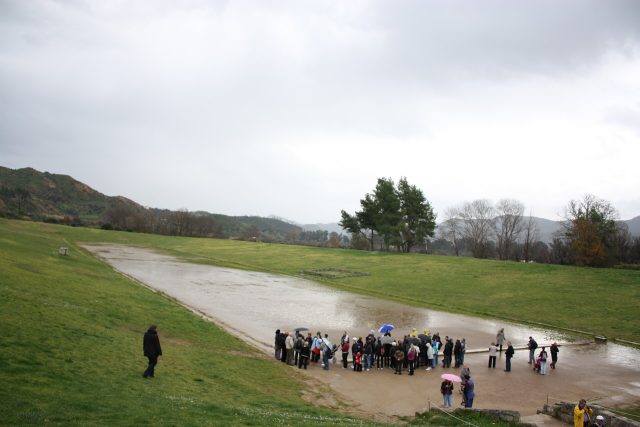
Beyond the Temple of Zeus, Olympia offers more to explore. Nearby stands the Temple of Hera, one of the oldest surviving temples in Greece, where the Olympic flame is still lit before each modern Games. The workshop of Phidias, where the statue of Zeus was crafted, lies just a short distance away, its foundations hinting at the labor and artistry that went into creating such a monumental work. The ancient stadium, where athletes once competed, remains largely intact, its starting line still visible in the earth.
The landscape around Olympia is quiet, even in peak season. The valley is framed by gentle hills, and the Alpheios River winds through the area, much as it did in antiquity. There are no crowds here, no vendors hawking souvenirs—just the occasional visitor wandering among the ruins, the wind rustling through the olive groves. The light in the early morning or late afternoon casts long shadows across the stones, softening the edges of time.
What makes Olympia special is not just its historical significance but the way it connects the past to the present. The Olympic Games, now a global phenomenon, trace their origins to this place. The ideals of unity, competition, and peace that defined the ancient games still resonate today. Standing in the shadow of the Temple of Zeus, it’s impossible not to reflect on how much of modern life has roots in these ancient traditions.
For those visiting Greece, Olympia offers something different from the bustling streets of Athens or the sun-drenched islands. It’s a place to step away from the noise and consider the enduring legacy of human achievement. The ruins don’t demand admiration; they simply exist, a silent testament to a world that once was. All they ask is that you pause, look closely, and listen to the echoes of history.