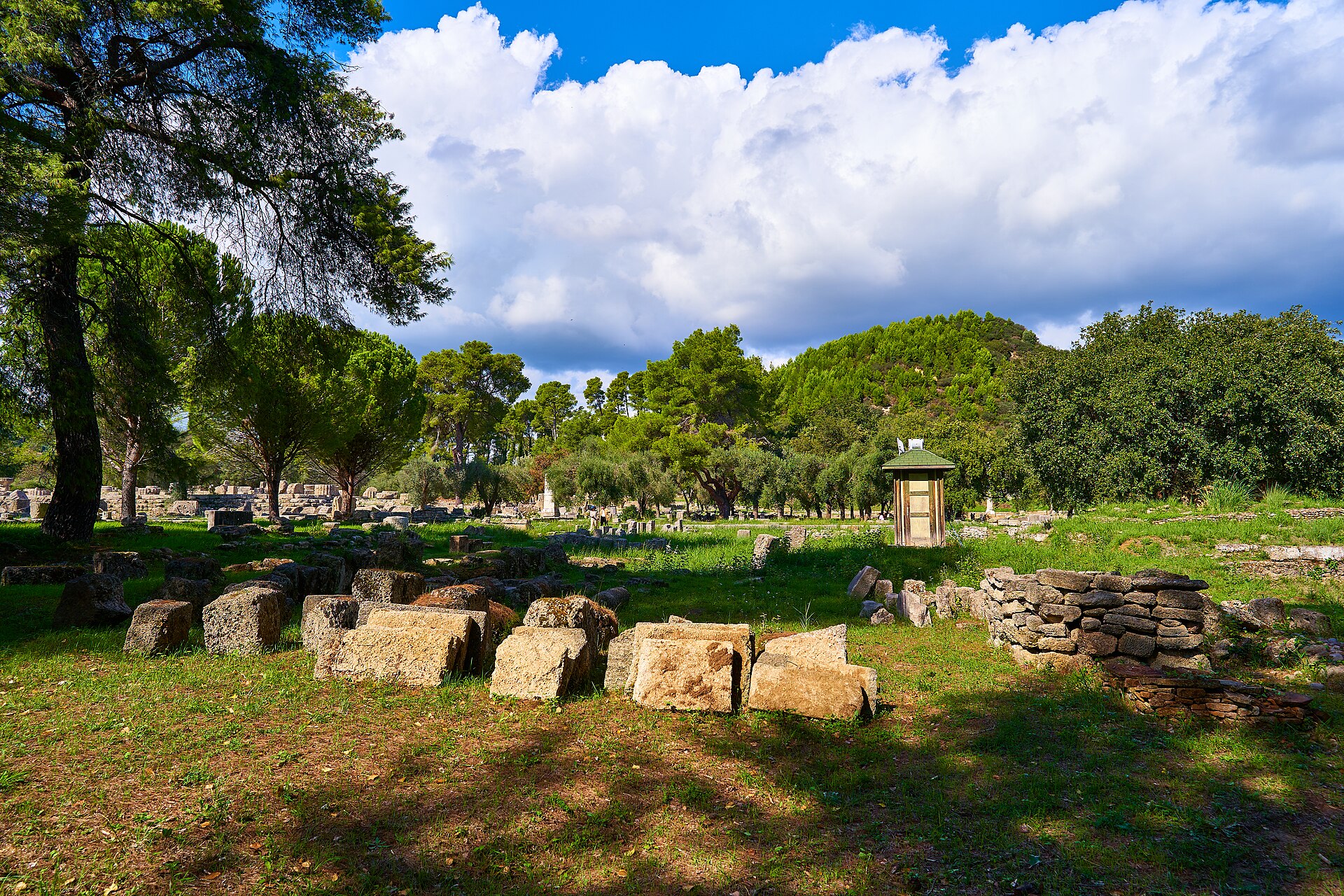
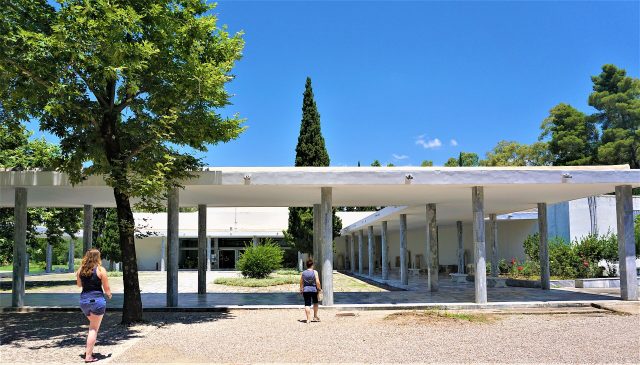
Olympia is a place where time seems to stand still, leaving behind only the quiet rustle of olive groves and the soft crunch of gravel underfoot. Nestled in the western Peloponnese, this valley once pulsed with the energy of the ancient world, where the first Olympic Games took shape over two millennia ago. Today, the archaeological site of Olympia is more than an open-air museum—it’s a living chapter of history, where every stone carries the weight of human achievement and fragility.
Walking through the sacred grove of Altis, it’s hard to imagine that this tranquil space once drew tens of thousands of people from across ancient Greece. Olympia was never just a sports ground; it was a religious sanctuary dedicated to Zeus, where athletes, philosophers, poets, and rulers gathered every four years to honor the gods and compete in contests of strength and skill. Victory here wasn’t rewarded with medals but with olive wreaths, cut from a tree said to have been planted by Heracles himself. The fame of Olympic champions was so great that their names were carved into marble, and statues of them stood proudly in the sacred grove.
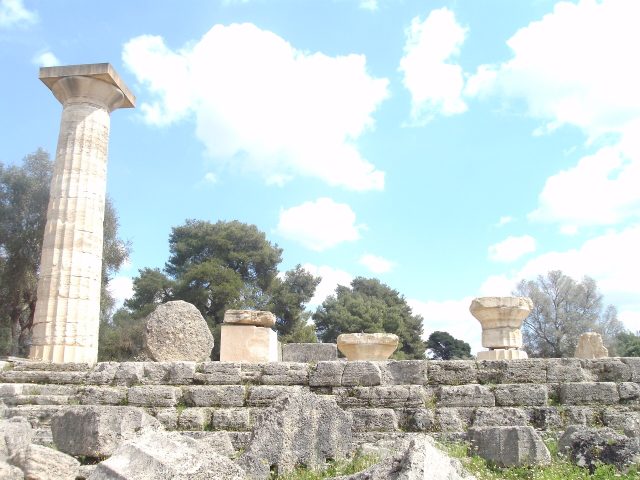
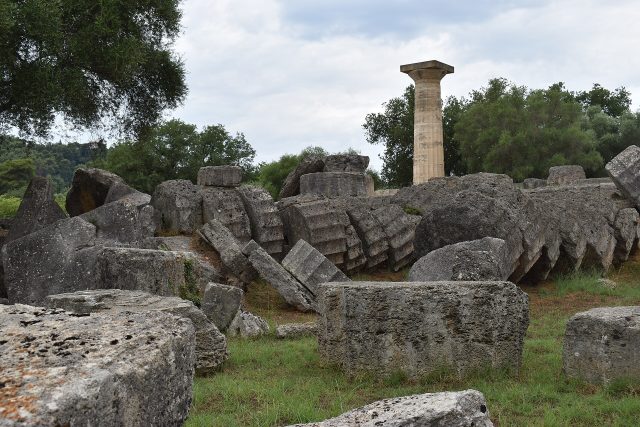
The ruins that remain today are fragments of that grandeur, yet they still command attention. The most striking is the Temple of Zeus, once home to the legendary statue of the god crafted by Phidias—one of the Seven Wonders of the ancient world. Though the statue itself is lost to time, the temple’s towering columns, partially restored, dominate the landscape, evoking the hymns and rituals that once filled this space. Nearby lie the remnants of Phidias’ workshop, where archaeologists uncovered tools and molds used to create the statue’s gold and ivory details, offering a glimpse into the meticulous craftsmanship behind the masterpiece.
Not far from the Temple of Zeus stands the Temple of Hera, one of the oldest Doric temples in Greece. This unassuming structure holds deep significance: it’s where the Olympic flame is lit for the modern Games, a tradition that bridges antiquity and the present. While smaller than its neighbor, the Temple of Hera was central to the sanctuary’s rituals, housing sacred objects and statues of victorious athletes. Today, the flame kindled here travels the world, a symbol of the enduring connection between past and present.
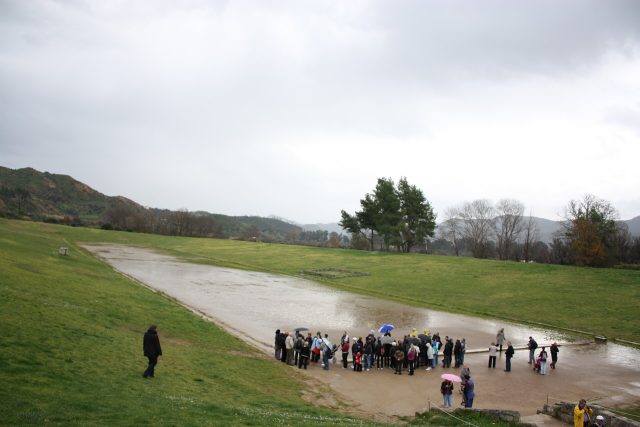
The sporting facilities of Olympia tell their own story. The stadium, where footraces once unfolded, remains remarkably intact, its stone starting lines still visible in the earth. The stands, built to hold forty thousand spectators, hint at the electric atmosphere of the Games. Women were barred from the stadium—even from approaching the sacred grove during competitions—with one exception: the priestess of Demeter, who alone had the right to watch from a designated spot. Nearby, the palaestra, with its colonnades and bathing pools, reveals how wrestlers and boxers trained for their events, their preparations as much a part of the spectacle as the contests themselves.
Olympia was more than a stage for athletic feats; it was a hub of culture and learning. The site once housed one of the ancient world’s largest libraries, along with workshops where artists created enduring works. Archaeologists have unearthed countless artifacts here—statues, vases, and other relics—now displayed in the site’s museum. Among the most remarkable finds are life-sized bronze statues of victorious athletes, their forms capturing not just physical perfection but the quiet intensity of competition: the set of a jaw, the tension in a muscle, the unshakable focus of a champion.
Time has not been kind to Olympia. Earthquakes, floods, and invasions have reduced many of its structures to ruins. Yet even in decay, the site retains a powerful atmosphere. Strolling along the paths lined with olive trees, it’s easy to imagine the roar of the crowd, the rumble of chariots on the hippodrome, the disciplined movements of athletes training in the gymnasium. The quietest moments come at dawn or dusk, when the light softens the stones and the shadows stretch long and mysterious. In those hours, the past feels almost tangible, as if the ideals of fair play and human excellence still linger in the air.
Today, Olympia is not just a destination for tourists but an active site of discovery. Archaeologists continue to excavate, uncovering new details about the sanctuary’s daily life. Each year brings fresh finds—fragments of statues, coins, everyday objects—that piece together the story of this ancient place. Some of the most revealing discoveries are the small, human touches: tablets inscribed with athletes’ names, competition schedules, even menus from local taverns. These fragments make history feel immediate, offering a window into the lives of people who walked these same paths thousands of years ago.
Visiting Olympia is an experience that lingers long after you leave. It’s a place where you can spend hours wandering from one ruin to the next, reading the signs and trying to picture the scene as it once was. The on-site museum holds some of the most treasured artifacts, including the famous Hermes of Praxiteles and the Nike of Paionios, masterpieces that embody the artistic brilliance of the ancient world. But what stays with you isn’t just the art or the architecture—it’s the sense of connection to something larger, a reminder of the ideas that shaped modern civilization.
Olympia is more than a tourist attraction; it’s a place steeped in meaning. Here, the foundations of values that still inspire us today were laid: the pursuit of excellence, respect for one’s rivals, the belief in human potential. That’s why this site continues to draw people from all over the world. It doesn’t just preserve the past—it reminds us that some things never fade, and that time only deepens their significance.