Palenque is one of those rare places where the past doesn’t just linger—it breathes. Tucked deep in the jungles of Chiapas, this Maya city feels more like a living memory than a ruin. Unlike the grand, crowded sites of Chichén Itzá or Teotihuacán, Palenque is quieter, smaller, and somehow more intimate. The stone structures, draped in moss and tangled vines, seem to whisper stories of a civilization that thrived here over a thousand years ago. It was a political and cultural powerhouse during the Classic Maya period, and even now, its remnants carry the weight of that legacy.
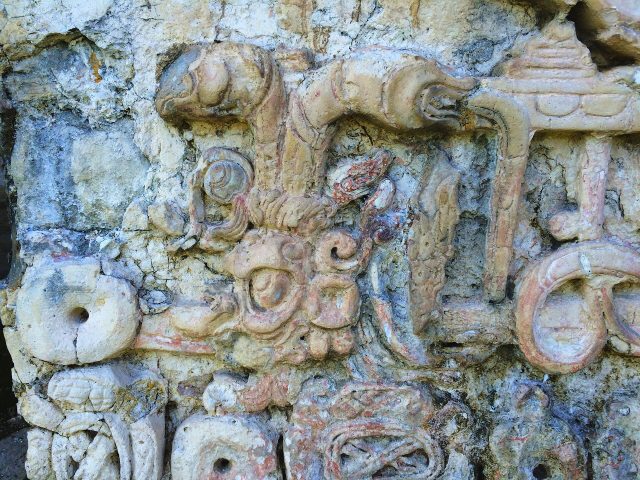
The centerpiece of the archaeological zone is the Palace, a sprawling complex of interconnected buildings, stairways, and corridors. Its most striking feature is the tower, an anomaly in Maya architecture, rising above the treetops. Scholars believe it may have served as an observatory or a ceremonial space. Inside, faded murals and intricate carvings depict the lives of Palenque’s rulers, their faces and symbols still visible despite the passage of time. Beneath the Palace lies a network of underground chambers, once home to steam baths and an advanced drainage system—remarkable for its era.
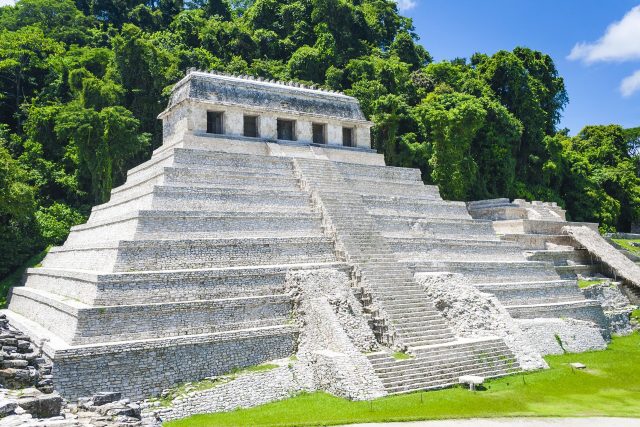
Nearby stands the Temple of the Inscriptions, named for the three massive stone panels covered in hieroglyphs. This pyramid is one of the most famous Maya tombs, where archaeologists discovered the sarcophagus of Pakal the Great in 1952. His jade death mask became an icon of Palenque, and the temple itself is a testament to the skill of ancient builders. What makes it unique is the hidden staircase inside the pyramid, leading down to the burial chamber—a design rarely seen in Mesoamerican architecture.
The jungle around Palenque isn’t just a backdrop; it’s part of the story. The ruins seem to be in a slow, eternal struggle with nature, as if the forest is patiently reclaiming what was once its own. Towering ceiba trees wrap their roots around ancient stones, while howler monkeys fill the air with their deep, echoing calls. The humidity clings to everything, and the scent of damp earth and tropical foliage makes it easy to imagine stepping back in time. Here, the past doesn’t feel distant—it feels alive.
Palenque was abandoned long before the Spanish arrived, and no one knows exactly why. Some theories suggest warfare, resource depletion, or shifting climate patterns played a role. Whatever the cause, the city’s decline remains a mystery. But even in ruin, Palenque retains a quiet power. There’s no grand spectacle here, no reconstructed facades—just the raw, unfiltered presence of history. Every stone, every worn step of the pyramids, holds a fragment of the past, waiting to be discovered.
The site is open to visitors, and the best time to explore is early morning, when the air is cooler and the jungle hums with the sounds of waking wildlife. The entrance fee covers access to all the main structures, though the distances between them can be deceptive—it’s worth planning a route in advance. Local guides offer tours, and if you’re lucky, they’ll share not just facts but the legends that have been passed down through generations. Their stories add another layer to the experience, blending history with the kind of folklore that feels almost tangible in this place.
Palenque isn’t just an open-air museum; it’s a place where history feels immediate. You can wander for hours, imagining the voices of priests echoing through the courtyards, the scent of burning copal rising from altars, and the footsteps of rulers receiving emissaries from distant Maya cities. Unlike more tourist-heavy sites, Palenque doesn’t rely on sheer scale to impress. Its magic lies in its subtlety—in the way the past and present coexist, in the quiet moments when the jungle falls silent and you can almost hear the whispers of those who once walked these same paths.
For those who seek more than just a quick photo opportunity, Palenque offers something deeper. It’s a place for reflection, for wondering about the people who built these structures and the lives they lived. The ruins don’t give up their secrets easily, but that’s part of their allure. Here, history isn’t just something to observe—it’s something to feel. And in a world where so much of the past has been polished for tourists, that authenticity is rare. Palenque doesn’t just show you the past; it lets you step into it.