Faras is one of those places where Sudan’s history reveals itself not in grand monuments or bustling markets, but in the quiet persistence of sand and stone. Tucked along the Nile, far from the usual tourist trails, the ruins of this ancient city tell the story of a once-thriving center of Nubian Christianity. There are no crowds here, no guided tours—just the wind, the river, and the faint echoes of a civilization that flourished long before the desert reclaimed it.
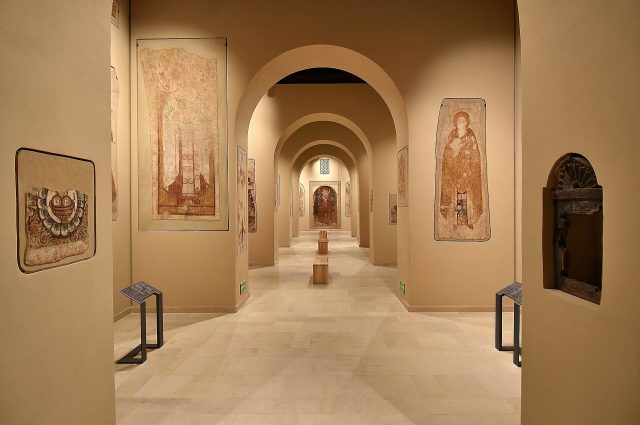
The city’s origins stretch back to the Meroitic period around the 3rd century BCE, but its golden age came much later, between the 6th and 14th centuries, when Faras became a vital religious and cultural hub of Christian Nubia. It was home to a bishop’s residence, and its cathedral was renowned for its frescoes—some of the most significant surviving examples of medieval Christian art in Africa. These paintings, blending Byzantine techniques with local influences, depict saints, biblical scenes, and Nubian rulers in vivid detail. Many were rescued from flooding during the construction of the Aswan Dam and now reside in museums in Khartoum and Warsaw, but their legacy lingers in the ruins.
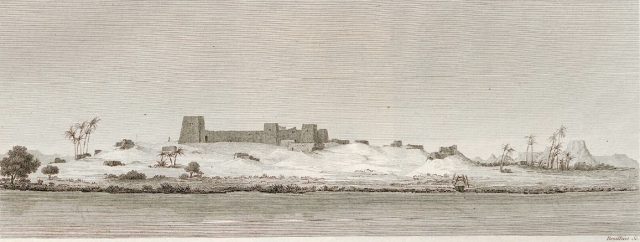
The architecture of Faras reflects layers of history. The remaining walls of the cathedral, built from sun-dried brick, are a testament to the building methods that endured for centuries in this region. Nearby, traces of older structures hint at the city’s earlier life, including temples dedicated to Nubian deities. Faras wasn’t just a religious center; it was a crossroads of trade, where merchants, pilgrims, and travelers from Egypt and deeper into Africa converged. The Nile was its lifeline, connecting it to the wider world.
Today, only fragments remain—crumbling foundations, scattered columns, and shards of pottery inscribed with Greek, Coptic, and Old Nubian script. Yet even these ruins carry a sense of timelessness. The desert wind and sun slowly erode what wars and floods could not, but archaeologists continue to uncover new pieces of the past. Each excavation adds another layer to the story of Nubian life, offering glimpses into how people lived, worshipped, and traded in this forgotten corner of the continent.
Visiting Faras is less about ticking off sights and more about stepping into a different era. There are no souvenir stalls or cafes, just the vastness of the desert, the slow flow of the Nile, and the quiet weight of history. The few locals who live nearby—herders with camels, fishermen casting nets—rarely venture into the ruins. To them, the ancient city is just another part of the landscape, as natural as the river or the dunes.
Faras is a reminder that Sudan’s history isn’t just about the pyramids of Kush or the mosques of Khartoum. It’s also about Christian churches buried beneath the sand, about cultures that thrived alongside more famous civilizations. Here, at the border between Egypt and Sudan, influences from different peoples and faiths intertwined, creating a heritage that is still being uncovered. The site isn’t just a monument to the past; it’s a window into a world that was once vibrant and complex.
Reaching Faras is no easy feat. The journey involves long stretches across the desert from the nearest towns, with little in the way of tourist infrastructure. But that remoteness is part of what makes the place special. There’s a sense of discovery here, of walking where few outsiders have trodden in centuries. Time moves differently in Faras—slower, as if in rhythm with the ancient stones.
It’s worth remembering that Faras isn’t a static open-air museum. Archaeological work is ongoing, and parts of the site may be off-limits. But even what is visible offers a glimpse of the city’s former scale. Someday, there may be informational signs or guided tours, but for now, Faras remains a place for those who want to see history unfiltered, without intermediaries.
Sudan isn’t often associated with its Christian past, but Faras stands as proof that this land was a crossroads of cultures long before Islam arrived. For nearly a thousand years, Christianity thrived here in the heart of Nubia, leaving behind not just frescoes and temples, but traditions that still resonate in local customs. Faras isn’t just an archaeological site; it’s a testament to how different faiths and peoples could coexist, shaping something unique in the process.