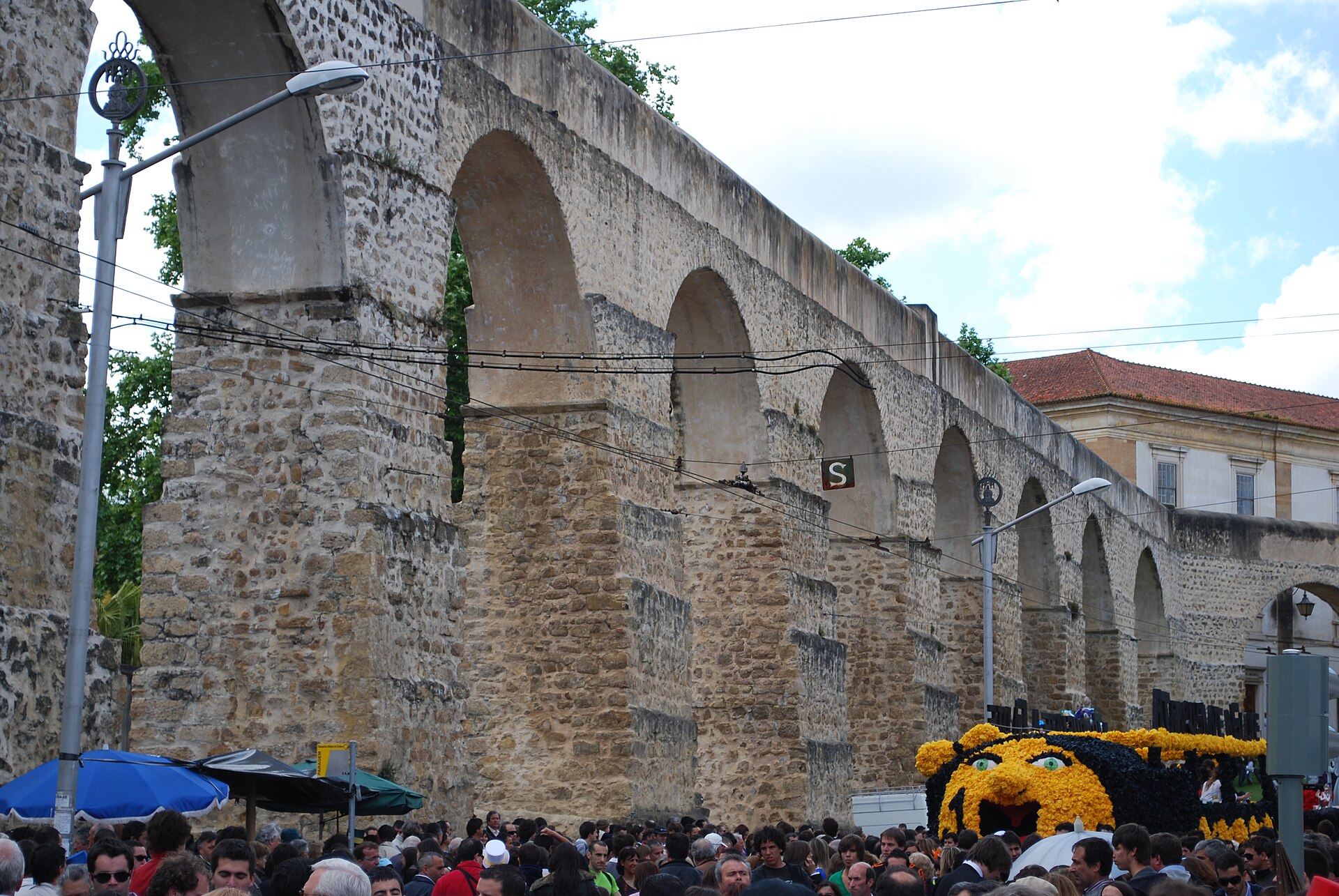
Coimbra’s Aqueduto de São Sebastião is one of those quiet survivors of time, a structure that still whispers of an era when engineering was as much about ingenuity as it was about necessity. Built in the sixteenth century, it stretches across the hills like a patient sentinel, its stone arches standing firm long after their original purpose faded. The aqueduct doesn’t just endure—it blends into the landscape, as if it has always been part of Coimbra’s rhythm, a silent witness to centuries of change.
The need for such a structure wasn’t born of ambition alone. Like many European cities of the time, Coimbra struggled with water scarcity. The old Roman aqueducts, once reliable, had long since fallen into disrepair, and the growing population demanded a steady supply. The task fell to Filippo Terzi, an Italian architect who had already left his mark on Portugal with his work in Lisbon and beyond. He designed a system capable of channeling water from the springs of Serra do Buçaco, spanning several kilometers of uneven terrain. Construction took nearly a decade, and by 1570, the aqueduct was complete, its arches carrying not just water but the promise of progress.
Walking along the top of the aqueduct today feels like stepping into history. The stones beneath your feet are worn smooth in places, rough in others, their surfaces softened by moss and time. There are no barriers, no signs urging caution—just the quiet invitation to look out over the city, to imagine the water that once flowed here, sustaining fountains, baths, and households. It’s easy to forget this was once a vital artery of Coimbra’s daily life, especially in the scorching summers when the city bakes under the sun. Now, the aqueduct stands empty, but its presence is no less powerful.
The architecture is deceptively simple. Double tiers of arches, built from local limestone, support the narrow channel that once carried water. Over the centuries, the stone has taken on a warm, golden hue, as if absorbing the sunlight itself. In places, you can still see remnants of the old spillways—thin grooves where excess water would have cascaded into the city’s reservoirs. The aqueduct was originally longer, but parts of it were lost to time or dismantled when they were no longer needed. What remains is still striking in its scale, a testament to the precision of its builders.
Coimbra has always been a city shaped by water. Nestled among hills, it relied on such structures not just for survival but for growth. The Aqueduto de São Sebastião wasn’t merely a solution to a practical problem—it was a statement. In an age when such feats of engineering were rare, its construction signaled that Coimbra was a city moving forward. Today, when visitors think of Coimbra, they often picture its medieval university or the winding streets of the old town. But the aqueduct offers a different kind of history, one of resilience and adaptation, of human determination in the face of nature’s challenges.
There’s something almost meditative about the aqueduct’s presence. It doesn’t demand attention like the grand cathedrals or bustling squares. Instead, it waits, unassuming, for those who seek it out. Locals walk their dogs along its base, or pause to sit on the stones, watching the city below. Tourists are few here, and that’s part of the appeal. There are no crowds, no souvenir stalls, just the quiet hum of Coimbra’s daily life unfolding around it. The aqueduct feels like a shared secret, a piece of the past that still belongs to the present.
Historians still debate its significance. Some argue that its construction was less a triumph of engineering and more a necessity born of desperation. Others see it as proof of Portugal’s place at the forefront of sixteenth-century innovation. The truth likely lies somewhere in between. What’s undeniable is the way the aqueduct bridges the gap between function and artistry. Its arches, repeating like a rhythm across the hills, seem to echo the contours of the land itself. It’s as if the landscape and the structure were designed in harmony, each complementing the other.
On clear days, the view from the aqueduct is worth the climb. Coimbra sprawls below, its red-tiled roofs glowing in the sunlight, the Mondego River winding through the valley like a silver thread. In the evening, the stones take on a soft, rosy hue as the sun dips behind the hills, and the city feels smaller, more intimate. It’s a place to sit and think, to let the weight of history settle around you. The aqueduct doesn’t shout its importance—it simply stands, a reminder of how much of our world is built on quiet, enduring foundations.