- Home
- Bosnia and Herzegovina
- Herbalist

Herbalist
Bosnia and Herzegovina · 8 places
Photo: Multiple users, CC BY-SA 4.0
Travnik sits quietly in the green hills of central Bosnia, a place where time seems to have paused. The streets wind past Ottoman-era houses with wooden balconies, their shutters still closed against the midday sun, just as they were when local merchants and officials gathered here centuries ago. The air carries the scent of woodsmoke and fresh bread, while the only sounds breaking the stillness are the chime of church bells and the distant call to prayer from the minarets. Around the town, the Vlašić and Vilenica mountains rise like silent guardians—lush and green in summer, dusted with snow in winter when skiers take to the slopes.
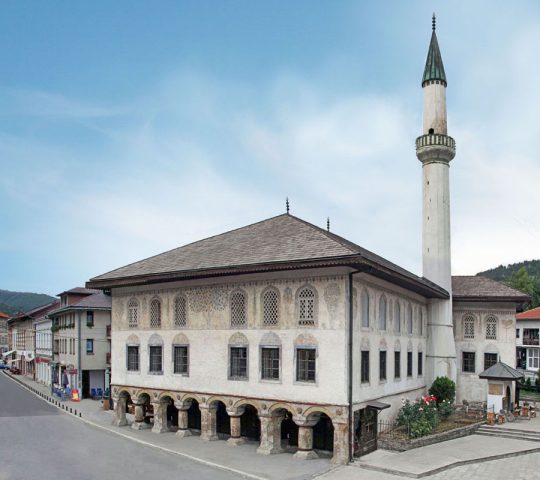
For over two hundred years, Travnik was the Ottoman Empire’s administrative heart in Bosnia, a crossroads for diplomats, traders, and craftsmen. The town thrived on its reputation for fine metalwork, particularly weapons and jewelry, and its streets buzzed with the energy of a place where deals were struck and ideas exchanged. Today, the legacy of that era lingers in the grand vizier’s palaces, the elegant minarets, and the old public baths. The most striking remnant is the Sulejmanija Mosque, its white stone standing out against the dark foliage of the surrounding gardens, a reminder of the town’s golden age.
Travnik has a literary soul. It was here that Ivo Andrić, the only Nobel Prize-winning writer from the former Yugoslavia, grew up. His childhood home, a modest house with a wooden veranda, sits on the edge of town, a place where the past feels close enough to touch. In the local cafés, where intellectuals once gathered, conversations still turn to books, politics, and the small joys of everyday life. Evenings bring locals to the main square, where they linger by the fountain, playing chess or sipping coffee as the light fades.
The mountains that loom over Travnik are more than just a backdrop. In summer, they offer cool breezes and crisp air, while in winter, their slopes draw skiers from across the region. But the real treasure here is the famous Travnik cheese, made from sheep’s milk using methods passed down through generations. Its flavor is unmistakable—salty, tangy, with a hint of smoke—and best enjoyed with warm bread, raw onions, and a glass of local wine. The cheese is still aged in wooden barrels, just as it always has been, and tasting it feels like a connection to the land itself.
This isn’t a place for those seeking luxury or constant entertainment. Travnik moves at its own pace, unhurried and unpolished. The streets are too narrow for cars, the houses wear their age proudly, and the people live much as their ancestors did. There’s a rhythm here, one that’s hard to find elsewhere in Europe, and if you let it, the town will slow you down too. It’s not about what you see, but how you feel while you’re here.
See & Do
8 places

Places on the map
Marker colour follows the categoryClimate and weather
Detailed weather: Herbalist- Average temperature
- 12 °C
- Precipitation per year
- 907 mm
- Average humidity
- 75 %
- Sunshine hours per day
- 8.9 h
- Time zone
- UTC+2 (GMT+2)
Average air temperature
°C
3
4
8
11
15
20
22
22
18
13
7
4
Jan
Feb
Mar
Apr
May
Jun
Jul
Aug
Sep
Oct
Nov
Dec


