Hasanaginica Square in Travnik is one of those rare places where time seems to soften, as if the world has gently pressed pause. Tucked into the heart of the old town, it opens up where the narrow stone streets widen just enough to let in light and air. There are no crowds here, no hurried footsteps—just the quiet rhythm of daily life. Locals sip coffee under the shade of plane trees, chat about nothing in particular, or simply sit in silence. The square isn’t grand or imposing; its charm lies in its unassuming warmth, the way it feels like a living part of the city rather than a relic.
The history of this place is woven into the fabric of Ottoman Bosnia, when Travnik was the capital of the Bosnian vilayet and the seat of viziers. The square takes its name from Hasanagin, a local ruler whose legacy lingers in the town’s memory. Centuries ago, this was a bustling hub—merchants haggling over goods, musicians filling the air with melodies, and the hum of conversation drifting through the evening. Today, the echoes of that era are faint but unmistakable. The old fountains, the intricately carved wooden balconies, the cobblestones worn smooth by generations of footsteps—all hint at a past that was far from quiet.
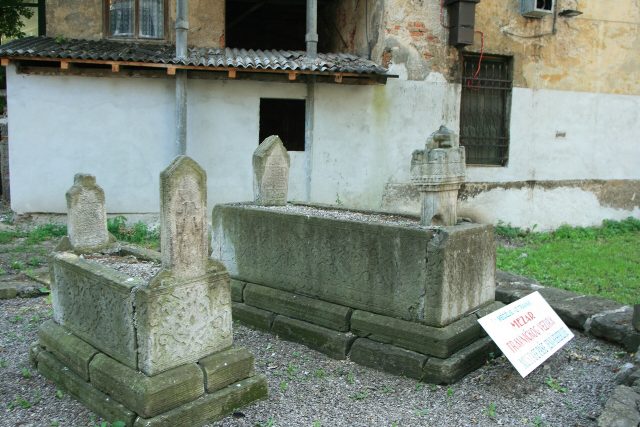
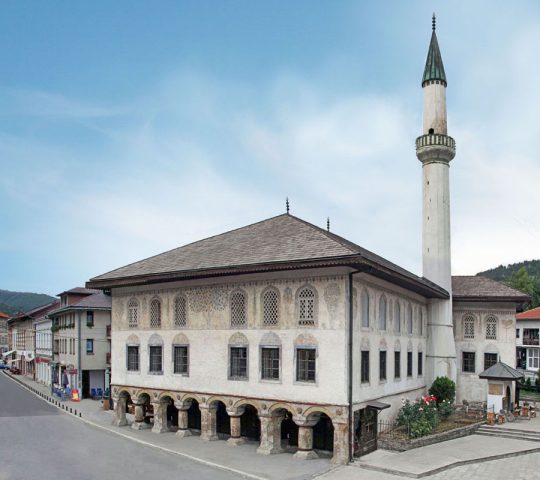
The architecture here tells a story of layers, of empires rising and falling. Ottoman houses with their terracotta roofs stand alongside Austro-Hungarian buildings, their facades a testament to the town’s shifting identity. The most striking structure is the former madrasa, built in the 18th century, its arched windows and inner courtyard a quiet refuge from the outside world. Nearby, a small mosque offers a different kind of stillness—unassuming on the outside, but inside, the soft glow of stained glass and the warmth of woven carpets create a space that feels both sacred and intimate. It’s a place where history doesn’t feel distant, but alive, as if the past and present have settled into an easy coexistence.
What makes Hasanaginica Square special is that it’s still very much a part of everyday life. In the mornings, elderly men gather under the trees to play backgammon, their laughter mixing with the clatter of dice. In the evenings, young people linger by the fountain, talking or scrolling through their phones, oblivious to the centuries of footsteps that have worn the stones beneath them. During the summer, the square occasionally hosts small concerts or festivals, where traditional Bosnian music spills into the night. In winter, the scent of roasted chestnuts and freshly brewed coffee drifts through the air. For locals, this isn’t just a historic site—it’s a living room, a meeting point, a place to slow down and watch the world go by.
The details here are what give the square its character. The old well in the center, once the heart of the neighborhood, where women would gather to draw water and exchange news. The wooden doors of the surrounding houses, each one carved with its own story, some faded by time, others still vibrant. Even the signs above the small cafés and shops look as though they’ve been there for decades, their lettering slightly worn but full of personality. It’s these small things that make Travnik feel like a town that hasn’t rushed to modernize, but hasn’t turned its back on the present either.
For visitors, Hasanaginica Square offers a glimpse of Bosnia beyond the usual tourist trails. There are no luxury hotels or flashy restaurants here—just the quiet authenticity of a place that has remained largely unchanged. The surrounding streets are a maze of small workshops where coppersmiths still hammer out traditional wares, and family-run cafés serve homemade cheese pies with tea in tiny glasses. If you’re lucky, you might stumble upon a local celebration, where the square fills with music, dancing, and the rich aroma of grilled meat. It’s the kind of place where you don’t just observe life—you slip into it, if only for a little while.
Travnik itself is a town of contrasts, nestled in a valley between mountains, its houses clinging to the slopes like something out of a painting. Hasanaginica Square is the perfect starting point for exploring. From here, you can see the town’s skyline—a mix of minarets and church steeples, red-tiled roofs and green hills rolling into the distance. A short walk up one of the narrow streets leads to the old fortress, where the entire valley unfolds beneath you. But even if you never leave the square, you’ll still get a sense of Travnik’s soul. There’s something about sitting on a bench, watching the light change over the rooftops, that makes the town feel both timeless and deeply human.
What sets Travnik apart is its lack of pretension. There’s no rush here, no need to fill the silence with noise. Hasanaginica Square isn’t a place for hurried sightseeing—it’s a place to linger, to listen to the sounds of the town, to wonder about the countless lives that have passed through over the centuries. Maybe that’s the real magic of such places: they don’t demand anything from you except curiosity and a willingness to see the world as it is, not as you expect it to be.