Kazbegi
Georgia · 6 places
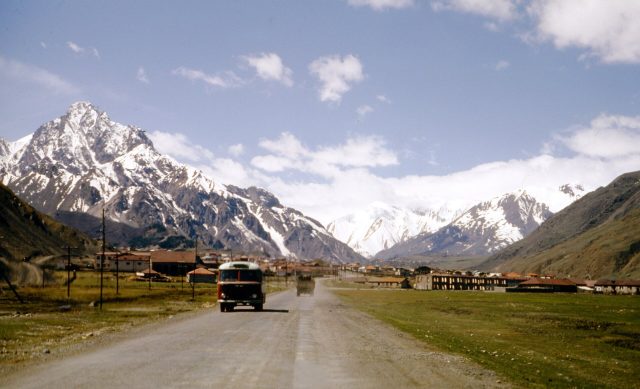
Photo: Vyacheslav Argenberg, CC BY 4.0
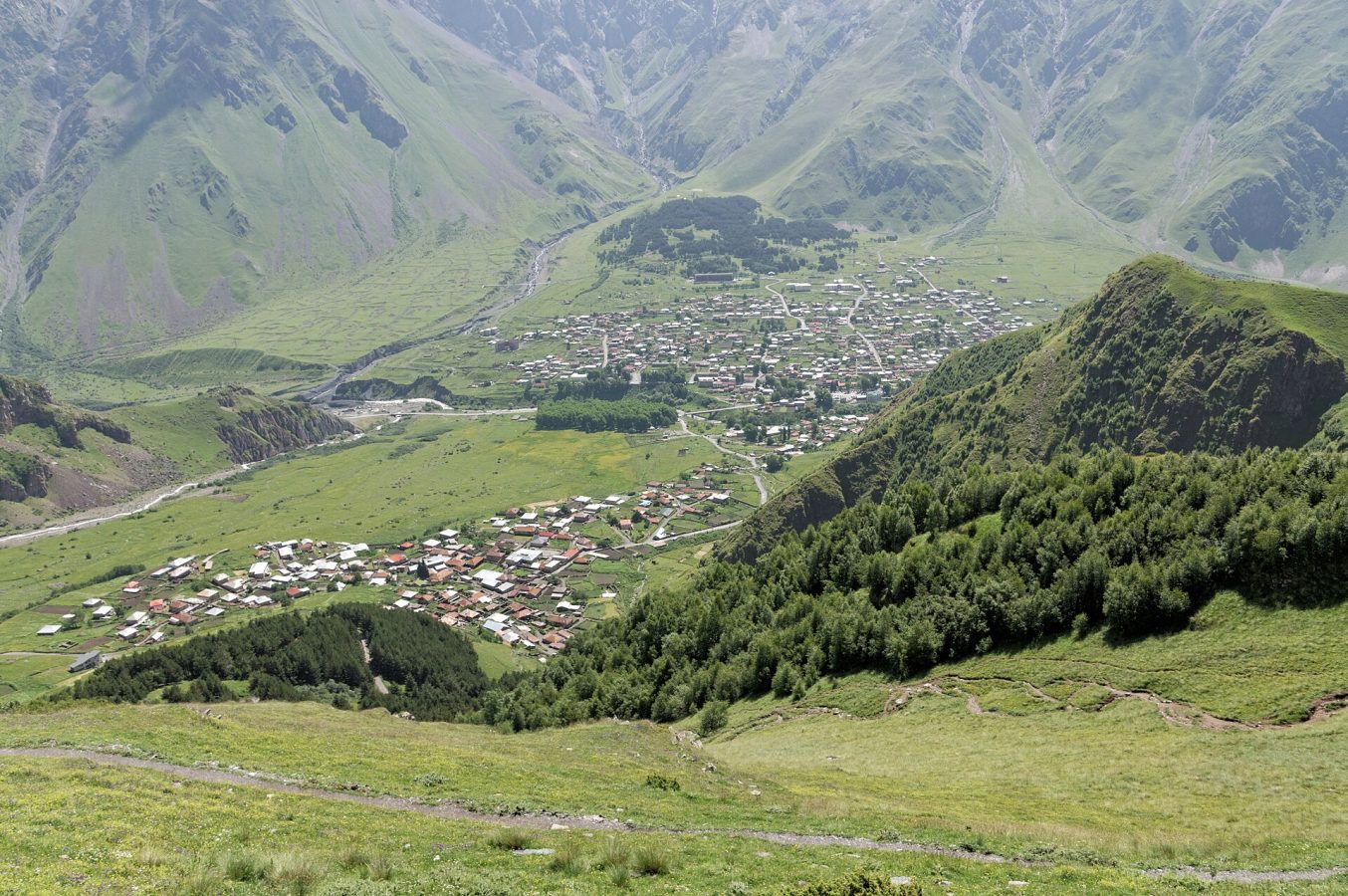
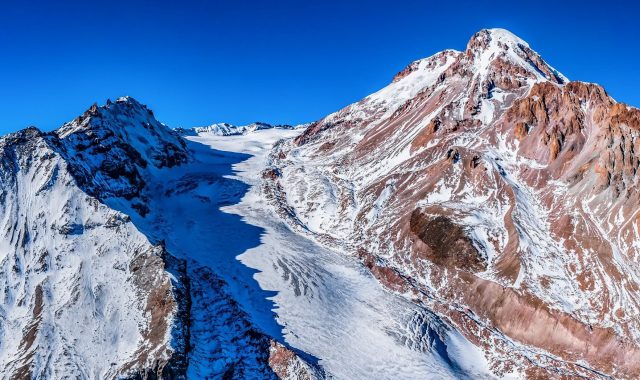
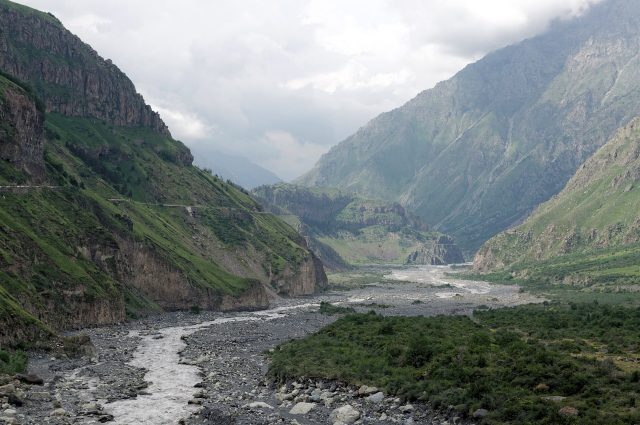
Stepanstminda is one of those rare places in Georgia where the mountains don’t just surround you—they become part of the very air you breathe. Tucked into a narrow valley carved by the Terek River, the town sits well over a thousand meters above sea level, and time here seems to move at its own unhurried pace, far removed from the clamor of the lowlands. All around, the snow-capped peaks of the Greater Caucasus rise like silent sentinels, with Mount Kazbek standing tallest among them. Its jagged outline looms over the village from nearly every angle, as if keeping watch over this quiet corner of the world where life follows the rhythm of nature rather than the demands of modern cities.
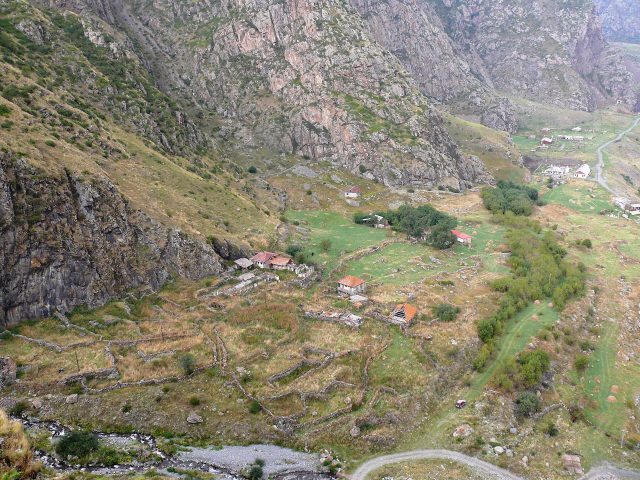
Stepanstminda itself is more village than town, a cluster of low stone and timber houses strung along winding lanes where the only traffic is the occasional herd of cows or a passing jeep. There are no high-rises, no shopping malls, no neon-lit streets—just a handful of small cafés serving up hearty khachapuri, steaming khinkali, and tea brewed with wild mountain herbs. In summer, the place hums with hikers, climbers, and travelers looking to escape the heat of the plains, while winter wraps the village in silence, its rooftops dusted with snow, turning it into a cozy refuge for those who don’t mind the cold.
The real draw, of course, is Kazbek. The mountain pulls in not just mountaineers but anyone who wants to stand in its shadow and feel its sheer scale. The road leading toward its base ends at the Gergeti Trinity Church, a 14th-century monastery perched on a cliff like something out of a legend. From a distance, it seems to float above the valley, a quiet testament to endurance and faith. You can hike up or take a rugged four-wheel drive, but even if you don’t make it all the way, the view from the lower slopes is worth every step. In winter, when snow blocks the road, the monastery feels even more remote, as if it’s guarding secrets meant only for those who brave the climb.
Stepanstminda also marks the gateway to the Darial Gorge, one of the most dramatic stretches of the Georgian Military Highway. The gorge begins just beyond the village, winding for kilometers between towering cliffs and the churning Terek River. Along the way, you’ll pass crumbling fortresses, bridges that seem to dangle over the abyss, and sheer rock faces draped in sparse forest. The road once connected Georgia to the North Caucasus, a vital trade route that shaped the region’s history. Today, it’s a scenic drive, but the echoes of its past linger in every bend and stone.
Life here moves slowly, and that’s part of the appeal. The locals are used to the mountain weather—sun one moment, snow the next—and they’ve adapted to it over generations. Many tend livestock, grow potatoes and vegetables on small plots, or work as guides and instructors when tourists arrive. There’s no rush, no urgency, and even visitors quickly fall into the same unhurried rhythm. Maybe that’s why Stepanstminda has a way of drawing in those who need a break from the noise of the world, offering a place where you can step outside of time and feel, if only for a little while, like you belong to something bigger.
See & Do
6 places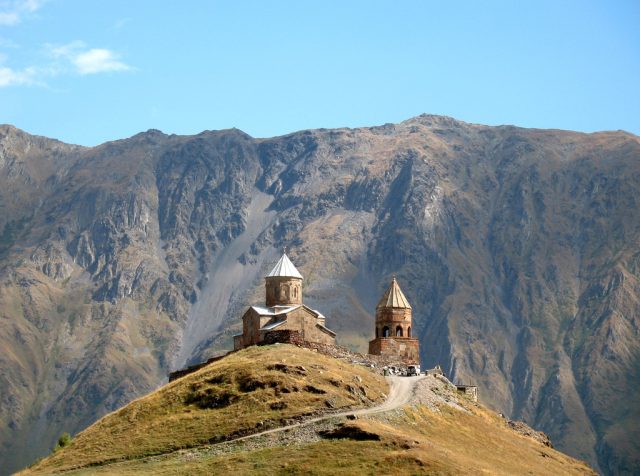
Places on the map
Marker colour follows the categoryClimate and weather
Detailed weather: Kazbegi- Average temperature
- 5 °C
- Precipitation per year
- 1167 mm
- Average humidity
- 80 %
- Sunshine hours per day
- 8.7 h
- Time zone
- UTC+4 (GMT+4)
Average air temperature
°C
-6
-7
0
5
7
13
16
17
11
6
3
-4
Jan
Feb
Mar
Apr
May
Jun
Jul
Aug
Sep
Oct
Nov
Dec