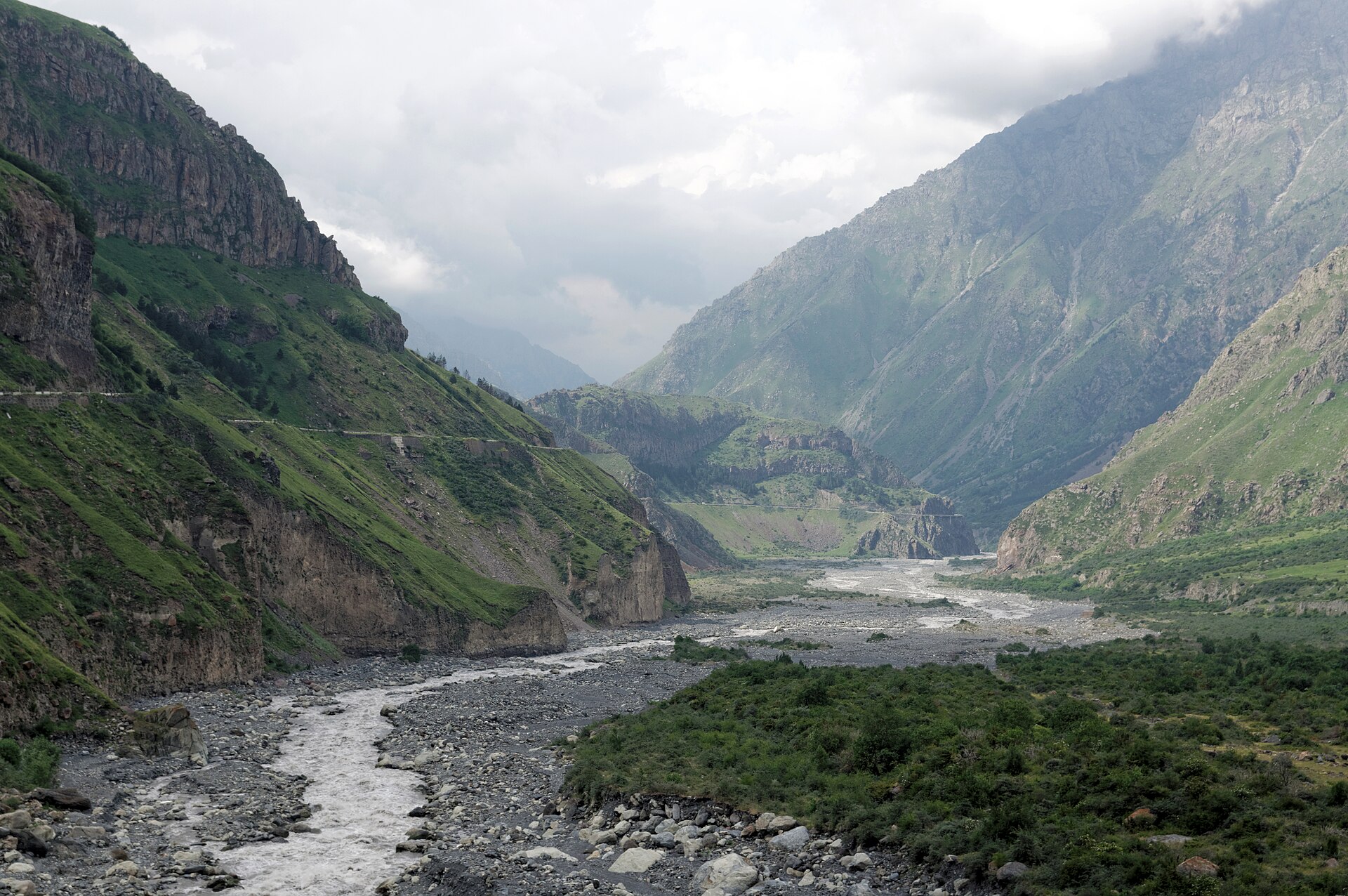
The Darial Gorge is one of those rare places where nature seems to have deliberately arranged everything to leave you in awe. A narrow cleft carved by the Terek River, it stretches for kilometers between towering cliffs that rise almost vertically, their jagged faces reaching hundreds of meters into the sky. The rock here is a mix of gray and russet hues, stark against the greenery of the slopes and the white froth of the rushing river below. Even on still days, the wind funnels through the gorge, carrying the scent of damp earth and pine. This isn’t a place for leisurely strolls—it’s where you stop, tilt your head back, and feel the weight of the mountains pressing down, making you acutely aware of your own smallness.
The gorge has always been more than just a landscape. For centuries, it served as a natural gateway, a threshold between the Caucasus and the world beyond. Ancient Greeks called it the Caspian Gates, while Persians knew it as the Gates of the Alans. Armies, merchants, and travelers passed through here, leaving behind traces of their journeys. In the Middle Ages, fortresses and outposts stood guard over the narrow passage, controlling the flow of people and goods between Georgia and the North Caucasus. By the 19th century, the Russian Empire had turned the gorge into a strategic corridor, paving the way for the Georgian Military Road—a vital artery connecting Vladikavkaz to Tbilisi. That road still winds through the gorge today, offering glimpses of a landscape that shifts from sheer cliffs to rolling hills dotted with grazing sheep.
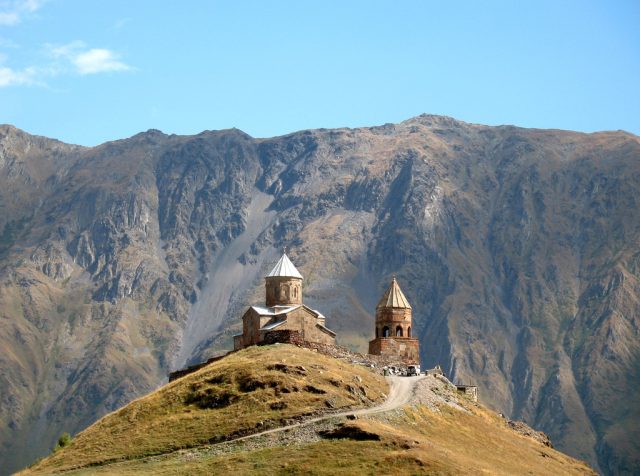
There aren’t many man-made landmarks in the gorge itself, but the ones that remain speak volumes. The most striking is the Darial Fortress, perched above the river like a silent sentinel. Though half-ruined, its massive stone walls and crumbling towers still exude a sense of power. Built sometime in the early Middle Ages, the fortress has witnessed countless conflicts, its stones bearing the marks of time and battle. Nearby stands a small 19th-century church, modest in size but perfectly in tune with its surroundings. It feels as if it has always been there, a quiet presence against the grandeur of the cliffs.
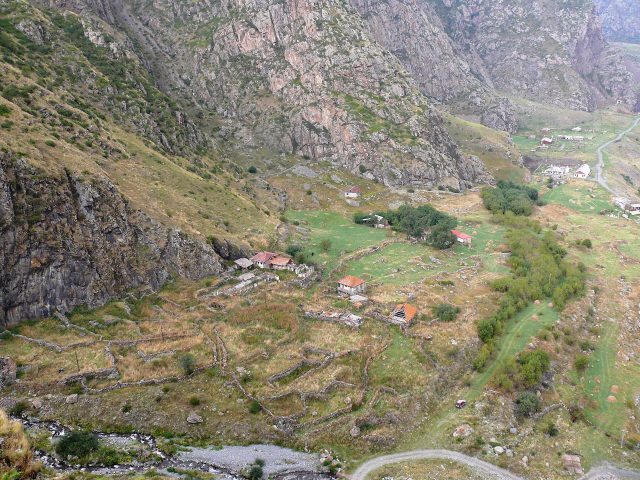
For the people who live in the nearby villages, the gorge is more than just a scenic spot—it’s a living part of their history and identity. Local legends still circulate about how the gorge came to be. Some say it was formed when a giant cleaved the mountain with his sword to let the river pass. Others link it to Queen Tamar, the medieval Georgian ruler who, according to folklore, traveled through here during her campaigns. These stories have been passed down through generations, and even those who have moved away carry them in their memories.
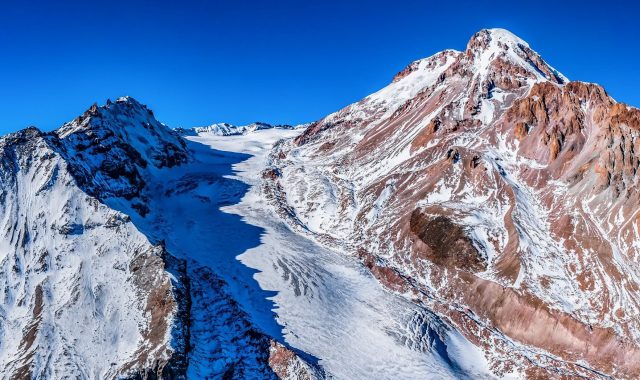
Visitors often remark on the gorge’s atmosphere, which feels untouched by time. There are no crowds, no souvenir stalls, no tourist traps—just the raw beauty of the mountains, the river, and the winding road disappearing into the distance. On clear days, the view opens up to the snow-capped peaks of the Greater Caucasus, their summits glinting in the sunlight. In winter, the gorge takes on a harsher appearance, with frost clinging to the rocks and the river partially frozen. Summer brings relief from the heat, the cool air making it easy to linger by the water, listening to the Terek’s relentless rush.
Getting to the gorge is straightforward—it lies just a few kilometers from Stepantsminda, the small town nestled at the foot of Mount Kazbek. From there, you can drive or even walk if you’re up for it. The road follows the river, passing old bridges and abandoned structures that hint at the bustling activity that once filled this place. Along the way, small cafés offer a chance to rest, serving tea, local cheese, and fresh bread. The people who run them are often happy to share stories about the area, adding another layer to the experience.
The Darial Gorge isn’t a place you can rush through. To truly appreciate it, you need to slow down and let the rhythm of the mountains set the pace. In the early morning, when mist still clings to the river, the gorge feels mysterious, almost otherworldly. By midday, the sun illuminates the cliffs, revealing subtle shifts in color—from slate gray to warm ochre. As evening falls, the shadows lengthen, and the air grows still, broken only by the sound of the water. This isn’t a destination for those seeking entertainment; it’s for those who want to see the Caucasus as it has always been—wild, imposing, and unapologetically rugged.
For many, the gorge has come to symbolize Georgia itself—a country where history and nature are so deeply intertwined that one cannot exist without the other. Every rock, every bend in the river carries echoes of the past. While it may not have the fame of Svaneti or Kakheti, places like Darial reveal the true character of the land. It’s not just a sight to see; it’s a piece of the Caucasus’s soul, worth experiencing at least once.