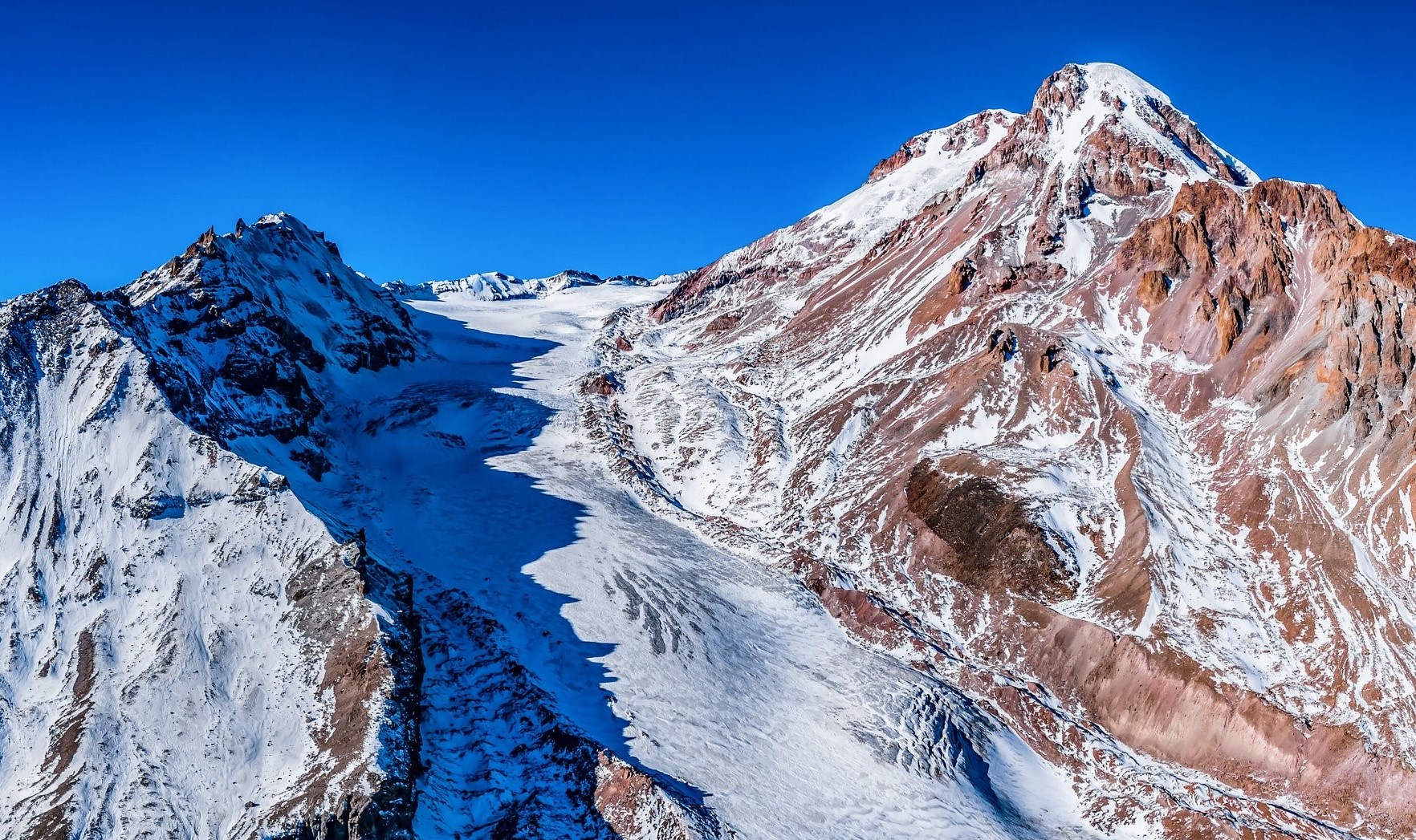
Mount Kazbek stands as one of the most iconic peaks of the Caucasus, its snow-capped summit straddling the border between Georgia and Russia. From a distance, its imposing silhouette dominates the horizon, especially along the Georgian Military Highway, where the mountain seems to loom over the winding road, appearing and vanishing with each turn. For many, Kazbek is more than just a mountain—it’s a symbol of the region, steeped in legend and history. The locals call it Mkinvartsveri, meaning "Ice Mountain," a name that perfectly captures its rugged, unyielding nature.
Part of the Greater Caucasus range, Kazbek rises to 5,034 meters, making it Georgia’s third-highest peak after Shkhara and Jangitau. While climbers don’t consider it the most technically challenging ascent, the weather here can shift in an instant. Even in summer, snow clings to its slopes, and winter brings biting winds and treacherous conditions that deter all but the most experienced mountaineers. Yet every year, adventurers arrive, drawn by the promise of testing their limits or simply witnessing the Caucasus from above.
The mountain’s history is woven into myth and folklore. In Georgian legend, Kazbek is where Amirani—the local counterpart to Prometheus—was chained for stealing fire from the gods and gifting it to humanity. Some say the chains that bound him can still be glimpsed on the slopes if you know where to look. Christianity, too, left its mark on Kazbek’s story. Nearby, in the Betlemi Cave, tradition holds that sacred relics once rested, including the manger where the infant Jesus was laid. Whether fact or fable, these tales add layers of meaning to the mountain’s presence.
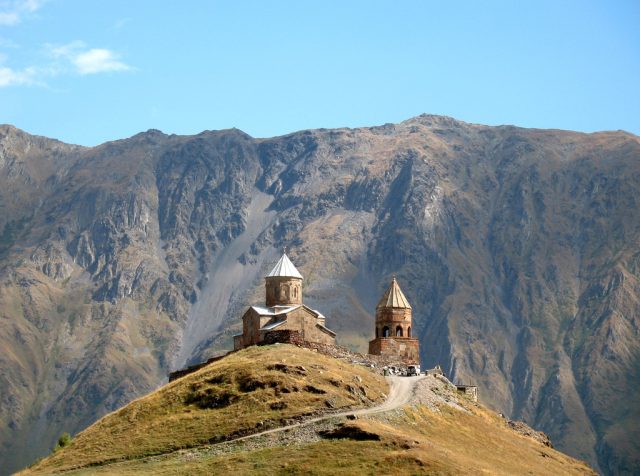
Reaching Kazbek’s foothills is easiest from Stepantsminda, a quiet village that serves as the gateway for travelers. From here, trails lead to the Gergeti Glacier, where the 14th-century Gergeti Trinity Church perches on a hillside, its stone walls framed by towering peaks. The church, another symbol of the region, was once a pilgrimage site, its steep path trodden by the faithful. Today, visitors climb the same route, not for prayer, but for the sweeping views and the sense of stepping back in time.
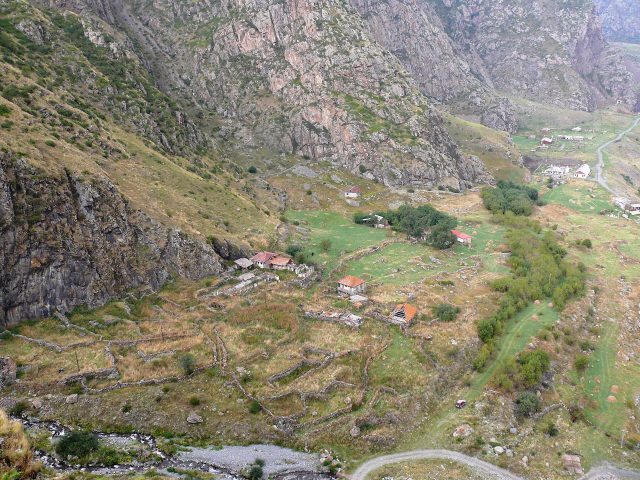
Stepantsminda itself moves at a slower pace, untouched by the rush of cities. The air carries the scent of fresh bread and drying herbs, while flocks of sheep and cattle often wander the roads. Local cafés serve khachapuri and khinkali, their flavors as familiar as the landscape. As evening falls, the light softens, painting the sky in shades of pink and violet, and the cool mountain air settles over the village.
For those who don’t plan to climb, Kazbek remains a constant presence. Its outline follows travelers along the road from Tbilisi to Vladikavkaz, a reminder of the Caucasus’s raw beauty. Even standing at its base, looking up, it’s impossible not to feel the mountain’s weight—its centuries of history, its indifference to human ambition. It’s not just a sight to admire; it’s a force that makes you pause, reconsidering your place in a world far older and vaster than yourself.
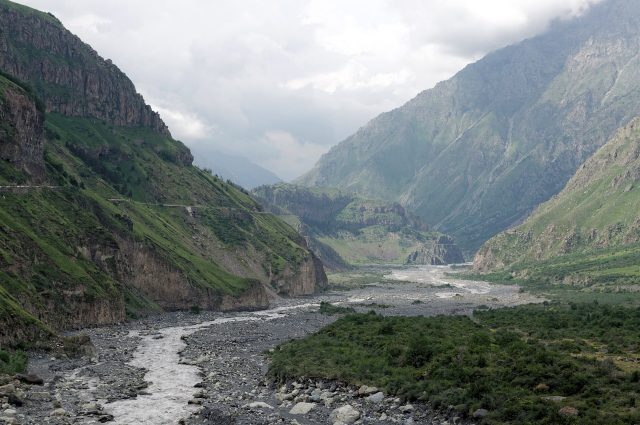
In winter, Kazbek wears its harshest face, snow blanketing its slopes and the Gergeti Glacier appearing even more formidable. Summer thaws the lower reaches, revealing green meadows where horses and sheep graze. The season draws visitors seeking respite from the valley heat, some lingering in Stepantsminda for days, hiking the trails or simply sitting by the river, listening to the rush of water and wind.
Beyond its physical presence, Kazbek is woven into Georgia’s cultural fabric. It appears in poems, songs, and art, its image stamped on souvenirs and postcards. For locals, it’s not just a mountain but a part of their identity—a symbol of endurance and beauty. Even those who’ve never set foot in the Caucasus know Kazbek, its snowy peak rising above the clouds in the collective imagination.
A journey to Kazbek is more than a visit to a scenic landmark. It’s an encounter with the layers of the Caucasus—its history, its people, its untamed landscapes. Here, time feels different, measured in the slow shift of shadows across the mountains. The peaks have stood for centuries, and in their presence, the fleeting concerns of the modern world fade, leaving only the quiet, enduring power of the land.