Southern Islands
Singapore · 8 places
Photo: ProjectManhattan, CC0
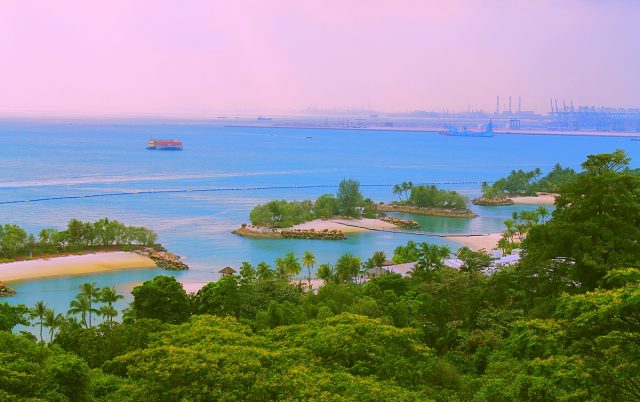
Singapore’s Southern Islands feel like a world apart from the city’s relentless pace. Here, the rhythm slows, the skyline flattens, and the only crowds you’ll find are the occasional seabirds wheeling overhead. The islands are scattered across the Singapore Strait, each with its own quiet character—some still hum with the echoes of old fishing villages, while others remain untouched, their shores lined with mangroves and empty beaches. The only way to reach them is by ferry, a journey that already feels like the start of something unhurried. No highways, no high-rises, just the open water and the promise of a different kind of day.
Sentosa is the exception, the island that plays by its own rules. Once a British military outpost, then a forgotten corner of the strait, it’s now Singapore’s most polished getaway. The beaches are manicured, the paths are paved, and the attractions—from theme parks to underwater tunnels—are designed to keep visitors busy. But even here, the island’s wild side lingers. Step off the main drag, and you’ll find pockets of jungle where monitor lizards sun themselves on rocks or the sunset paints the sky in silence, far from the resort lights. Sentosa is both a playground and a reminder that even the most developed places have edges where nature still holds sway.
Then there’s Pulau Hantu, the largest of the uninhabited islands, where the past feels closer than the present. Abandoned World War II bunkers crumble along the shore, their concrete shells now home to ferns and crabs. The trails are overgrown, leading to secluded coves where the water is so clear you can see the sand shifting beneath the surface. Locals whisper about strange sounds at night—wind through the rocks, or maybe something older—but the real draw is the solitude. There are no hotels, no restaurants, just the quiet and the knowledge that you’re sharing the island with nothing but the tide and the trees. Nearby, Pulau Sembawang holds the ghost of a fishing village, its wooden stilt houses long gone, replaced by the nests of herons and the occasional fisherman casting his line.
Pulau Ubin is where Singapore’s past lingers most stubbornly. The island still moves at the pace of a bicycle, its dirt paths winding past wooden houses on stilts, small farms, and a working granite quarry where the air hums with the sound of machinery. There are no paved roads here, no high-rises, just the slow churn of daily life—fishermen heading out at dawn, children playing by the water, old men gathering in the shade to talk. It’s easy to forget that the city’s glass towers are just a short boat ride away. Ubin feels like a place where time has simply decided to pause, a living museum of the Singapore that once was.
The smaller islands—Pulau Brani, Pulau Sekudu, Pulau Salat—are the quietest of all. Some have the skeletal remains of old lighthouses, their beams long extinguished. Others offer hidden coves where the water is so still it mirrors the sky. Fishermen sometimes camp here for the night, cooking their catch over driftwood fires and sleeping under the stars. These islands don’t make it onto most itineraries, but that’s precisely why they feel special. They’re a reminder that Singapore wasn’t always a city of the future, that it was once just a chain of islands where life moved to the rhythm of the tides. Today, they’re the last places where that rhythm still plays out, undisturbed.
See & Do
8 places



Places on the map
Marker colour follows the categoryClimate and weather
Detailed weather: Southern Islands- Average temperature
- 28 °C
- Precipitation per year
- 2457 mm
Average air temperature
°C
27
28
29
29
29
29
29
29
29
29
28
28
Jan
Feb
Mar
Apr
May
Jun
Jul
Aug
Sep
Oct
Nov
Dec