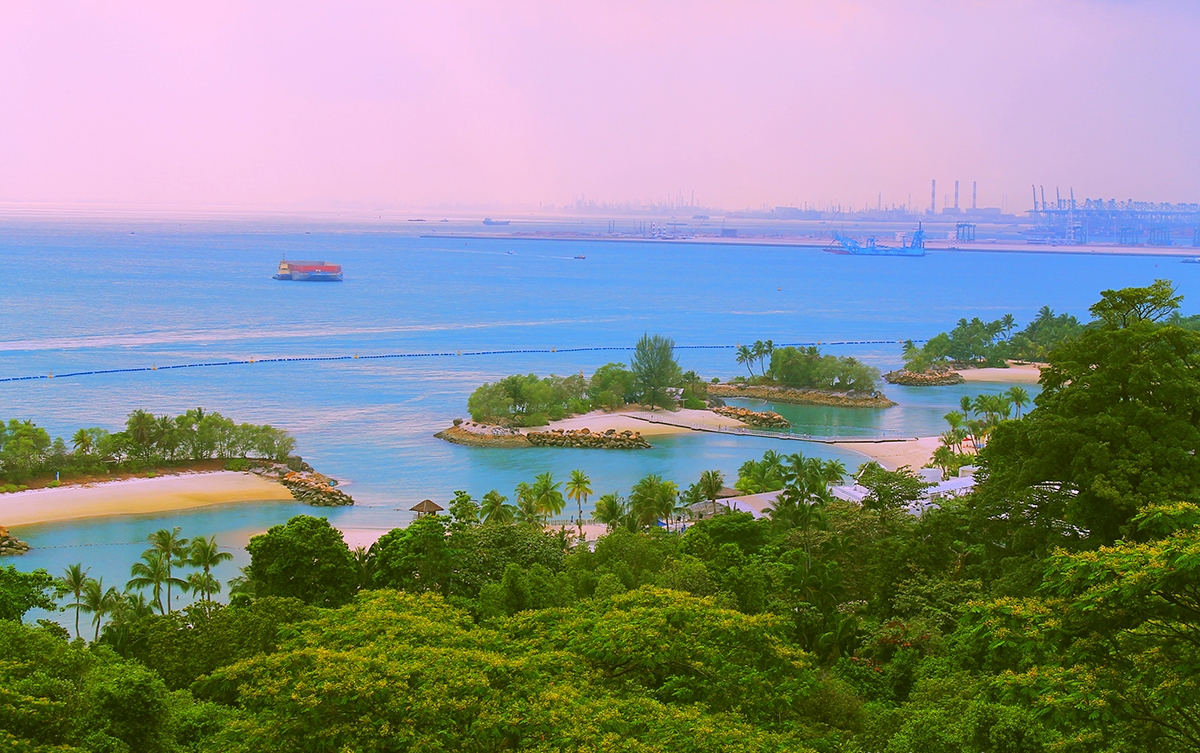
Palawan Beach is one of those rare spots in Singapore where the city’s relentless energy fades into the background, leaving only the quiet rhythm of waves and the occasional cry of seabirds. Tucked away on Sentosa Island, it offers a sense of seclusion that’s hard to find elsewhere on this well-trodden stretch of land. Unlike the crowded beaches nearby, Palawan feels almost untouched, even on weekends. The sand is soft and pale, the water clear but not the unreal turquoise of postcard-perfect resorts. There’s something honest about it—the kind of place that doesn’t try too hard to impress, and that’s exactly why it does.
Sentosa itself has come a long way from its past as a military outpost and a cluster of fishing villages. By the mid-20th century, it had been transformed into a playground for tourists, packed with hotels, theme parks, and attractions. Palawan, though, has managed to stay slightly apart from the island’s commercial buzz. The suspension bridge leading to the beach has become one of Sentosa’s signature sights, a low, swaying walkway that offers a view of the bay and the palms lining the shore. It’s a favorite spot for photos, especially at sunset, when the water takes on a warm, golden glow.
The beach itself is small but well-kept, with wooden boardwalks running along the shore and clusters of casuarina and palm trees providing shade. The water is calm, with no strong currents, making it a safe place for a swim, even for children. That said, it’s still an urban beach, and the water isn’t always pristine, particularly after rain. But for anyone looking to cool off or soak up the sun without fuss, it’s more than enough. A few cafes and snack stalls dot the shoreline, though the amenities here are simpler than on Sentosa’s busier beaches.
What makes Palawan interesting isn’t just its sand and sea, but the layers of history beneath them. The area around the beach still holds traces of Sentosa’s military past, including the remnants of colonial-era forts. Nearby, Fort Siloso has been turned into an open-air museum, a reminder of the island’s role in defending Singapore. Walking along the shore, you might stumble upon small coves or rocky outcrops where artillery batteries once stood. These quiet echoes of the past give the place a subtle depth, as if the present and the past exist side by side.
In recent years, Palawan has become a favorite not just for tourists but for locals too. Families come here for picnics, couples for quiet afternoons, and photographers for the soft light and uncluttered scenery. Early mornings are especially peaceful, when the beach is nearly empty and the air is still cool. It’s the kind of place where you can sit on the sand, listen to the waves, and forget, for a little while, that you’re in one of the world’s most densely packed cities.
Getting here is straightforward. From downtown Singapore, you can take the MRT or a bus to Sentosa, then hop on the island’s monorail or a shuttle to the beach. The suspension bridge starts just a short walk from the monorail station, so the last leg of the journey is easy. Ferries also run between Sentosa and the mainland, and if you’re driving, parking is available nearby. The journey itself feels like part of the experience—leaving the city behind and stepping into a slower, quieter rhythm.
Palawan isn’t the kind of beach you visit for luxury or excitement. There are no high-end resorts or beach clubs here, just sand, sea, and a sense of calm. It’s a place for simple pleasures: the warmth of the sun, the sound of waves, the feel of a breeze. In a city where space is at a premium, spots like this are precious. They remind you that even in the middle of urban life, there are still corners where time moves differently, where the world feels a little softer and a little kinder.