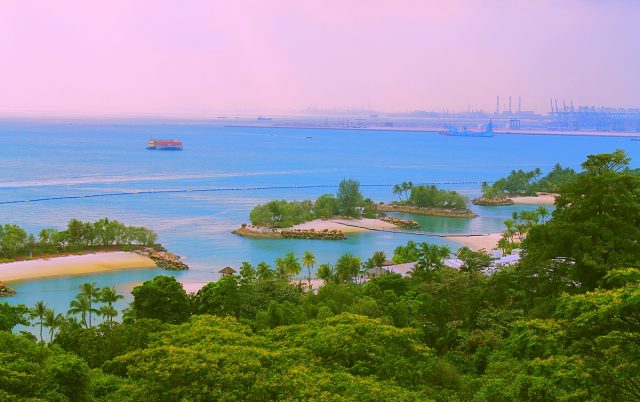
Sentosa feels like a world apart, though it’s just a short cable car ride or ferry trip from Singapore’s bustling waterfront. The island offers a quiet contrast to the city’s skyline—wide beaches, shaded walking trails, the steady rhythm of waves, and pockets of history tucked between the trees. There are no towering buildings or traffic jams here, though weekends and holidays do bring crowds. Even then, the place retains its own unhurried pace, a sense of escape without the effort of leaving the city behind.
The island wasn’t always a retreat. In the 19th century, the British built Fort Siloso as part of Singapore’s coastal defenses, its cannons aimed at the strait to deter naval attacks. The guns never fired a shot in combat, and today the fort stands as an open-air museum. Visitors can wander through old tunnels and bunkers, past rusted artillery pieces, and imagine the lives of the soldiers stationed here. The surrounding park has slowly reclaimed the site, with trees and vines softening the edges of the ruins, creating a strange mix of abandonment and tranquility.
Beaches are what most people associate with Sentosa, and there are several, each with its own character. Siloso Beach, with its fine white sand and gentle slope into the water, is ideal for families. Palawan Beach, where the water is clear enough to spot fish, draws snorkelers. Tanjong Beach, with its rocky outcrops and wilder feel, appeals to those seeking solitude. Even on busy days, it’s easy to find a quiet stretch of sand—there’s always space to slow down.
But Sentosa is more than just beaches and history. Over the years, it has become a testing ground for entertainment, with new attractions appearing regularly. Universal Studios Singapore, part of the Resorts World complex, packs in a full day’s worth of rides and shows, from Hollywood-themed roller coasters to ancient Egyptian tombs. Nearby, the S.E.A. Aquarium holds sharks, rays, and thousands of other marine creatures beneath its glass domes. For those who prefer activity, there’s kayaking, sailing, or even a jungle zip line.
Not all of Sentosa’s attractions rely on modern technology. The island has its share of quiet green spaces, where time seems to move differently. The Fort Siloso Skywalk, a suspended trail through the treetops, leads to a viewpoint overlooking the sea and the city skyline. At the Southernmost Point of Continental Asia, a small monument marks the tip of the Asian continent, a popular spot for photos. From the nearby cliffs, you can watch the sunset paint the sky in shades of pink and gold.
Evenings on Sentosa don’t slow down. Bars and restaurants along the beaches light up, serving local dishes and cocktails with the sound of waves in the background. Clarke Quay, a riverside entertainment strip relocated from the mainland, fills with live music and the scent of grilled seafood. For those who want to stay overnight, there are options ranging from luxury resorts with private beaches to simple bungalows where the only sounds are birdsong and rustling leaves.
Sentosa makes it easy to lose track of time. There’s no need to rush or plan—just wander the paths, swim in the sea, or sit in a café watching the island go by. On weekdays, when the crowds thin out, the place feels even more peaceful. The sound of the surf and the breeze through the trees create the illusion of being far from the city, though Singapore is just minutes away. That might be the island’s greatest trick: offering the feeling of a getaway without ever leaving home.