
Sardarapat
Armenia · 7 places
Photo: Սէրուժ Ուրիշեան (Serouj Ourishian), CC BY-SA 3.0
Sardarapat feels like a place where Armenia’s history isn’t just remembered—it’s still alive. Tucked into the Ararat Valley, less than an hour’s drive from Yerevan, this quiet town is best known for the memorial complex that marks the 1918 battle where Armenian forces, led by General Movses Silikyan, halted the advance of the Ottoman army. The victory became a defining moment for the nation, a symbol of resilience that still resonates today. The memorial itself, built in 1968, stands as one of the country’s most important landmarks, though it’s far from the only reason to visit.
Life here moves at a different pace than in the capital. There are no crowds, no tourist traps, just low-slung houses built from the region’s characteristic tuff stone, vineyards stretching along the roads, and the distant silhouette of mountains that seem close enough to touch. The surrounding countryside holds layers of history—ancient settlements where archaeologists have uncovered traces of Urartian fortresses and early Christian churches. Locals speak of their homeland with quiet pride, as if sharing something so deeply rooted it doesn’t need explaining.
Beyond the memorial, the area offers a handful of monasteries, each with its own story. Aragatsotn Monastery, nestled in the foothills of Mount Aragats, feels like a hidden retreat, while Etchmiadzin Cathedral, just a short drive away, remains a living center of Armenian faith. These aren’t just historical sites; they’re places where services are still held, where the walls seem to hum with centuries of devotion. The landscape itself—rolling hills, fertile fields, and the occasional glimpse of the Arax River—adds to the sense of timelessness.
Sardarapat isn’t just about the past, though. It’s a place where Armenia’s present unfolds in small, everyday ways. The vineyards produce grapes for the region’s well-known wines, and roadside stalls sell honey, dried fruits, and spices brought from across the country. In summer, the air is thick with the scent of ripe apricots; in autumn, woodsmoke drifts from fires where traditional dishes are prepared. The town doesn’t try to impress—it simply exists, and that’s its charm. Staying here for a day or two offers a glimpse of rural Armenian life, unhurried and steady, much like the river that flows nearby.
If you find yourself in this part of the country, don’t rush off after visiting the memorial. Take time to wander the quiet streets, stop at a small café for fresh lavash and strong coffee, or explore the fields beyond the town. It’s in these moments—watching the light change over the mountains, listening to the murmur of conversation in a local shop—that Sardarapat reveals why it matters so deeply to Armenians. Here, history, faith, and daily life aren’t separate; they’re woven together in a way that feels both ordinary and extraordinary.
See & Do
All of them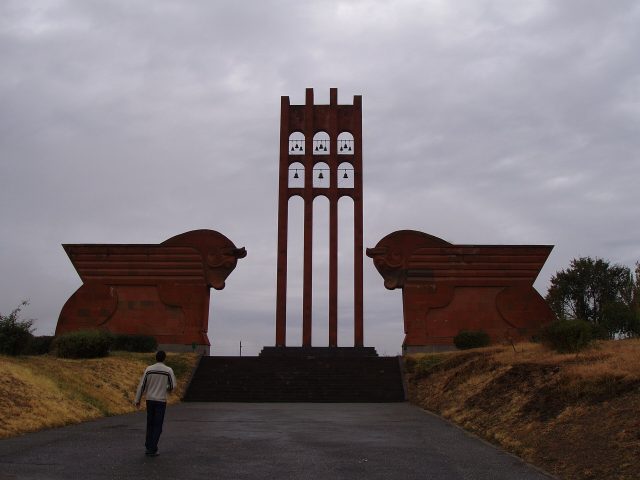


Places on the map
Marker colour follows the categoryClimate and weather
Detailed weather: Sardarapat- Average temperature
- 13 °C
- Precipitation per year
- 1658 mm
Average air temperature
°C
-2
0
8
13
18
24
26
26
21
13
6
2
Jan
Feb
Mar
Apr
May
Jun
Jul
Aug
Sep
Oct
Nov
Dec


