
Rupite
Bulgaria · 6 places
Photo: Wikimedia Commons, CC BY 2.5
Rupite feels like a place where the world slows down just enough to let you breathe. Tucked into southern Bulgaria’s quiet hills, it’s a village of sunbaked slopes, winding vineyards, and the faint murmur of the Struma River cutting through the landscape. There are no crowds here, no neon signs or towering buildings—just the steady rhythm of life as it’s been for generations. Locals still work the land, weaving baskets from reeds and tending to small plots of vegetables, while visitors come for the stillness and the steaming mineral springs that rise from deep underground.
The thermal waters here are impossible to ignore. They surge to the surface at a near-boiling 75 degrees Celsius, thick with minerals that have drawn people for centuries. The Romans knew their healing power, and today, the springs still offer relief for aching joints and stubborn skin conditions. In winter, when frost dusts the surrounding hills, the pools send up clouds of steam, wrapping the air in a warm, sulfurous haze. After soaking, the body feels lighter, as if the water has washed away more than just the day’s fatigue. The baths themselves are simple—small, open-air pools where locals and travelers alike linger, letting the heat seep into their bones. There’s no grand spa here, just the quiet understanding that the water does more than warm the skin.
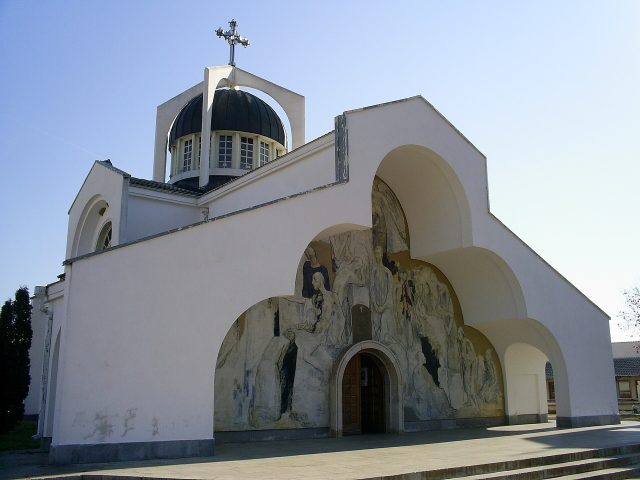
Just steps from the springs stands the Church of St. Petka, a modest building with walls covered in faded but vivid frescoes. It was built at the request of Bulgaria’s most famous clairvoyant, Vanga, who believed this land held a special energy. The church is small, its interior hushed, with sunlight filtering through narrow windows to illuminate scenes from the Bible. Nearby, her former home has been turned into a museum, filled with the personal artifacts of a woman who remains a figure of fascination long after her death. Visitors still come to leave flowers, light candles, or simply sit in the quiet, as if hoping to catch a whisper of the intuition that once guided her. The air around the church feels heavier, charged with something unspoken, whether faith or folklore.
Beyond the village, the landscape unfolds in rolling hills and patches of forest, where wildflowers bloom in spring and leaves turn to gold in autumn. The vineyards here produce wine that tastes of the earth—deep, slightly tart, best enjoyed slowly, with a meal or a long conversation. Walking the dirt paths that crisscross the valley, you can spend hours without seeing another soul. The horizon stretches wide, framed by distant mountains, and the silence is broken only by the occasional rustle of wind through the trees or the distant lowing of cattle. There are no grand hotels in Rupite, just a handful of rooms in local homes, where hosts will pour you a glass of homemade wine and point you toward the best trails or the quietest corners of the river.
This isn’t a place for those who need constant entertainment or the hum of a busy resort. Rupite moves at its own pace, untouched by the rush of modern life. The air is clean, the nights are dark, and time feels different here—softer, more deliberate. It’s a village that has changed little over the decades, where the past lingers in the way people live, in the stories they tell, and in the land itself. If you’ve ever wondered what Bulgaria was like a hundred years ago, this is where you’ll find the answer. Not in museums or guidebooks, but in the slow, unhurried rhythm of a place that has always known how to wait.
See & Do
6 places
Places on the map
Marker colour follows the categoryClimate and weather
Detailed weather: Rupite- Average temperature
- 16 °C
- Precipitation per year
- 739 mm
- Average humidity
- 64 %
- Sunshine hours per day
- 9.9 h
- Time zone
- UTC+3 (GMT+3)
Average air temperature
°C
6
7
11
14
18
25
28
27
22
16
11
7
Jan
Feb
Mar
Apr
May
Jun
Jul
Aug
Sep
Oct
Nov
Dec


