Rupite is a quiet village tucked away in southern Bulgaria, a place where time seems to move at its own unhurried pace. The landscape here is gentle—low hills rolling into the distance, fields dotted with wildflowers, and the faint scent of herbs carried on the warm, dry air. But what draws most visitors to this unassuming corner of the country is not its scenery alone, but the memory of a woman who spent her final years here. Vanga, as she was known to the world, was one of the most famous clairvoyants of the 20th century, and her modest home in Rupite has since become a place of quiet reflection for those who seek to understand her life and legacy.
Vanga, born Vangelia Gushterova in 1911, lost her sight as a child after a freak accident, an event that many believe awakened her extraordinary abilities. Over the decades, word of her gift spread far beyond Bulgaria’s borders. People from all walks of life—farmers, politicians, artists—traveled to meet her, hoping for guidance or a glimpse into their futures. By the time she settled in Rupite in the early 1990s, her health was already fragile, but the village offered her the peace she needed. Here, surrounded by the warmth of the earth and the quiet rhythms of rural life, she continued to receive visitors until her death in 1996.
Her house, now a museum, is a simple one-story building with whitewashed walls and a red-tiled roof, much like any other in the Bulgarian countryside. Stepping inside feels less like entering a museum and more like visiting a home where someone has just stepped out for a moment. The furniture is plain, the kind you might find in any village house—wooden chairs, a table covered with a hand-embroidered cloth, a few personal belongings left as they were. In one room, her bed remains, neatly made, with a quilt folded at the foot. Nearby, a small desk holds her glasses, a notebook, and a few other items she used daily. The room where she met with visitors is almost untouched, with a wooden table at its center, surrounded by chairs. The air is still, as if holding its breath, and it’s easy to imagine the quiet conversations that once took place here.
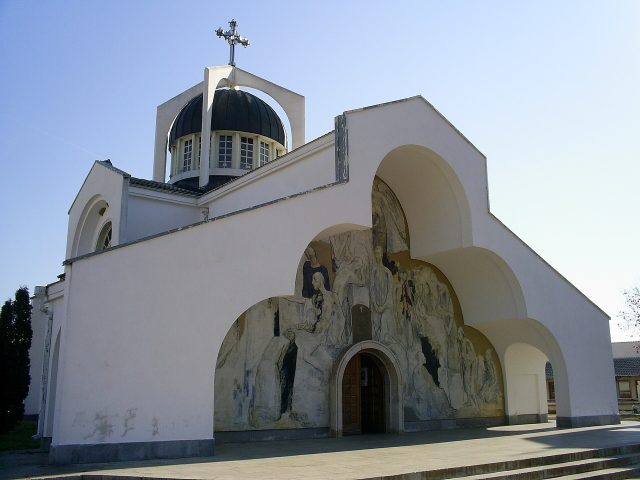
Just a short walk from the house stands the Church of St. Petka, built at Vanga’s request. She believed Rupite was a place of special energy, a spot where the earth’s power was particularly strong. The church is small but striking, its walls covered in frescoes that tell stories not just of saints and biblical scenes, but of historical figures and even events that have yet to unfold. Some of the images are unsettling—visions of the future that blur the line between prophecy and art. Vanga herself was involved in the church’s creation, choosing the subjects for the paintings and even directing where they should be placed. The result is a space that feels both sacred and deeply personal, a testament to her belief in the unseen forces that shape our lives.
Rupite is more than just a pilgrimage site for those drawn to Vanga’s story. The village sits in the foothills of the Pirin Mountains, an area rich in history. Long before Vanga’s time, this land was home to ancient settlements, and the thermal springs that bubble up from the earth have been used for centuries—first by the Romans, then by generations of locals who believed in their healing properties. The water here is warm and mineral-rich, and even today, visitors can soak in a small outdoor pool near the village center. The surrounding countryside is dotted with vineyards and fields of lavender and tobacco, their scents mingling in the air with the earthy warmth of the springs.
What makes Rupite special is its lack of pretense. There are no crowds here, no tourist traps, just a quiet village where life moves at its own pace. The people who live here remember Vanga not as a mythical figure, but as a neighbor—a woman who offered advice, shared her wisdom, and sometimes simply listened. They speak of her with respect, but without the kind of reverence that turns a person into something larger than life. For them, she was someone who lived among them, who understood their struggles and celebrated their joys. That sense of familiarity is still palpable in the village, where her presence lingers in the stories people tell and the way they welcome visitors.
There’s a certain mystery to Rupite, one that doesn’t need grand explanations. It’s in the way the light falls over the hills at dusk, in the quiet hum of the thermal springs, in the way the church’s frescoes seem to watch you as you move through the space. Some come here seeking answers, others simply to feel the weight of history in the air. But what they often find is something simpler—a moment of stillness, a chance to step away from the noise of the world and listen to the quiet voice inside themselves.
Vanga’s house and the Church of St. Petka are the most visible symbols of Rupite’s legacy, but the true heart of the place lies in its everyday life. It’s a village that has not been frozen in time, but one that continues to live and breathe. The fields are still tended, the springs still flow, and the stories of Vanga are still told, not as legends, but as part of the fabric of the community. In that way, Rupite remains a living place, one where the past and present coexist without effort. It’s not a destination for those seeking spectacle, but for those who understand that some of the most meaningful journeys are the quiet ones.