Rupite is a quiet village tucked away in southern Bulgaria, a place that feels suspended in time. Its gentle landscapes of rolling fields and distant mountains give little hint of the deeper currents that draw visitors here. At the heart of this unassuming settlement lies Kozhuh Hill, a modest rise in the land that carries far more weight than its size suggests. For locals and pilgrims alike, it is a place where the past lingers, where the earth seems to hum with stories older than memory itself.
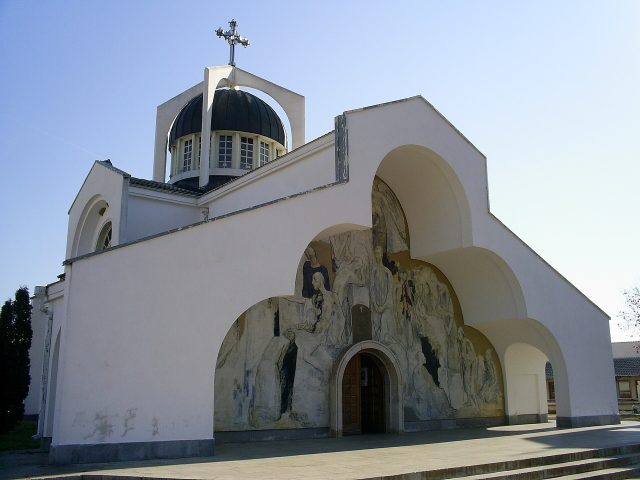
The hill’s significance is inseparable from the life of Vanga, the blind mystic who spent her final years in Rupite. She spoke of this land as a wellspring of energy, a place where the veil between worlds felt thin. After her death, she was laid to rest at the foot of Kozhuh, and today, her presence still lingers in the quiet corners of the village. The small Church of St. Petka, built at her request, stands as a testament to her vision. Its architecture is unusual for Bulgaria—more reminiscent of Byzantine churches than the familiar Orthodox domes—with vibrant frescoes that glow against the pale stone. Inside, the air is thick with the scent of wax and incense, and the soft murmur of prayers blends with the rustle of leaves outside.
The climb up Kozhuh is short, but the view from the top makes the effort worthwhile. On clear days, the horizon stretches endlessly, revealing patchworks of vineyards, golden fields, and the faint outline of mountains in the distance. Below, Rupite unfolds like a postcard: whitewashed houses with red-tiled roofs, gardens bursting with late-summer fruit, and the slow curve of the Struma River cutting through the land. There are no crowds here, no hurried footsteps—just the occasional visitor wandering the paths or sitting on the grass, watching the light shift over the hills.
The history of Kozhuh reaches back far beyond Vanga’s time. Archaeologists have uncovered traces of Thracian settlements in the area, suggesting that this land has long been considered sacred. Later, during the Roman era, trade routes passed nearby, leaving behind fragments of a world that once thrived here. Local legends speak of ancient rituals performed on the hill, of offerings made to gods of earth and sky. Whether these stories hold truth or not, there’s an undeniable sense of continuity in Rupite—a feeling that the land remembers, even if the people who once walked it are long gone.
The Church of St. Petka, completed in the 1990s, has become the village’s most recognizable landmark. Vanga claimed that this spot held a unique power, a force capable of healing and renewal. The church itself is small but luminous, its high ceilings and vivid murals creating an atmosphere of quiet reverence. Many who visit come seeking solace, lighting candles before the icon of St. Petka or simply sitting in silence. The church remains open year-round, welcoming those who travel from near and far, drawn by curiosity, faith, or the simple need to step away from the noise of the world.
Beside the church, Vanga’s former home has been preserved as a modest museum. The rooms are much as she left them: her desk still cluttered with papers, her chair positioned by the window where she would sit for hours, listening to the concerns of those who sought her guidance. The exhibits are unassuming—a few photographs, a shawl draped over a chair, a collection of handwritten notes—but they offer a glimpse into the life of a woman who became a legend. There’s no grand narrative here, no attempt to mythologize. Instead, the museum feels like a pause in time, a place where the ordinary and the extraordinary coexist.
Beyond the hill and the church, Rupite is a place of simple, enduring rhythms. The Struma River winds through the valley, its banks lined with willows and wildflowers. In late summer, the vineyards surrounding the village swell with ripe grapes, their sweetness perfuming the air. Locals tend to their gardens, growing tomatoes, peppers, and melons that find their way to roadside stalls alongside jars of honey and homemade wine. There’s no rush here, no urgency—just the steady pulse of life tied to the land.
A visit to Rupite is less about ticking off sights and more about surrendering to the pace of the place. There are no grand attractions, no souvenir shops, no guided tours urging you to move along. Instead, there’s the slow unfurling of a day spent wandering dirt paths, stopping to rest beneath an old tree, or watching the way the light slants across the fields as evening approaches. Some come for Vanga’s legacy, others for the quiet beauty of the landscape, but most leave with the same sense of having touched something timeless. It’s the kind of place that lingers in the mind long after you’ve left, a quiet corner of the world where the past and present seem to breathe as one.