
Pula
Croatia · 8 places
Photo: Orlovic, CC BY-SA 3.0
Pula feels like a place where time has settled into the cracks of ancient stones, where the sea laps against walls that have stood for two thousand years. Tucked into the southern edge of Istria, it carries the weight of history without the stiffness of a museum exhibit. Unlike the flashier coastal cities, Pula moves at its own pace—unhurried, unpolished, but alive with the quiet rhythm of a working port town where traditions still matter. It’s the kind of place that doesn’t demand your attention at first glance, but the longer you stay, the harder it is to leave.
The city’s heartbeat is the Arena, a Roman amphitheater so well-preserved it still serves its original purpose. Built in the first century, it’s one of the few remaining structures of its kind, and on summer nights, the same arches that once echoed with the roar of gladiator crowds now frame the sounds of opera, rock concerts, or film screenings. There’s something surreal about watching a performance under the same stars that witnessed battles and public spectacles centuries ago. The Arena isn’t just a relic; it’s a living part of the city, hosting everything from classical music festivals to the occasional underground rave. Walk inside, run your fingers along the weathered stone, and you’ll feel the layers of time pressing in around you.
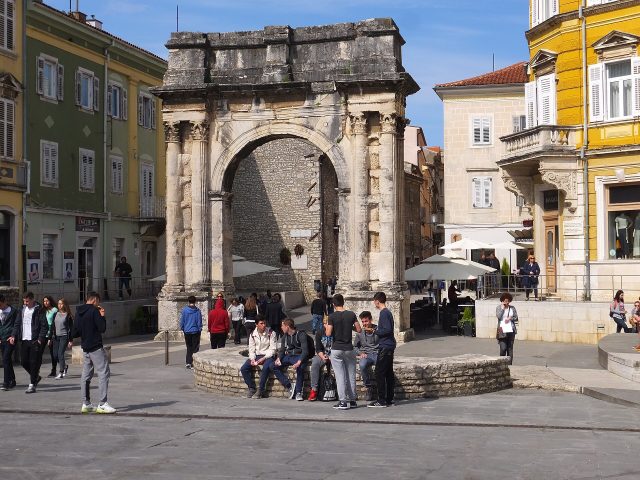
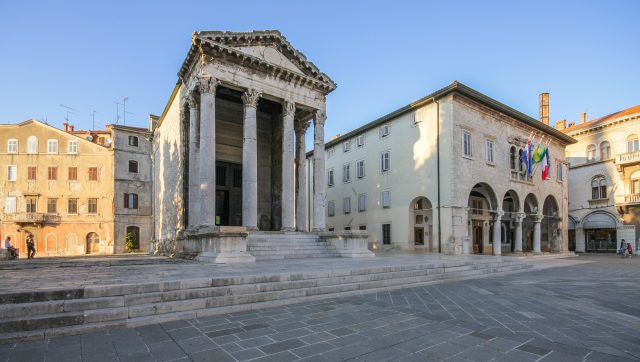
Beyond the Arena, Pula’s past lingers in unexpected corners. The Arch of the Sergii, a triumphal monument from the first century BC, stands unassumingly at the edge of a square, its carvings worn smooth by centuries of wind and salt. Nearby, the Temple of Augustus, small but perfectly proportioned, sits in the shadow of a medieval clock tower, as if the city couldn’t decide which era to favor. The streets of the old town twist and turn, lined with low-slung houses where laundry flutters between buildings and cats nap in doorways. There are no crowds here, no selfie sticks jostling for space—just the occasional clatter of dishes from a family-run konoba or the murmur of old men playing cards in a café. In the evenings, the scent of grilled fish and rosemary drifts from waterfront restaurants, and the harbor glows with the lights of fishing boats returning for the night.
The sea here isn’t the postcard-perfect turquoise of Dalmatia’s southern islands, but it has its own rough charm. The water is deeper, darker, shifting from slate gray to emerald depending on the light, and the shoreline is a mix of pebbled coves and concrete piers where locals dive in for a quick swim. The beaches aren’t the main attraction—though they’re perfectly pleasant for a lazy afternoon—but the real draw is the coastline itself. Rent a kayak and paddle around the bay, or take a boat to the nearby Brijuni Islands, where deer roam freely and the ruins of Roman villas peek through the pine forests. The best view of the city comes from the tip of Cape Kasteja, where the Adriatic stretches out in all directions, and the Arena looks like a miniature model set against the water.
What makes Pula special is its refusal to perform for tourists. There are no luxury resorts or neon-lit promenades, just a city that has quietly endured for centuries, absorbing empires and wars and economic booms without losing its character. It’s a place for people who prefer history woven into everyday life rather than packaged into guided tours, for those who’d rather wander aimlessly through backstreets than tick off landmarks from a checklist. The evenings are slow, the wine is local, and the conversations in cafés spill out onto the sidewalks long after the sun has set. Pula doesn’t try to impress you. It just waits, patiently, until you realize you don’t want to be anywhere else.
See & Do
8 places

Places on the map
Marker colour follows the categoryClimate and weather
Detailed weather: Pula- Average temperature
- 16 °C
- Precipitation per year
- 1315 mm
- Average humidity
- 69 %
- Sunshine hours per day
- 9.6 h
- Time zone
- UTC+2 (GMT+2)
Average air temperature
°C
8
8
11
14
18
24
26
27
22
17
12
9
Jan
Feb
Mar
Apr
May
Jun
Jul
Aug
Sep
Oct
Nov
Dec


