Plovdiv
Bulgaria · 5 places
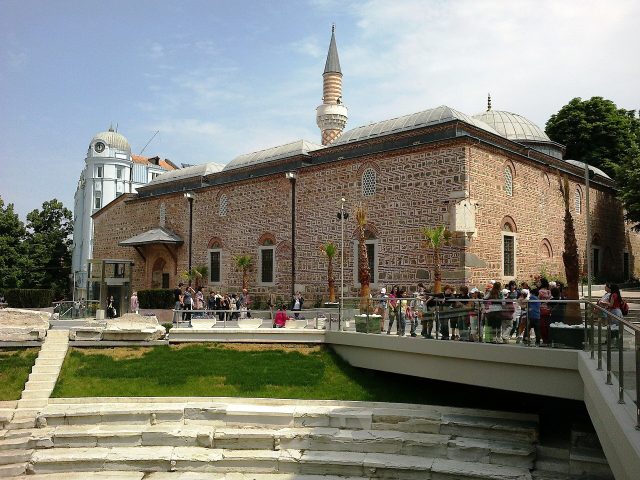
Photo: Stolichanin, CC BY-SA 3.0
Plovdiv doesn’t reveal itself all at once. Spread across seven hills, much like Rome, it lacks grand domes or marble colonnades. Instead, its charm lies in the quiet details—the narrow streets where peeling plaster on old houses gives way to sudden bursts of color: a café’s bright sign, wrought-iron balconies draped in grapevines, or the soft glow of streetlamps as dusk settles in. The city moves between two worlds: one of ancient stones, the other of modern life, and they coexist without clashing.
History here runs deep, layer upon layer. In the Old Town, time feels suspended. A well-preserved Roman forum speaks of the days when Plovdiv was Philippopolis, a key city in the empire. Nearby, a medieval fortress overlooks the Maritsa Valley, while Ottoman mosques and Revival-era houses—with their carved wooden ceilings and hidden courtyards—hint at the merchants, artisans, and travelers who once crossed paths here. Walking these streets, you can imagine the lives that unfolded over centuries.
Plovdiv isn’t just a living museum. It has a rhythm of its own. In summer, the main pedestrian street hums with energy—musicians play on corners, artists display their work, and people linger over coffee under the shade of plane trees. Autumn brings the scent of fresh bread and spices as fairs fill the air with the flavors of homemade cheeses, honey, and wine from nearby villages. Winter is quieter; cafés offer warmth, and holiday markets sell handmade crafts and mulled wine.
The city surprises you. It’s home to one of the world’s oldest theaters, an ancient amphitheater still used for concerts and performances. Tucked away in old courtyards, you might find a contemporary art gallery or a wine bar where bottles are filled straight from the barrel. The people here don’t rush, but they’re always ready with a suggestion or a cup of coffee. They take pride in their city—they simply live as their ancestors did.
Plovdiv isn’t like Bulgaria’s coastal cities. It has its own character, shaped by time and the blending of cultures. The streets are uneven, the trams are old, and the air carries the scent of jasmine in the evenings. There’s a light here, the kind that lingers as the sun sets behind the hills, reflecting off the windows of centuries-old houses. Maybe that’s why it’s so easy to fall for Plovdiv—it doesn’t try to impress. It just lets you discover it, in your own time.
See & Do
5 places

Places on the map
Marker colour follows the categoryClimate and weather
Detailed weather: Plovdiv- Average temperature
- 14 °C
- Precipitation per year
- 704 mm
- Sunshine hours per day
- 7 h
Average air temperature
°C
3
5
8
12
16
21
24
24
20
14
9
5
Jan
Feb
Mar
Apr
May
Jun
Jul
Aug
Sep
Oct
Nov
Dec