
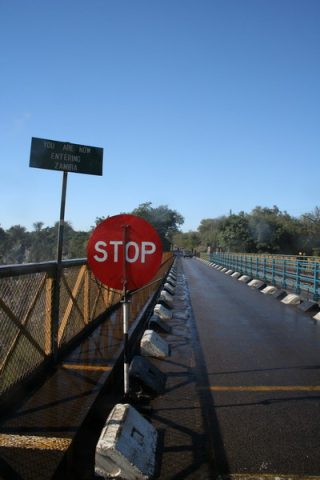
Chirundu Bridge
Zambia · 6 places
Photo: Dr Mary Gillham Archive Project, CC BY 2.0
Chirundu
Chirundu is one of those places that feels like it exists between worlds. Straddling the banks of the Zambezi River, it marks the spot where Zambia meets Zimbabwe, the border running right through the bridge that spans the water. Two countries, two border posts, and a few streets where life moves to its own rhythm. The town sits along one of Southern Africa’s key transport routes, linking the continent’s interior to Mozambique’s ports. Trucks pass daily, carrying fuel and food, while people cross the river—some moving on, others staying.
The Zambezi here is wide, its sandy banks home to hippos in the dry season. When rains come, the river rises, flooding into islands and channels, turning the land green. Elephants, buffalo, and antelope move through the nearby forests, while eagles circle above. Beyond the trucks and border queues, the savanna begins.
Mornings bring activity: drivers refuel, vendors set up stalls, and locals start their day. By evening, the town slows. The only sounds are birds and, sometimes, the distant roar of lions. A few guesthouses and cafes offer rest and food. Chirundu isn’t for those seeking spectacle—it’s a place people pass through by necessity or chance.
History lingers here. Colonial caravans once crossed these parts, later followed by a railway to the coast. Now, only weathered buildings and rusted tracks remain. For locals, this history isn’t extraordinary—it’s just part of life, like the river.
If you stop here, don’t rush. Sit by the Zambezi, listen to the water, watch the sunset turn the river gold. There are no monuments or festivals, just the feeling of Africa as it is—a place where humans are a small part of something vast.
See & Do
All of them
Stay
All of themPlaces on the map
Marker colour follows the categoryClimate and weather
Detailed weather: Chirundu Bridge- Average temperature
- 26 °C
- Precipitation per year
- 825 mm
Average air temperature
°C
27
27
27
25
22
20
20
23
28
30
29
29
Jan
Feb
Mar
Apr
May
Jun
Jul
Aug
Sep
Oct
Nov
Dec


