Panama
Panama · 15 places
Photo: Mr.Jhosimar, CC BY-SA 3.0
Panama City is the kind of place that reveals itself slowly, layer by layer. At first glance, it’s a bustling metropolis where glass skyscrapers rise from the tropical greenery, and the hum of business districts blends with the unhurried pace of colonial streets. There’s no rigid European order here—just raw energy that pulses through the city. It’s in the honking taxis, the rapid-fire Spanish with its Caribbean lilt, the scent of fried plantains and fresh coffee drifting from street vendors. Life moves to its own rhythm, where a morning of meetings in a sleek office tower might end with the sound of waves crashing on a beach just thirty minutes away.
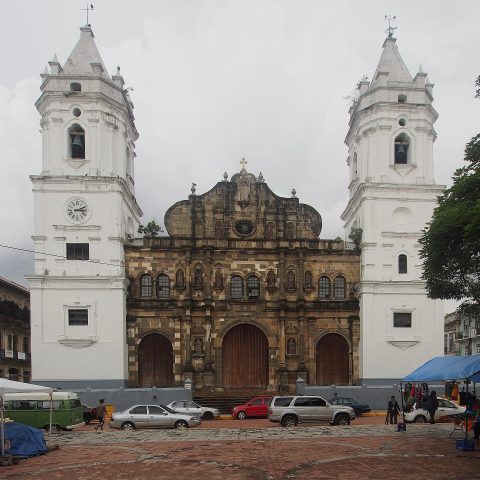
The heart of the city beats in Casco Viejo, the old quarter where time seems to soften. Cobblestone streets wind past two-story buildings with wooden balconies and intricately carved doors, their faded facades whispering of colonial days. It’s easy to lose yourself here among crumbling churches and plazas where old men play dominoes under the shade of mango trees. By evening, the neighborhood comes alive—salsa spills from bars, and rooftop restaurants serve ceviche with local spices. Casco Viejo isn’t a museum; it’s a living, breathing place where history and everyday life intertwine effortlessly.
Yet Panama City isn’t just about the past. Its gaze is firmly fixed on the future, and nowhere is that clearer than from the observation deck of one of the downtown skyscrapers. Below, the Panama Canal stretches out—a marvel of engineering that has connected two oceans for over a century. The canal isn’t just a tourist attraction; it’s the backbone of the country’s economy, and its workings are visible everywhere. Massive ships glide through the locks while dockworkers in hard hats sip coffee from plastic cups, and fishermen mend their nets along the waterfront, just as they have for generations.
The city is surprisingly compact. Within half an hour, you can trade the steel-and-glass skyline for wild Pacific beaches or the lush trails of Metropolitan Natural Park. There’s no strict divide between tourist zones and local life—everything bleeds together. One block might feature a gated mansion with security, while the next has laundry strung between modest homes. Panamanians are warm but unobtrusive; they won’t strike up a conversation with strangers, but if you ask for directions or advice, they’ll help without hesitation.
Panama City thrives on contrasts—global and local, modern and traditional, all coexisting in the same space. You could spend a day exploring museums and galleries, or simply sit in a waterfront café, watching the sunset paint the sky in shades of pink and gold behind the skyscrapers. The city doesn’t try to be perfect or meet anyone’s expectations. It just is—loud, colorful, a little chaotic, but undeniably alive. And perhaps that’s what makes it so compelling.
See & Do
15 places



Places on the map
Marker colour follows the categoryClimate and weather
Detailed weather: Panama- Average temperature
- 27 °C
- Precipitation per year
- 1900 mm
Average air temperature
°C
27
28
28
28
28
27
27
27
27
27
26
27
Jan
Feb
Mar
Apr
May
Jun
Jul
Aug
Sep
Oct
Nov
Dec