The Ministry of Government and Justice in Panama City is one of those understated buildings that quietly anchors the historical center. It doesn’t demand attention like the grander landmarks nearby, but its presence is woven into the fabric of the city in a way that feels natural, almost unremarkable—until you pause to consider what it represents. For those who take the time to notice, it offers a glimpse into Panama’s administrative history, a physical reminder of how the country’s institutions took shape in the decades following independence.
Built in the early 20th century, the ministry reflects the architectural sensibilities of its time, blending European influences with the practical needs of a young republic. The facade is restrained yet dignified, with clean lines and a symmetry that speaks to the era’s emphasis on order and stability. High ceilings, heavy wooden doors, and large windows suggest a space designed to convey authority without ostentation. While the interior remains largely off-limits to the public, the building’s exterior hints at the classical details within—marble staircases, ornate moldings, and spacious halls that once served as the backdrop for the work of shaping a nation.
The ministry’s history is closely tied to Panama’s evolution after breaking away from Colombia in 1903. In the early years of independence, the country was busy establishing its governmental structures, and buildings like this one became symbols of the new political order. The Ministry of Government and Justice played a central role in that process, overseeing the coordination of various agencies and laying the legal groundwork for the fledgling republic. Though many administrative functions have since moved to more modern facilities, the building remains a testament to a time when Panama was still defining its identity.
Architecturally, the ministry is a fine example of how Latin American countries adapted European styles to their own contexts. Unlike the opulent colonial palaces or the eclectic designs of later periods, this structure is marked by its functionality and clarity. The decorative elements are subtle, almost understated, reinforcing the building’s purpose as a place of governance rather than spectacle. It shares this quality with other administrative buildings of the era across the region—unassuming yet purposeful, designed to project both permanence and progress.
Today, the ministry continues to serve its original function, though its role has likely evolved with the times. It isn’t a museum or a tourist attraction, and access is limited to official business, but for those wandering through the old quarter of Panama City, it offers a quiet connection to the past. The surrounding streets, lined with cafes, small shops, and other historic buildings, create an atmosphere where the layers of the city’s history are visible at every turn. The ministry stands as a bridge between the Panama of the early 20th century and the bustling metropolis it has become.
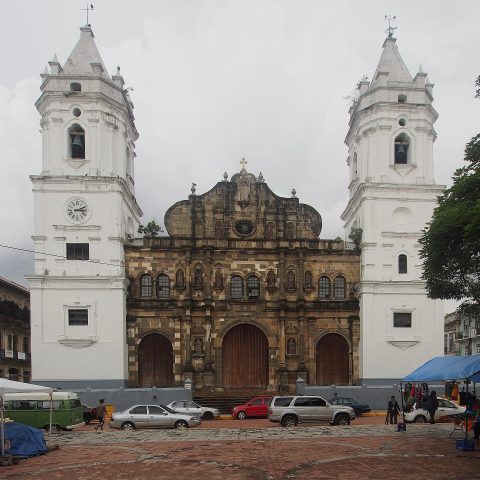
Its location near more famous landmarks, like the National Theater and the Metropolitan Cathedral, makes it an easy stop for anyone exploring the historic center on foot. The area is a living timeline of architectural styles, from colonial-era mansions to neoclassical government buildings and sleek modern offices. The ministry fits neatly into this progression, its modest presence a counterpoint to the more flamboyant structures around it. It may not be the first thing visitors notice, but it holds its own place in the city’s story.
For those interested in Panama’s political history, the building is a tangible link to the country’s formative years. There are no plaques or exhibits here, no grand narratives laid out for tourists, but the very fact of its existence speaks volumes. It was constructed during a period when Panama was still figuring out how to govern itself, when every institution was a step toward stability. The ministry wasn’t just an office—it was a statement of intent, a declaration that the new republic was here to stay.
Now, decades later, the building blends into the background of daily life in Panama City. It’s no longer a symbol of a nation in the making but a familiar part of the urban landscape. Yet for those who look closely, it remains a witness to change. Its walls have seen the comings and goings of officials, the ebb and flow of political tides, and the steady march of progress. In that sense, it’s more than just a government building—it’s a quiet chronicler of Panama’s journey.
You wouldn’t plan a trip around visiting the Ministry of Government and Justice, but if you find yourself in the historic center, it’s worth a moment of your time. It won’t dazzle you with grandeur or artistry, but it has a story to tell—one of quiet resilience, of a country finding its footing, and of the unassuming buildings that helped shape its future. That’s the beauty of places like this: they don’t shout their significance, but they’re essential to understanding the city and the people who call it home.