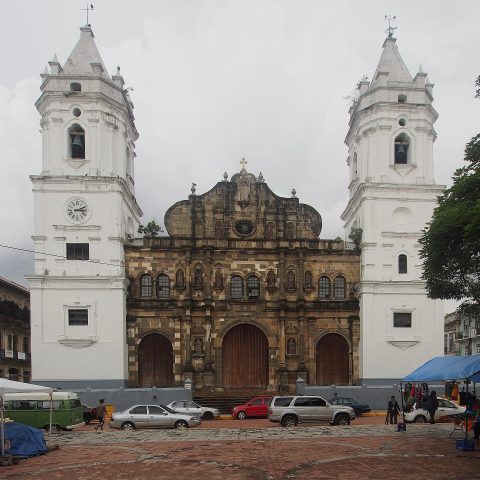
The Panama History Museum sits quietly in the heart of the capital, tucked away on Avenida Central in a building that carries its own stories. Constructed in the early 1900s, the structure is a relic of a different era—tall ceilings, heavy wooden doors, and wide halls bathed in the soft, filtered light of the tropics. There’s no grandeur here, no attempt to impress with flashy displays. Instead, the building itself feels like a time capsule, its creaking floorboards, intricate plasterwork, and vintage chandeliers whispering of the people who once walked these rooms under very different circumstances.
The museum’s exhibits trace Panama’s past from pre-Columbian times to the present, but they do so in a way that feels personal rather than academic. Rather than overwhelming visitors with endless dates and names, the displays focus on the lives of ordinary people—their tools, their struggles, the moments that shaped their daily existence and, by extension, the nation itself. You’ll find artifacts from indigenous communities, colonial-era weapons and household items, documents tied to the fight for independence, and personal belongings of those who helped build the country. The most compelling section, though, is dedicated to the Panama Canal, a project that didn’t just transform the country but rewrote global trade. The exhibits here don’t shy away from the human cost—photographs, letters, and tools tell the story of the workers who labored in brutal conditions, the diseases that claimed thousands of lives, and the sheer scale of the engineering feat.
What makes the museum stand out is its attention to the details that often go unnoticed. There are panels about the workers who built the canal—not just the engineers and politicians, but the laborers from the Caribbean and Europe who endured backbreaking work in the jungle. Another exhibit explores Panama’s time as part of Gran Colombia, showing how locals viewed the union and what it meant for their identity. These are the kinds of stories that rarely make it into textbooks, but they’re the ones that make history feel real. The museum doesn’t just present facts; it invites you to imagine what it was like to live through these moments.
The building itself has lived many lives. It once housed government offices, later became a hub for private businesses, and by the mid-20th century, it was nearly demolished to make way for something newer. Fortunately, it was saved and restored in the late 1980s, turning it into a cultural space that now serves as a quiet reminder of the importance of preserving the past. In a city where modern skyscrapers rise almost overnight, the museum stands as a testament to the idea that history isn’t just something to be remembered—it’s something to be lived with.
Visiting doesn’t require any special knowledge or preparation. The exhibits are designed to be accessible to everyone, though younger visitors might not grasp all the nuances. For those who don’t speak Spanish, there are brief English descriptions, but many of the artifacts speak for themselves—a collection of old maps showing a Panama that looks nothing like today’s, or black-and-white photographs of the city’s streets before the skyline was dominated by glass towers. The museum doesn’t rely on flashy technology or interactive displays; instead, it lets the objects tell their own stories.
Weekdays are the best time to visit, when the halls are quieter and you can take your time. There’s something special about sitting on a bench in one of the rooms, watching the light play across the artifacts, or standing by a window and looking out at the modern city—where colonial facades stand side by side with sleek high-rises. The museum feels like a bridge between two worlds, a place where the past and present coexist in a way that’s rare in a city that’s always racing forward.
This isn’t a museum that tries to be the biggest or the most famous. It doesn’t have the glitz of some of its counterparts, with their touchscreens and virtual reconstructions. Instead, it offers something simpler, something more intimate. It’s a place where history isn’t just something you learn about—it’s something you can almost touch, like flipping through an old family album. You don’t come here to memorize dates; you come to understand where Panama came from, and maybe, in the process, where it’s going.