- Home
- Niger River
- Niamey

Niamey
Niger River · 6 places
Photo: Roland Huziaker, CC BY-SA 2.0
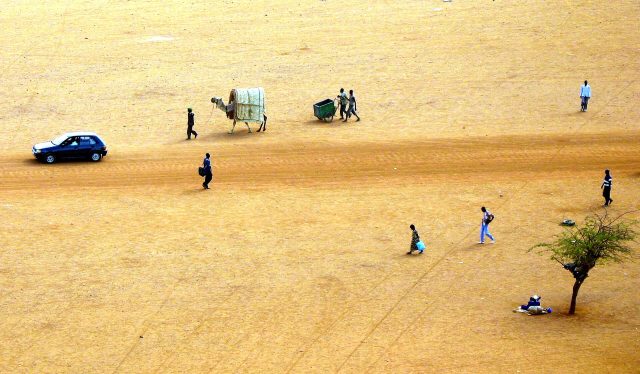
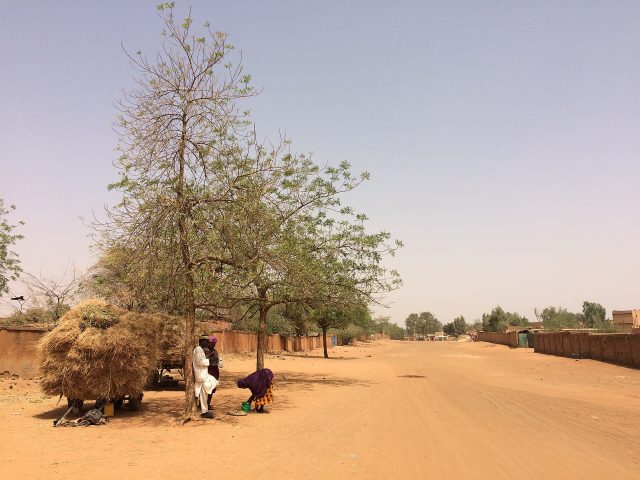
Niamey unfolds slowly, like the lazy bend of the Niger River that shapes its edge. The city sprawls across the left bank where the savanna blurs into semi-desert, its rhythm set by the seasons and the water’s flow rather than the ticking of clocks. There are no neon-lit boulevards or towering glass facades here—just wide, sun-bleached streets where the wind carries the scent of grilled meat from roadside braziers and the occasional swirl of dust. As the capital of one of the world’s least developed nations, Niamey might not fit the usual idea of a metropolis, but that only makes it more compelling. It moves to its own beat, a place where tradition and modernity coexist in an unforced, often messy harmony, where French influences linger in the architecture while the pulse of West Africa thrums beneath.
Founded in the late 19th century as a modest fishing village, Niamey grew into a key trading hub after the French made it their colonial administrative center. Traces of that past remain in the Plateau district, where old government buildings stand with their high ceilings and shaded verandas, remnants of an era when European officials and merchants called the city home. Yet Niamey hasn’t fossilized in nostalgia. Along the riverfront, modern offices and hotels rise beside the water, while on the outskirts, new neighborhoods of concrete and clay sprawl outward, home to young families and migrants from the countryside. The city is still finding its shape, still deciding what it wants to be.
Contrasts define Niamey. In the heart of the city, air-conditioned restaurants serve French cuisine to well-dressed diners, while just a few blocks away, open-air markets buzz with the energy of daily life. The Grand Marché is the most famous, a labyrinth of stalls where vendors hawk everything from hand-embroidered boubous to plastic flip-flops, from sacks of spices to secondhand mobile phones. The air is thick with the smell of roasting peanuts and incense, the shouts of hawkers cutting through the hum of the crowd. Here, wealth and want exist side by side, not as a spectacle but as an ordinary fact of life.
The Niger River is the city’s lifeline. During the rainy season, it swells, nourishing the land, while in the dry months, its waters turn sluggish and muddy. Locals gather along its banks to wash clothes, bathe, or simply escape the heat under the shade of acacia trees. Fishermen return at dusk with their catch, and children splash in the shallows. As evening falls, the riverfront comes alive—families spread out mats for picnics, and groups of young people gather to dance to the beat of drums or the tinny sound of a phone speaker. The city feels different then, more open, more alive.
Niamey isn’t a place that tries to impress. There are no world-class museums or ancient ruins, no carefully curated tourist trails. What it offers instead is something rarer: the chance to step into a city that doesn’t perform for outsiders but simply exists. Walk its streets, and you’ll hear the laughter of schoolchildren spilling from a courtyard, see old men hunched over a game of checkers under a tree, or women balancing baskets of mangoes on their heads. The city doesn’t hand you easy answers or polished narratives. It invites you to observe, to wander, and to accept things as they are—unvarnished, complicated, and full of quiet vitality.
See & Do
6 places

Places on the map
Marker colour follows the categoryClimate and weather
Detailed weather: Niamey- Average temperature
- 30 °C
- Precipitation per year
- 433 mm
- Sunshine hours per day
- 8.7 h
Average air temperature
°C
25
28
33
36
35
33
30
28
30
32
30
26
Jan
Feb
Mar
Apr
May
Jun
Jul
Aug
Sep
Oct
Nov
Dec